When Toddlers Grip During Back Floats—and How to Help Them Let Go Safely
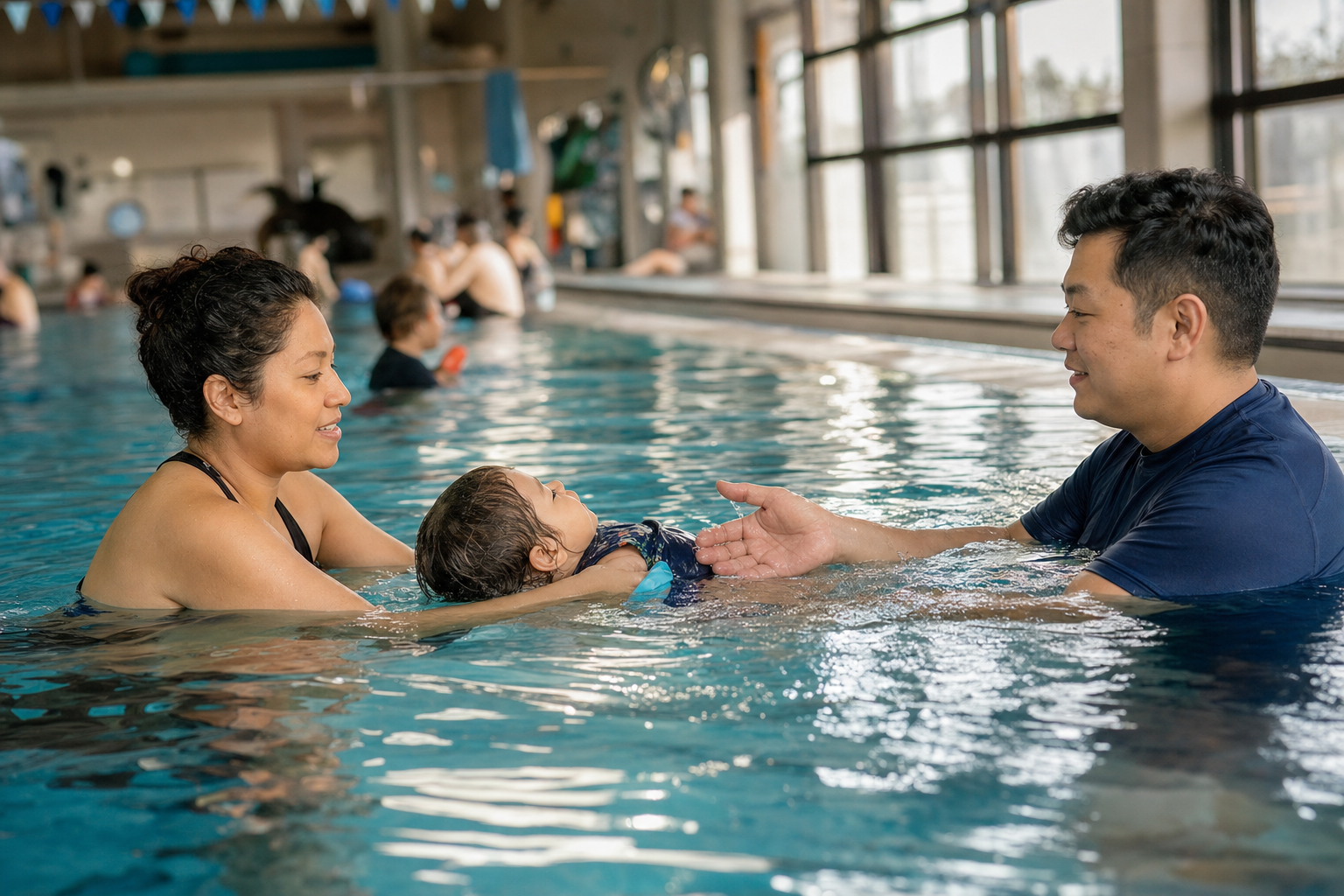
One moment your 18–36 month old is floating safely on their back, the next they’re grabbing your shirt or pulling back toward you like they’re dangling from a lifeline. If your toddler grabs during swim lessons or seems terrified of the back float position, you’re not alone—and there are ways to build security before ever asking them to release their grip.
Why Toddlers Grip During Back Floats
Toddlers at this age begin to understand danger in a more vivid way. When they're asked to lie back in water, their instincts kick in: fear of water over their face, strange pressure in their ears, the sensation of sinking, or simply losing control. What feels like defiance is often fear. They grab for something solid—your shirt, the instructor’s hand, the wall—as a safety anchor. And often, swim instructors misread that grip as stubbornness instead of distress. Parents, too, may feel frustrated when a toddler doesn’t “just let go,” especially during a toddler scared back float scenario.
A Better Way: Building Safety Before Releasing Support
You want your toddler to learn trust—not to power struggle. That means slowly increasing their comfort level with the back float before asking them to let go entirely.
Start with Hand-Release Games
Begin in very shallow water with a parent-child swim class or instructor support. Hold your toddler securely—hips or shoulders—and allow them to cling to you or your shirt. Then gently shift into small “hand-release” games. One example: make a count (“1-2-3”) and release one hand while you still support the back and head. Let the child feel the support still in place. Make sure to verbally reassure: “I’ve got you. You’re safe.” You can build up the hold time gradually.
Progressing from one hand to two hands off only when your child visibly relaxes—in body, not just in words—is vital. Experts at Swim Foundations recommend using distraction (singing, counting aloud), keeping support only as long as needed, and gradually easing into full back floats while using verbal cues of comfort. (swimfoundations.com)
Use Reassurance Cues and Body Language
Your face and tone matter. When you approach a float exercise, get down to eye level, speak softly, keep your face warm and expressive, and lean close enough that your toddler can hear you even if they close their eyes. Tell them exactly what will happen, so nothing surprises them.
If you want a structured way to build water confidence at home, the 10-Week Plan guides you step by step.
These non-verbal cues of safety reinforce the message: this is okay. When toddlers trust they won’t be dropped or abandoned, their grip often loosens naturally.
Know When Gripping Is a Signal to Pause
If your toddler begins shaking, trying to pull away, opening their eyes wide, or making noise—especially after letting go of a hand—those are signs it’s time to stop or slow down. Pushing through terror rarely works. Instead, pause the lesson, return to a fully supported float, perhaps even go back a step, and let calm return. Eyes above water, mouth open—these moments are more about emotional regulation than swimming skill.
[[ctababy]]
How Instructors and Parents Can Support Together
During swim classes, instructors and parents often work as a unit. If parents aren’t in the water any longer, their observant presence and consistent responses matter.
In your home practices, you might bring in a structured method. For example, a program like the 10-Week Plan from swimy.org offers a framework for gradually introducing float skills. It scaffolds safety and skill-building so toddlers gain confidence over time, avoiding letting fear build and grip turn into resistance. Incorporating such plans allows both parents and instructors to set expectations that comfort comes first, not compliance.
Sharing roles also helps: one adult supports, another encourages verbally. In classes with multiple children, instructors should encourage parents to resist pulling hands away forcibly or treating grip as misbehavior. Instead reinforce that fear was there, but your toddler still tried.
Common Mistakes to Avoid
One big error is praising only when the child complies, calling that “good,” instead of remarking on their bravery, or how they stayed calm. That makes toddlers see safety behaviors as “scoring points,” not trusting signals. Other pitfalls include yanking hands away (“Now let go!”) or insisting they float independently, even though every instinct in their body is screaming not to.
Sometimes instructors treat a grip as defiance and issue pressure or shame. That often backfires—fear becomes power struggle, and the child digs in, grips harder. Instead, treat grip as communication: “You’re scared. That’s OK.” Then offer support until safety feels real.
Putting It All into Practice: What Parents Can Do Next
Begin small, maybe at bath time. Try floating together leaning back, hand in hand. Practice gradually increasing how much you support. Use the finger-touch method: let their fingers brush water, then gradually lower their body. Every time they stay relaxed for even a few seconds, celebrate that. Outside of swim lessons, talk about the pool in positive, calming language.
Set realistic goals: many toddlers will cling through their first few lessons. Sometimes more than toddlers who didn’t grab. That’s consistent with what many parents share in swim instructor forums—shirt-grabbing, tears, stepping back—and it’s not a sign that they’ll never learn. It’s part of the process. What matters is consistency, reassurance, and hearing the child’s fear—and responding with empathy rather than force.
When toddlers grip during swim lessons, it doesn’t mean they’re being difficult—it often means they’re afraid. If you build security with games, verbal cues, and pacing safety, you’ll help your child float more safely without it turning into a battle. Over time they’ll let go—not because you forced it, but because they felt safe enough to.
120+ swimming exercises sorted by age — with video and instructions. Developed by swim instructors, completely free.

120+ swimming exercises sorted by age — with video and instructions. Developed by swim instructors, completely free.