VR Water Safety for Kids 8–12: Hype or Help?
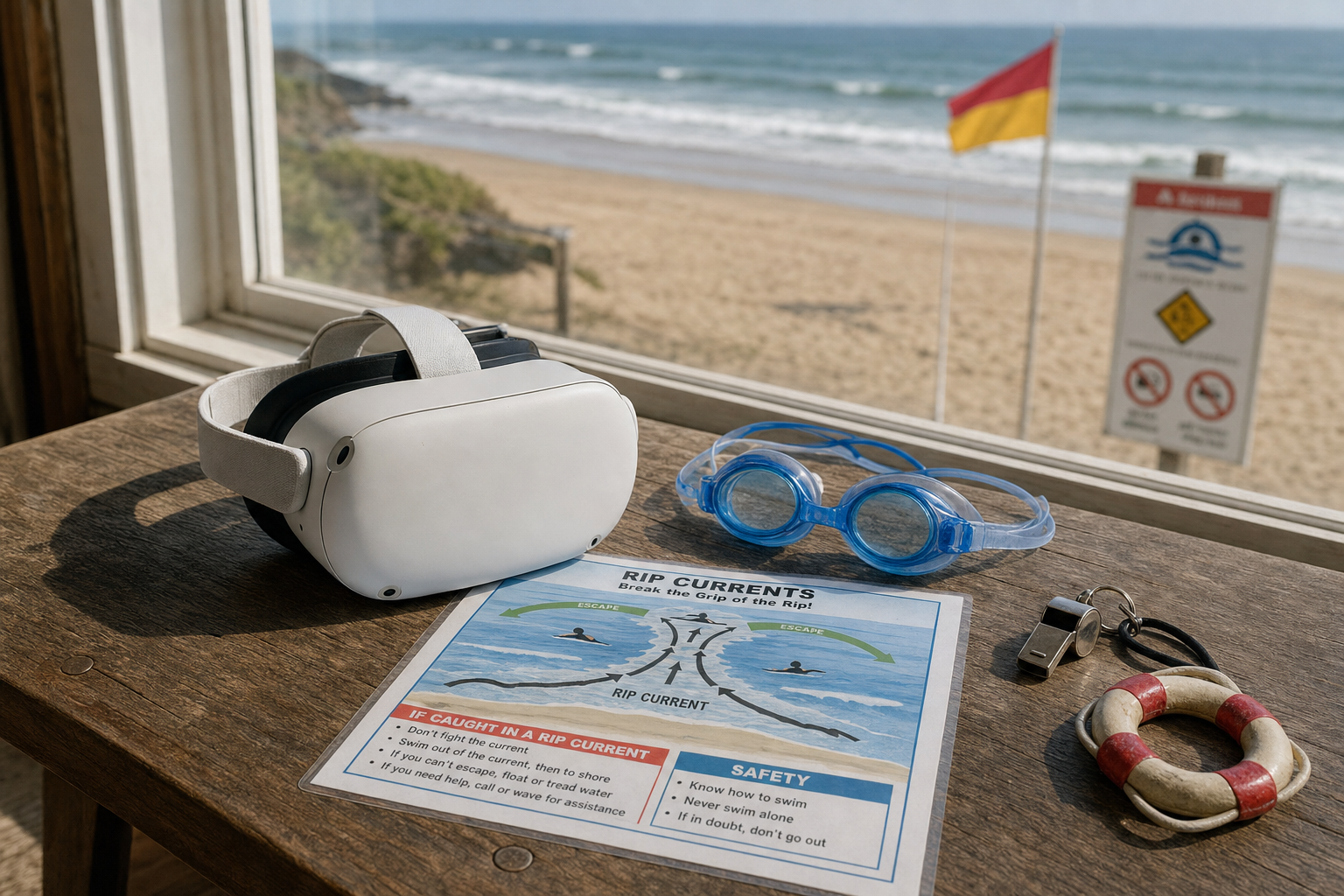
Virtual reality water-safety tools have entered the scene lately, offering “rip current simulators” and virtual swimming safety workshops aimed at children aged 8-12 years. What do they actually do well, where do they fall short, and how can parents use them sensibly—especially as summer approaches? Here’s what the latest research tells us.
What VR can teach kids about rip awareness and rescue steps
Studies show that VR and immersive tools often do a strong job helping children recognise beach safety signs, spot rip currents (especially from aerial views), and pick safer places to swim. In one study of Australian kids aged 8-11, immersive VR was more effective than a desktop game for identifying signage and aerial rip patterns. Those using either platform improved in ground-level recognition of rips and knowing where it was safe to enter the water. (sciencedirect.com)
Another study using 360-degree video focused on kids aged 10-12, showing they retained rip awareness, how to act if caught (like swimming parallel or floating), and general water hazards up to eight weeks after VR exposure. Engagement was higher than poster or regular video methods. (doi.org) Research reviewing immersive virtual reality for injury prevention more broadly confirms that while only a few studies focus strictly on water safety, VR is promising for teaching procedural rip current steps, spatial awareness, and hazard recognition in a low-risk setting. (doi.org)
VR tools often cover three big pieces: recognising danger signals (flags, signs), understanding what a rip current looks like, and what actions to take if caught (stay calm, float or swim parallel, wave for help). But they rarely work on actual in-water skills—VR isn’t a substitute for being in the pool or under the eye of a swim coach.
Where VR fits alongside real lessons
VR tools shine as adjuncts rather than replacements. They increase awareness and help build strong mental models before heading to water. For example, children using traditional swim lessons plus VR retain more water safety knowledge than those using only either method. (onlinelibrary.wiley.com) When exposure is limited (classroom, home), immersive experiences can bridge gaps in understanding risk without exposing kids to danger.
Seasonally, just before summer is an excellent time to use VR water safety for kids, because awareness fades over winter. You can combine pool lessons, real beach visits (supervised), and VR to rehearse rips and rescue steps mentally before actual exposure.
If you want a structured way to help your child progress at home, the 10-Week Plan guides you step by step.
One helpful tool to pair with lessons is following structured curricula. For instance, the 10-Week Plan of swimy.org provides a mix of practical in-pool skills and safety theory that parents and instructors can adapt. Building virtual safety awareness alongside this kind of consistent, progressive program can be very powerful.
How parents can use VR safely—without creating false confidence
[[ctakid]]
Children aged 8-12 can grasp complex ideas, but also may mis-judge how virtual skills translate in real life. Always supervise VR use. Start with short sessions, debrief after: ask what the child saw, what they’d do if at a real beach, how it felt. Emphasise that while virtual rips are safe, real ones are unpredictable.
Watch for motion sickness or signs of discomfort—VR headsets may cause dizziness, eye strain, or nausea especially when simulating waves or fast movement. Some studies screen children first for susceptibility. (onlinelibrary.wiley.com)
Avoid using scary or overly dramatic simulations that might frighten kids. Fear can freeze learning. Better to start with calm examples of rip currents, then build up to more realistic visuals. Also, clarify that tools are for awareness, not for replacing swimming skills or rescue training.
Pitfalls: Where VR falls short or can do harm
VR often gives a “look” at danger but doesn’t build physical ability: swimming strength, breathing control, or feeling waves in a rescue scenario. Some tools assume kids will react appropriately in a simulated rip, but research shows knowing doesn’t always translate into doing. (pubmed.ncbi.nlm.nih.gov)
Misplaced confidence is a risk. A child may believe that because they “passed” the VR rip simulator, they can handle an ocean rip. Real ocean conditions—crowds, currents, cold water—are unpredictable. Relying only on virtual learning can leave gaps.
Younger or more anxious children might find VR scary or overwhelming. Parents should carefully choose age-appropriate content, preview it, and make sure kids understand what is real and what is virtual.
Key recommendations for parents, just in time for summer
Use VR as one part of a safety toolbox. Combine it with face-to-face swim lessons, beach walk-throughs, and supervised practice in real water. Set clear expectations: virtual skills support, not replace, real experience.
Select tools vetted by reputable sources: universities, lifesaving societies, water safety groups. Look for those that teach rip current rescue steps, signage, safe swimming zones, and retention over time. Check reviews and get feedback from other parents or educators.
Ensure balanced exposure. VR sessions should be limited in duration, with breaks. Then follow up with discussions and hands-on practice. Ask children how they’d act at real beaches or pools when conditions differ from the simulation.
Stay involved. Watch alongside your child, ask questions: “What did that sign mean?” “If that rip looked like that in real life, what could you do?” This cements understanding and helps avoid false confidence.
Virtual reality tools for water safety hold real promise for children aged 8-12—rip awareness, rescue steps, signage recognition, and safer decision-making can all improve. But only when used wisely, alongside swimming lessons and under supervision. As summer approaches, using VR to boost preparedness can be smart—but replacing real skills with virtual ones is not. Make safety surround every learning moment—whether poolside, beach-side, or headset-on.
120+ swimming exercises sorted by age — with video and instructions. Developed by swim instructors, completely free.

120+ swimming exercises sorted by age — with video and instructions. Developed by swim instructors, completely free.