Towel Ponchos Without Deck Trips: Keep Your 6–36-Month Baby Warm Safely After Swimming
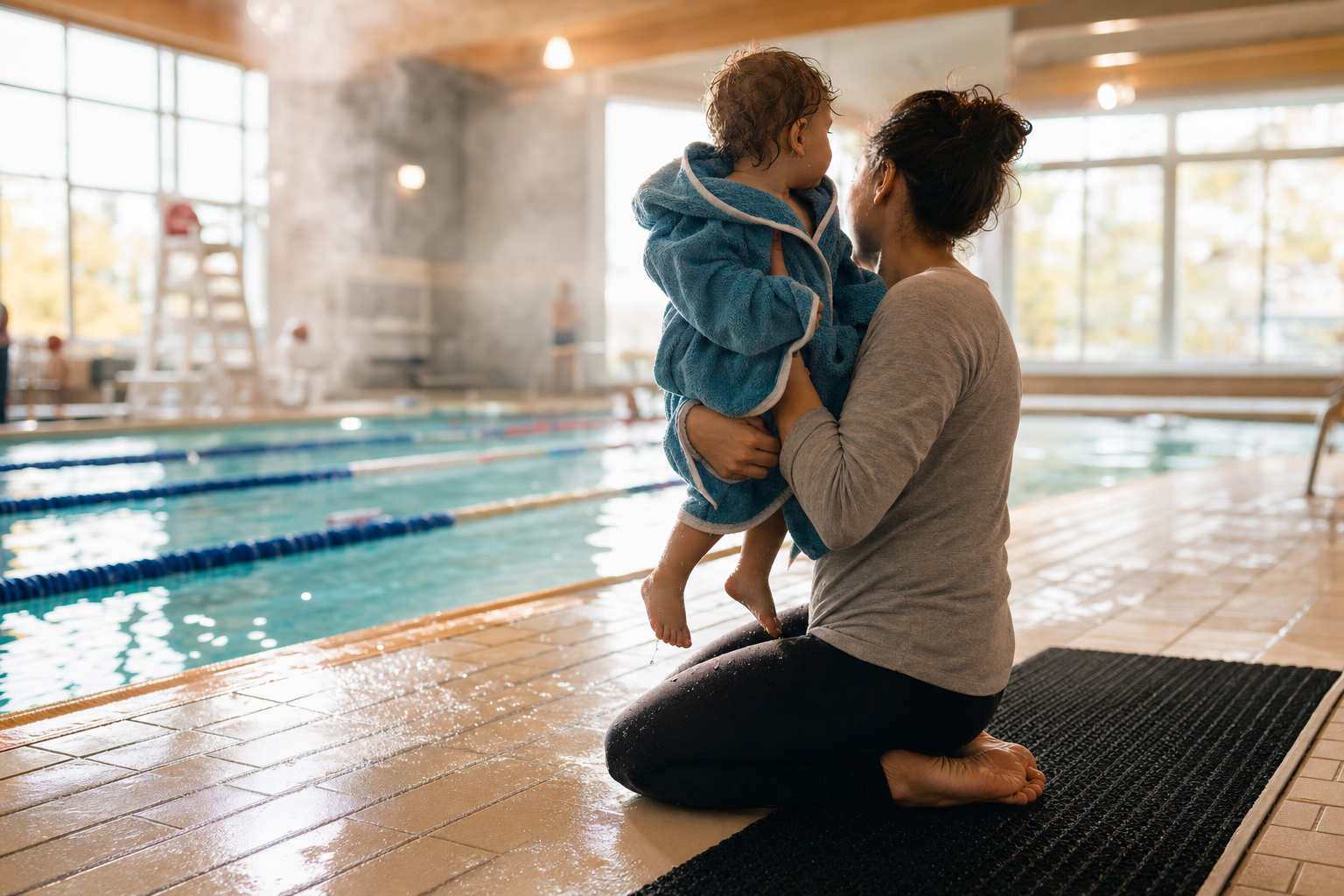
As soon as those swim lessons end, babies and toddlers can lose body heat fast—especially wet, shivery little ones stepping onto cold pool decks. A well-designed baby swim towel poncho or toddler swim robe can get your child warm faster, cut down on fuss, and avoid slip or trip hazards while they’re unsteady on their feet. Here’s how to pick gear that works, what to avoid, and how to make post-swim routines smoother this autumn, winter, or early spring.
Why hooded ponchos and robes matter (age 6-36 months)
Babies under 3 years can’t regulate body warmth well. Wet skin and hair let heat leak fast, often through the head. Wearable towels with hoods trap warmth better around the neck and head, helping them heat up sooner after lessons. Experts at Puddle Ducks stress that "wearable towels with hoods are good for this" when tiny swimmers are prone to chilling.(puddleducks.com) A towel robe or hooded zip design keeps arms and torso warm too—especially useful when toddlers wriggle and struggle in open-poncho styles. Recent guidance from the American Academy of Pediatrics recommends swim lessons after children turn 1 year, with constant supervision, through design that protects warmth as well as safety.(healthychildren.org)
What parents often miss: design features that make a difference
It can be tempting to buy the cutest towel poncho or softest robe. But when it comes to safety and rapid warmth, certain features change everything:
Best fabrics and cuts
Choose towels made of absorbent, breathable fabrics: cotton or bamboo terry is ideal. Microfiber dries fast but may not feel warm enough on cold skin. Designs with long sleeves or at least wide arm openings help trap heat when your child pulls off their swimsuit. Zip-front robes stay closed even when toddlers move. Hooded designs with snaps under size 24-months help keep the robe anchored without creating bulk or slipping off.(radkidsusa.com)
Fit, length, and safety on wet decks
Nothing makes a slippery deck trip hazard faster than hems that drag under little feet. For crawlers and early walkers, the bottom of the robe or poncho should hit about knee-length when standing upright—never longer. Avoid designs with extra long panels or flowing bits that scrape. For pre-walkers, avoid walking on wet decks altogether: carry them, then use a secure robe or hooded towel once you're inside and dry. Designs with zip front and bodied around the shoulders stay secure even when toddlers are unsettled.(radkidsusa.com)
If you want a structured way to build water confidence at home, the 10-Week Plan guides you step by step.
Hood, closure, and coverage
A good hood keeps your child’s head warm—essential for reducing heat loss. The opening must be roomy enough, but not so loose that water get inside. Closures matter: zippers or snaps work better than clumsy ties, especially when hands are wet and cold. Full cut robes help shield under layers so toddlers can wriggle off to change without exposing skin in chilly changing rooms.(radkidsusa.com)
Stay warm out there—and enjoy every splash. [[ctababy]]
Here’s a tip from parent-swim programs like those following a structured plan such as the “swimy.org 10-Week Plan” that helps children build water skills gradually. Using such swim plans means lessons happen throughout seasons—indoor winter classes or early-spring outdoor pools—so having warm, safe covering gear becomes part of your routine, not an afterthought.(swimy.org)
Choosing between a poncho and a robe: what fits your stage
Poncho towel style
A poncho towel is a square or rectangular towel with a head hole and maybe a hood. It slips on like a cape, allowing arms free movement. Great for splash pads, quick changes, and toddlers who dislike restrictive sleeves. But open fronts and loose hems make it poor for walking far or cold pool-side waits. If you do use a poncho, choose one just long enough to cover mid-thigh when standing, and never let it drag under feet.
Zip up or wrap-around robe
Toddler swim robe styles that zip or wrap closed offer much more safety walking on wet surfaces. They stay shut, trap warmth, and reduce fumbling with the garment. Ideal for kids learning to walk or wandering between car, pool, and changing room. Prioritize designs with quick-dry lining, full torso and arm coverage, and secure fasteners.
Safe post-swim routines you can trust
After swim class, get your baby wrapped up immediately: hood on, robe or poncho on before you leave the pool area. For children who aren't walking yet, carry them instead of letting them stand on slippery decks while wrapped in long cloth. A towel or robe roped around the child while stationary helps avoid shivering losses. Keep extra dry clothes, socks and a hat inside your swim bag so you can layer on quickly once you’re inside or in a warm vehicle. When changing, use bench or seat covers—wet decks and towels under benches are germ and slip hazards.
Key takeaways for keeping babies warm without slips or trips
Support your child’s warmth and safety by choosing a baby swim towel poncho or toddler swim robe that:
- Covers the head with a snug hood, uses warm, absorbent fabric, and keeps arms shielded.
- Is the right length to avoid dragging hems—knee height when standing if walking, shorter if crawling.
- Features secure closures like zippers or snaps rather than open fronts.
- Lets you carry pre-walkers safely on wet decks, rather than letting them shuffle in long fabric.
As seasons change and pool sessions shift indoors or start again in early spring, your gear makes all the difference. The right design helps your baby warm up fast after every lesson, prevents slips, and lets parents breathe easier.
120+ swimming exercises sorted by age — with video and instructions. Developed by swim instructors, completely free.

120+ swimming exercises sorted by age — with video and instructions. Developed by swim instructors, completely free.