Swim School Safety Audit: 9 Questions to Ask Before You Enroll
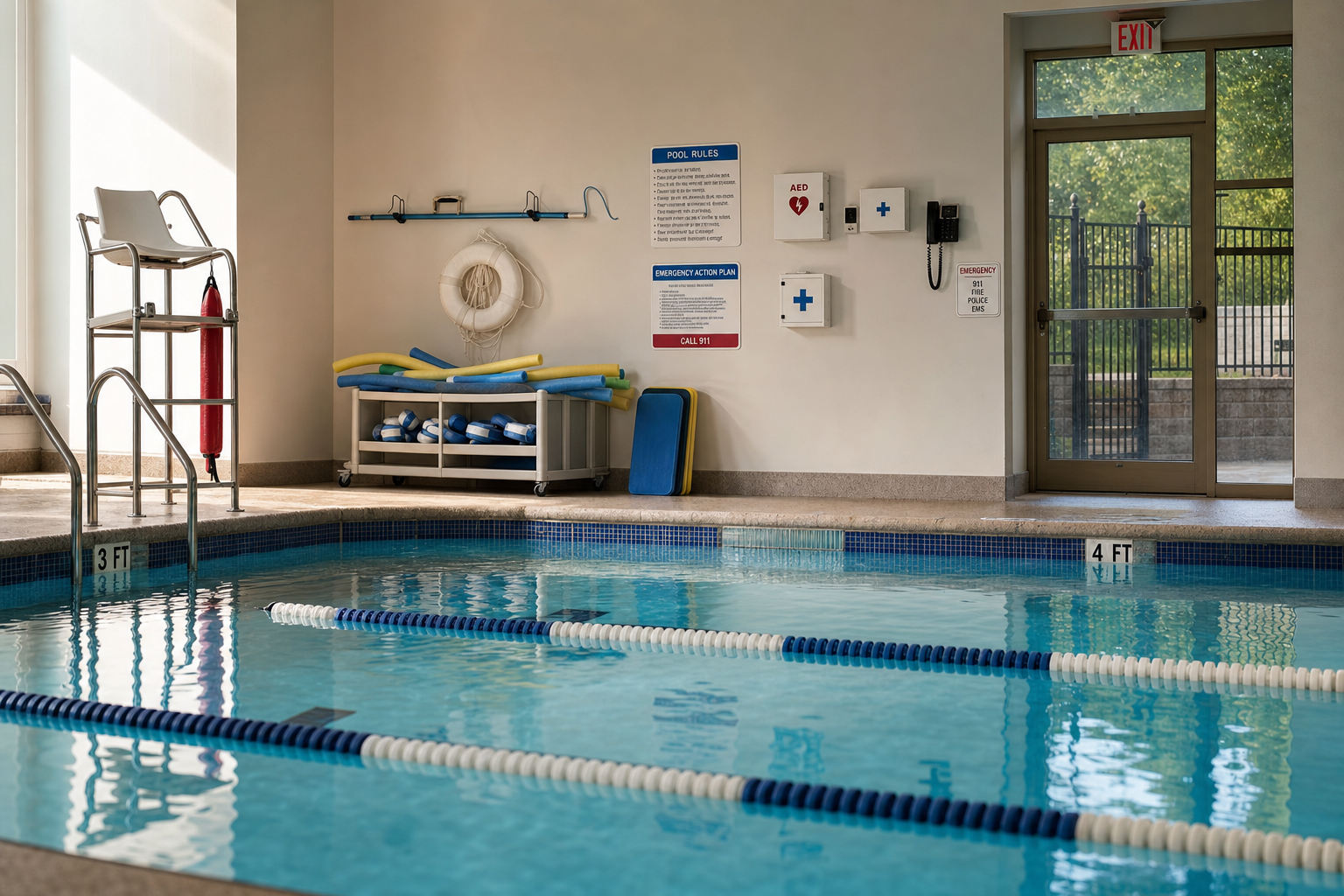
Before you sign your school-age child (ages 3-12) up for swim class this season, especially between March and October, you need to know: is this swim school safe? These nine questions will help you audit instructor credentials, class ratios, rescue gear, emergency readiness, water clarity, and barriers so your child learns in a facility that follows the layers of protection recommended by leaders like the AAP and CPSC.
1. What Certifications Does the Instructor Hold?
Find out if the instructor is certified in swim instruction, CPR/AED, and lifeguarding. The American Red Cross offers programs such as Basic Swim Instructor (BSI) and Water Safety Instructor (WSI), both of which require CPR, AED, first aid, and water safety training. (production.redcross.org) If your swim school can also show compliance with other recognized certifying bodies—USA Swimming, YMCA—or state regulations, that’s even better. A qualified instructor who knows swimming techniques is vital for both skill and safety.
2. What’s the Class Ratio?
Class size matters. A good swim school class for ages 3-6 should have perhaps 4 students per instructor; for older, more competent children (8-12), up to 6 per instructor might work—but no more. Facilities like the YMCA usually guarantee low student-to-instructor ratios and assign instructors who are certified by bodies like the Red Cross. (kenoshaymca.org) Ask specifically: “how many kids in water per instructor?” If the ratio seems high, the safety risk increases and instruction quality may fall.
3. Is There an Emergency Action Plan (EAP) + CPR Readiness?
Even if every season is routine, emergencies can happen. A proper swim school should have a written EAP that includes steps for rescue, resuscitation, and calling for help. In line with the AAP’s updated 2026 drowning-prevention policy, early rescue and resuscitation are essential layers. (publications.aap.org) Ensure that adult instructors and staff have current CPR/AED certification and are trained to recognize signs of drowning—they’re not always obvious. “Close, constant, attentive, and competent supervision” is now AAP’s standard. (publications.aap.org)
4. What Rescue Gear Is On-Site and Accessible?
Look for physical rescue tools: reaching poles, ring buoys (with rope), rescue tubes, and backboards or flotation devices. The facility should also have a phone nearby, emergency numbers posted, first-aid supplies, and an AED. These are part of what Watersafety USA recommends when evaluating a learn-to-swim program. (watersafetyusa.org)
5. How Clear and Well-Maintained Is the Water?
Water clarity is not just about comfort—it’s safety. If you cannot clearly see the depth, bottom of the pool, or persons in distress, that pool is not safe. Public pool operations guidance from cities like Manchester, NH, emphasizes visible bottom as a requirement. (manchesternh.gov) Ask when the water chemistry is tested, how often filtration or turnover cycles run, and how often the facility cleans surfaces. The CDC’s Model Aquatic Health Code has clear rules: disinfectant levels (chlorine or bromine), pH range (around 7.0–7.8), frequent testing—especially on busy days. (cdc.gov)
If you want a structured way to help your child progress at home, the 10-Week Plan guides you step by step.
[[ctakid]]
6. Are Barriers and Pool Access Secure?
According to updated guidelines from CPSC, fully surrounding your swimming pool with a four-sided isolation fence with self-closing and self-latching gate is one of the top layers of protection. (publications.aap.org) If the facility uses the house wall as one side of the barrier, make sure all doors to the pool area have alarms, self-closing and self-latching features, and that gateways are out of reach. (cpsc.gov) These barriers should be 48 inches or higher and prevent children from crawling under or climbing over. (cpsc.gov) If your pool school is somewhere you sometimes drive by, take a look.
7. Does the School Require / Encourage Water Competency?
Swim lessons are essential, but per the AAP’s 2026 policy, water competency goes further. It includes not only basic strokes but knowing how to float, recover if submerged unexpectedly, tread water, avoid risky behavior, and stay self-rescuable. (publications.aap.org) Ask if children are tested for these skills over time, gradually building confidence. Some swim schools offer plans or challenges—like the “10-Week Plan” programs to track progress safely. You might see that or something similar in your local swim school. Make sure the path toward swim competency is clear and age-appropriate.
8. How Many Supervisors and Lifeguards Are On Duty?
In addition to the instructor in the water or at poolside, look for lifeguards who are stationed in positions to see the whole pool. Supervision must be “competent”: meaning staff trained to notice distress, avoid distractions, and be fully focused. The AAP policy specifically updates that supervision should be “close, constant, attentive, and competent.” (publications.aap.org) Ask when the facility is busiest—around summer afternoons—and observe whether lifeguards rotate, rest, and stay alert. Also check if high staff turnover means new staff might be less experienced.
9. Are Emergency Exits, Drains, and Electrical/Entrapment Hazards Up to Code?
Safety isn’t just about seeing problems—it’s about preventing hidden ones. Pool drains or suction outlets should have compliant covers (like those required under Virginia Graeme Baker Pool & Spa Safety Act). (en.wikipedia.org) Electrical safety—no exposed wires or faulty lighting—needs checking. Walk around the perimeter: surfaces should be slip resistant, steps should have handrails, edges not sharp. Also ensure that emergency exits are clearly marked and unlocked during sessions.
Wrapping Up: Layers of Protection in Real Facilities
When you’re trying to choose a swim school, using this audit checks many of the “layers of protection” that authorities like the AAP and CPSC warn are necessary. Think of it like safety in layers: solid barriers around the pool, certified instructors with CPR/lifeguard training, low ratios, proper rescue gear, clean and clear water, competent supervision, and awareness of emergency ready procedures. All of those combine so that a single lapse doesn’t become a tragedy.
If after asking these questions you’re confident about most answers, check if there’s a trial class or facility tour so you can watch how things really work in action. It’s one thing to promise pool class ratios or rescue equipment, another to see it being used. Safety in swimming is as much about what is done as what is promised.
120+ swimming exercises sorted by age — with video and instructions. Developed by swim instructors, completely free.

120+ swimming exercises sorted by age — with video and instructions. Developed by swim instructors, completely free.