Submersion Red Flags in Baby Swim Class: What’s Safe
Know What’s Age-Appropriate: What Experts Say
The American Academy of Pediatrics makes it clear: there’s no evidence that infant swim programs for babies under 1 year significantly lower drowning risk. Swim lessons are viewed as a useful safety layer only for children once they turn one. Meanwhile, for those 1-to-4 years old, swim lessons have been associated with an estimated 88% reduction in drowning risk—though that number comes with wide confidence intervals.(healthychildren.org)
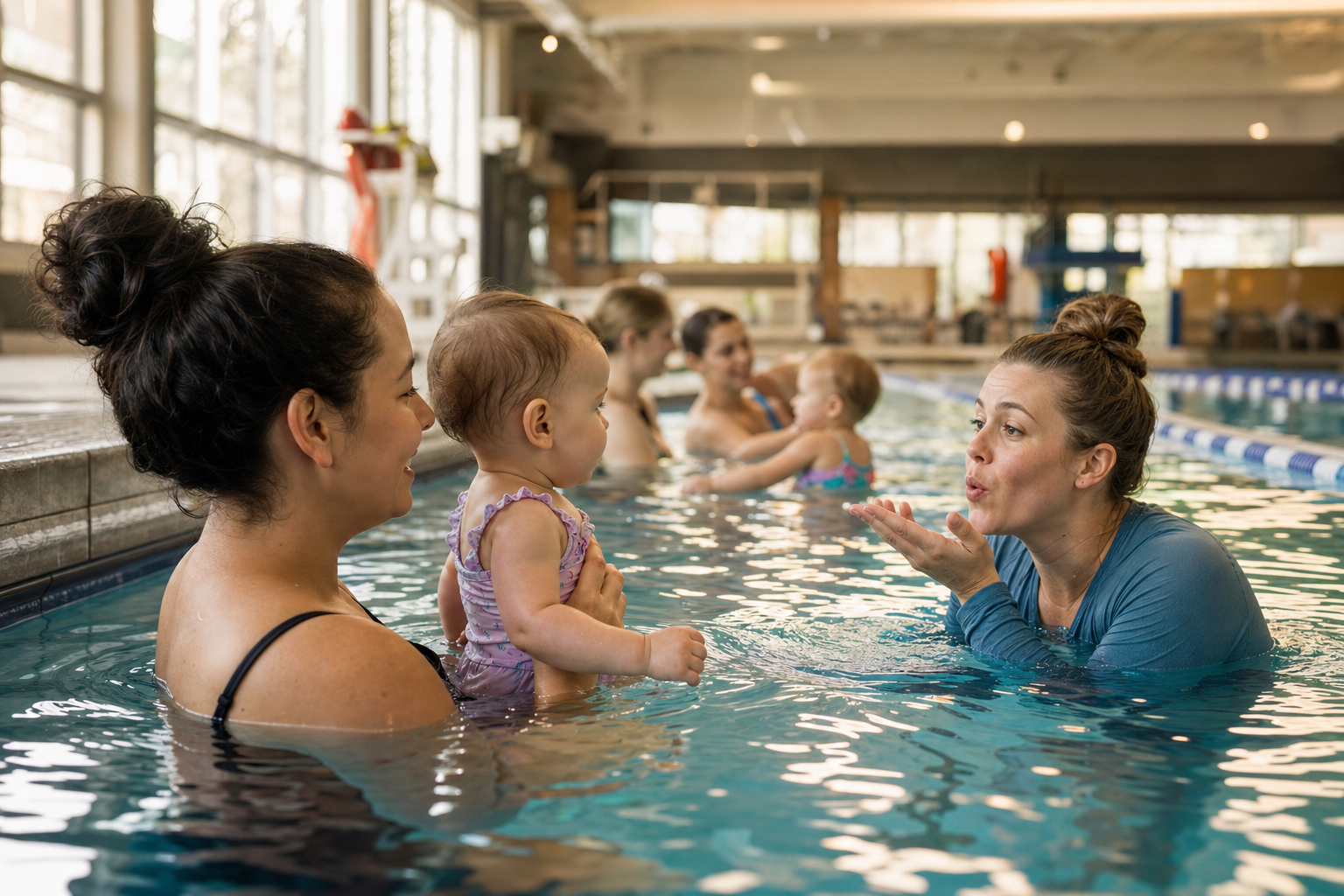
Programs like parent-and-baby water classes are fine for babies younger than 1—comforting them in warm water, exploring with gentle movements, blowing bubbles, and building trust. But formal water survival skills or underwater training are better reserved for toddlers who can physically support their heads and show developmental readiness.(boystownpediatrics.org)
Red Flags to Watch For: When “Underwater Play” Turns Risky
Parents often report that swim classes promise survival skills or claim that repeated submersion is essential. But there are key warning signs that underwater activities are no longer gradual or consent-aware.
If your baby coughs or sputters more than once after being submerged, that’s your body’s signal: enough. Repeated dunking—even brief ones—can irritate their throat, nose, or lungs. Look out for pressure on arms or torso during submersion: lifting or dragging may feel scary for the child and may cause inhalation hazards. Constant crying, whimpering, or visibly tense body language? That’s not progress—it’s distress. Trainers who laugh off crying or pressure are ignoring consent cues your child gives. It should always be okay for a baby to refuse or withdraw.(liveabout.com)
A program’s structure matters too. If submersions are frequent (e.g. many per lesson), long, or always teacher-controlled with no parental involvement, those are major red flags. According to the Guidelines for Aquatic Programs for Children Under Three Years from World Aquatic Babies & Children, young children should experience only brief submersions (1 to 3 seconds) and under six such instances per lesson, until consistent breath control is shown.(wabcswim.com)
What Safer, Calmer Progression Looks Like
A good baby swim class is gradual and responsive. The goal isn’t to force underwater survival—but to build confidence, breath control, and positive associations with water. One approach that combines safety with structure is the 10-Week Plan from swimy.org, which walks parents through gradual milestones: familiarisation, facial dips, blowing bubbles, supported floating, before any underwater transitions.
If you want a structured way to build water confidence at home, the 10-Week Plan guides you step by step.
Ideal sessions use warm water (around 87-94°F / 31-34°C), limit lesson duration for babies under 12 months, and always keep an adult within arm’s reach (“touch supervision”). Face immersion should start small—maybe pouring water over hair or letting them rest with their face just at water level—after consistent readiness. Submersion should be voluntary or signaled (a short cue) and done one at a time. The instructor must pause or change pace at any indication of discomfort.(boystownpediatrics.org)
Physical readiness also counts: head control, ability to sit with help, tolerance for water on face. For babies under 6 months these are limited; between 6-12 months, some may manage supported floating but still can't reliably control breathing. Another concern is medical: prematurity, lung issues, or recent respiratory illness may make even brief water exposure risky. Always consult a pediatrician in those cases.(boystownpediatrics.org)
[[ctababy]]
When to Ask Questions or Stop
If you see any of these during class, speak up or walk away: baby coughing heavily or choking; repeated dunking without visible signs of progress or comfort; pressing or pulling motion rather than gentle guiding; instructor ignoring your child’s cries; long submersions or doing “big” underwater stretches before readiness. Trust your gut: if it looks distressing, it probably is.
Also question any claims of “survival swim” for infants under 12 months—such promises are rarely backed by strong scientific evidence. Formal swim classes after age 1 can help, but even then, they’re just one layer of safety. Barriers around pools, life jackets, constant supervision, and caregiver education remain critical.(healthychildren.org)
Finally, avoid forced or repeated submersion at younger ages. If your child has medical concerns—like preterm birth, asthma, or previous respiratory issues—talk to their pediatrician before introducing underwater elements or enrolling in more intense swim programs. It’s better to build comfort slowly than to risk trauma or respiratory stress.(publications.aap.org)
Gentle Reminders for Parents and Caregivers
Safe baby swim class underwater activities should be gradual, consent-aware, and age-appropriate. Mistaking distress for a learning moment can do more harm than good—long-term fear of water, damage to airway health, or trauma. Ask your swim school about instructor training, class ratios, how they handle submersion breaks, and whether parents are involved.
Always check water temperature, limit exposure under 1 year, and make sure there are zero signs of forced underwater work. You want calmer progression: water dips, bubble-blowing, floating, face in water on their terms. Children benefit most when they trust the process.
If anything in class feels off—pressured submersion, crying, coughing—stop. Discuss with the instructor, and if needed, pause until your child is clearly ready. Safety and emotional safety go hand in hand.
In summary: baby swim class underwater exercises can be valuable, but only when paced to your baby's readiness, with consent, and under expert guidance. Always be ready to question methods—especially repeated dunking or pushing—because a calm, consensual process is what gives children confidence, not fear. If concerns persist, consult your pediatrician—you’re your child's strongest advocate in the pool.
120+ swimming exercises sorted by age — with video and instructions. Developed by swim instructors, completely free.

120+ swimming exercises sorted by age — with video and instructions. Developed by swim instructors, completely free.