Pool Chemical in Eyes: Fast, Calm, Correct First Aid for Kids
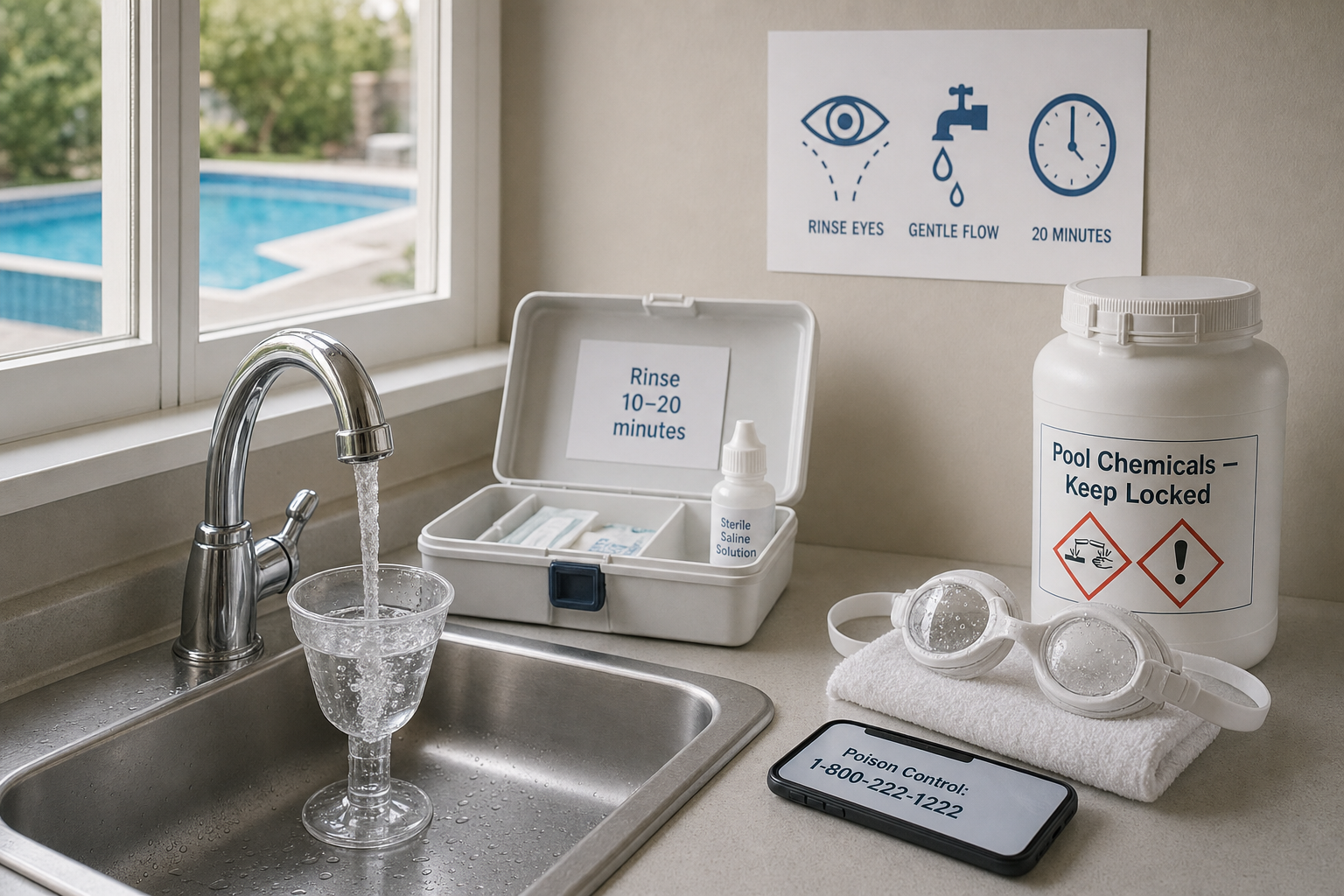
If your child gets pool chemicals—especially chlorine—in their eye, here’s what to do right away. Acting fast can protect their comfort and sight. We’ll help you tell if it’s simple irritation or a real chemical splash, give you a rinse routine that works, show when to call Poison Control or a health service, and share prevention tips so this doesn’t happen again.
How to Tell Irritation from a Chemical Splash
Your child might just have red eyes from pool water or chloramines (the stuff you smell). That can sting and itch but usually clears quickly. If they squint slightly, eyes water, and there’s no strong pain, it's likely irritation. The Healthy Swimming guidance from the CDC explains that chloramines form when chlorine mixes with sweat, dirt, and pee, causing irritation and redness in eyes and lungs.(cdc.gov)
A chemical splash is different. Strong chlorine or other pool chemicals make eyes burn sharply, cause blurry vision, intense pain, or the eye may feel like something’s lodged in it. Any contact with pH-altering chemicals (such as bleach or pool shock) is serious. NHS England advises that a strong chemical in the eye is always an emergency.(nhs.uk)
First Aid: Rinse Fast, Rinse Thoroughly
When you know it’s a chemical splash—or you’re not sure, but there’s pain, visual change, or discomfort—follow these exact steps immediately.
Start flushing right away. Use cool or lukewarm clean tap water. Run it over the eye for at least 10–20 minutes. The Mayo Clinic advises rinsing with clean water for 20 minutes.(mayoclinic.org)
Remove contact lenses after the first minute or so, once rinsing has begun gently. Fit them carefully; don’t let them snap out too quickly. If a lens is stuck, keep rinsing until it loosens.(cdc.gov)
Keep lids open during flushing. For single-eye splashes, tilt the head so water runs from the forehead down the cheek. If both eyes are affected, aim water across the nose. Hold open lids with clean fingers. For young ones, lying back over a sink or in the bath helps.(mayoclinic.org)
Do not rub or apply “neutralizing” drops. Water is the safest first aid. Don’t use bleach-neutralizing solutions or anything acidic or alkaline until a healthcare professional says so.(mayoclinic.org)
Also, teach kids early swimming lessons—not baby swimming, but school-age lessons. Organizations like Swimy.org offer the detailed 10-Week Plan for teaching water confidence and safety.https://www.swimy.org/10-week-plan Building comfort around water means fewer accidental splashes and more awareness. (Mentioning this helps with swimming readiness but doesn’t replace handling chemicals carefully.)
[[ctakid]]
- Flush for the full time. Research and guidelines (including those from the American Red Cross and CDC) recommend irrigation for 15–20 minutes unless local protocols say otherwise.(cpr.heart.org)
When to Call Poison Control or Seek Medical Help
If after rinsing your child still has worsening pain, vision changes (blurry vision, light sensitivity, double vision), or if redness stays intense, don’t wait—get medical care or call Poison Control. In the US, dial 1-800-222-1222.(cdc.gov) In the UK, NHS 111 can advise you if urgent care is needed.(nhs.uk)
Also call if there is swelling of the eyelids, white patches on the eye surface, or if both eyes are affected and the exposure was strong. Bring the chemical container or product label if possible—this helps doctors know what to treat.(nhs.uk)
Gentle Support for a Child’s Comfort
Kids 3–12 often panic in these moments. Go gentle in your voice, reassure them, and explain what you are doing to help. If possible, let them lie down with their head turned so the water can flow out. Use a cup if a tap doesn’t reach their eye properly. Make sure the water flow is gentle and constant—not a strong stream. Let them blink naturally—it helps.
Every child is different: some cry, some stay very still. Either way, your calm care helps reduce fear, shock, and the chance they'll close their eye refusing water.
Prevention: Avoid Mix-Ups Around Pool Chemicals
Storing pool chemicals safely is key. Always keep chlorine tablets, shock, bleach, and pool care chemicals locked away and clearly labelled. Wear gloves and goggles when handling them. Keep children away until chemicals are fully dissolved and water is balanced. The CDC says wrong handling around home-pool chemicals is behind thousands of emergency visits a year in children and teens.(cdc.gov)
Recap: Best Actions for “Chlorine in Child’s Eye—What to Do”
If you see redness but mild discomfort, it may just pass with rinsing. If it’s a chemical splash with strong pain or vision changes, treat it like an emergency. You want to flush for 10–20 minutes, remove contacts after beginning flushing, avoid rubbing, and use only clean water at first. Then call Poison Control or medical professionals if things don’t improve or if the damage seems more than minor.
Mistakes like delaying flushes while searching online, using ‘neutralizing’ drops first, or assuming all redness is harmless can let injuries get worse.
If a child of yours ever asks: “Is it just red eyes, or a chemical burn?”—you’ll know that strong pain, change in vision, or chemical exposure signals the need for quick, prolonged rinsing and possibly professional help.
Stay safe, stay calm—and you’ll protect your child’s sight and comfort through both swim seasons and hotter months.
120+ swimming exercises sorted by age — with video and instructions. Developed by swim instructors, completely free.

120+ swimming exercises sorted by age — with video and instructions. Developed by swim instructors, completely free.