E-Foils, Jet Skis & SUPs: Teach Swim-Zone Awareness
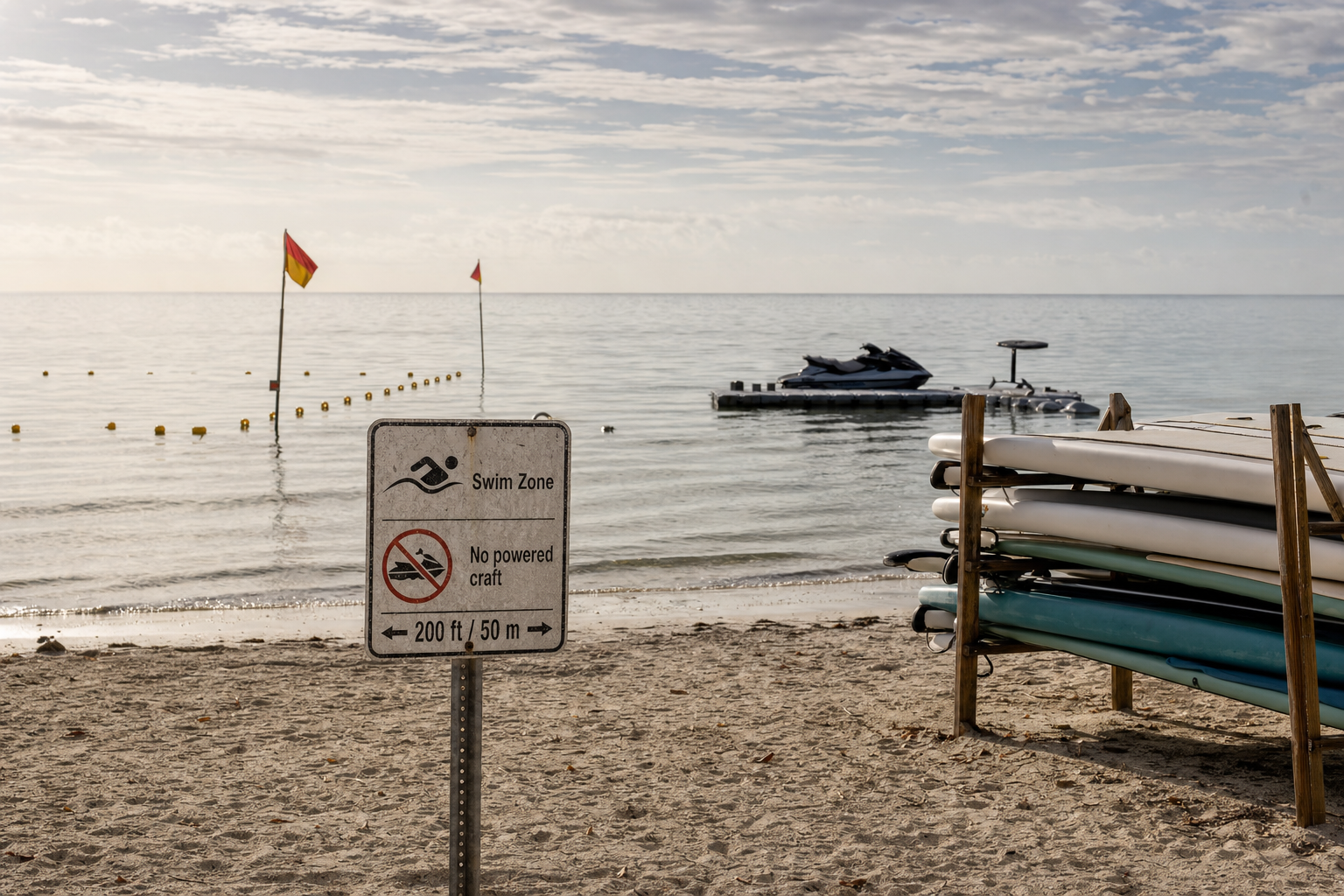
It only takes seconds for fast powered boards or watercraft to appear near unsuspecting swimmers. That’s why your family needs to know how to stay safe when e-foils, jet skis, and stand-up paddleboards (SUPs) are nearby. We’ll show how you can pick the safest swim zones, teach your kids clear rules—and avoid the dangerous assumption that a calm morning means danger is gone.
Safe Swim Zones: Where Kids Belong
The single most important rule: swim only in lifeguarded zones, between the flags. In the UK, a red-and-yellow horizontal flag marks the lifeguarded area; in the US, similar red/yellow pairs are used to show where professional lifeguards are watching. These areas are designed to keep swimmers safe from hazards including fast craft. Always check the meaning of flags on each beach.(hmcoastguard.uk)
At beaches without lifeguards, it’s still key to choose zones marked for bathing or swimming. These are often designated in coastal management plans, and lifeguard services usually provide signage. For example, in England, the Environment Agency monitors designated bathing waters from mid-May to end of September and requires signs showing the water quality.(gov.uk)
Spotting Craft Corridors & What They Mean
Fast craft—jet skis, e-foils, motorised SUPs—often have special zones or corridors. These are paths set aside for machines. Bathers should always stay out of those. In New Jersey, for instance, it’s illegal to operate a power boat or sailboard within 200 feet of a designated swimming area.(regulations.justia.com)
E-foils are treated like motorboats in many places. In Hawaii, a recent rule says e-foils must ride at “slow-no-wake” speed (often less than five miles per hour) when within 200 feet of swimmers, shorelines, or surfers.(dlnr.hawaii.gov) Manufacturers’ safety manuals also stress keeping a wide distance—sometimes 50-metres—from swimmers or other water users.(e-surfer.com)
If you want a structured way to help your child progress at home, the 10-Week Plan guides you step by step.
Life Jackets & Natural Waters: Be Prepared
Natural water—lakes, bays, rivers—is unpredictable. Always insist that children wear life jackets, even if they are strong swimmers. The US sees drowning as a leading cause of death for kids aged 5-14 in open water.(cdc.gov) Life jackets help if you misjudge currents or a child gets tired.
Never let speed or cool-factor tempt you to skip safety gear. Wearing impact vests, helmets, and bright swimwear helps make children more visible and protected. Rules around SUPs often require a PFD (personal flotation device) for each participant.(childrens.com)
[[ctakid]]
Setting Clear “Never Chase” Rules
Kids often want to chase e-foils, jet skis, or friends on SUPs. Here are rules to set with your children:
Always swim back to where you got in—never chase a craft. Not only is it dangerous, but many boards and watercraft move fast, creating wakes or currents.
Stay within the lifeguarded flags—never wander beyond or outside those zones.
If you can’t see a lifeguard, only swim when an adult is within arm’s reach.
Agree ahead of time on a meeting spot if someone drifts or gets pulled by current.
You might also sign the 10-Week Plan with your child, a swim school approach that boosts confidence in open water while teaching zone awareness.(rlss.org.uk)
False Security: Calm Morning, Hidden Risk
Just because the water is calm doesn’t mean it is safe. Tides change, craft zones may open later in day, currents shift, flags get lowered. Early morning lull can create false safety.
Always check local warnings, tides, weather, and flag status every session. Don’t assume that just because it’s peaceful, you can relax your rules. Better to keep strict boundaries and safety gear always ready.
Expert Rules for Families to Practice
Teach kids to scan for flags, signs, craft—constantly look both ways in water for boards or jetskis coming close.
Choose beaches with clear swim zones and marked “craft lanes” or corridors. These separate powered craft from swimmers.
Make life jackets and PFDs mandatory in natural water whenever fast craft or SUPs are active nearby.
Use bright colours, like neon suits or floats, so kids stand out in water.
Run drills: what to do if a dog or a toy pulls them toward a craft; how to float if caught in wake; how to call a lifeguard.
What Parents Should Know & Do
Parents should model the behaviour: obey swim-between-flags, wear safety gear, keep eyes on kids. Ask kids to teach you what they know about safe zones; that reinforces learning.
Check beach maps or apps ahead of time so your family knows where swim zones and craft corridors are. If unsure, stop and ask a lifeguard. Observe where jet skis enter the water and how SUP groups navigate—they usually mark separation.
Make a family holiday rule sheet with zones, craft rules, life jackets, “never chase” and swim flag obedience. Print it or suggest together just before beach outings.
E-foil safety swimmers, jet ski near swimmers rules, and kids beach swim zone education are essential for safe summer holidays. Use lifeguarded zones, spot where fast craft belong, and instill “never chase” as a firm rule. Summer fun becomes lasting if everyone knows exactly where swimmers belong—and what to do when powered boards are nearby.
120+ swimming exercises sorted by age — with video and instructions. Developed by swim instructors, completely free.

120+ swimming exercises sorted by age — with video and instructions. Developed by swim instructors, completely free.