Backstroke Nose Burn? Easy Bubble Tricks Kids Remember
Kids in school galas often dread that sting when water rushes up the nose during backstroke. Parents can stop that sinus burn by teaching gentle nose bubbles and a head-still alignment from the back. Here’s exactly what you need: two poolside cues and a fun drill to make backstroke breathing automatic—no more erratic kicks, no more panic at the start.
Why “Backstroke Nose Water Fix” Matters Fast
If water is going up your child’s nose, it’s usually because the chin is too high and the head tips, allowing water to flow in. That also causes “head too high” posture, which drops their hips and increases drag. Coaches point out that letting your child look at the ceiling or up toward lights helps the hips rise and form stay flat on the water.(sportssteps.com) Erratic flutter kicks send waves over the face; steady, small kicks paired with exhaling through the nose keep water out.(sportssteps.com)
Teaching backstroke breathing for kids ages 5-12 means building reliable nose-bubble control first. According to WaterWiseKids, most young swimmers master nose bubbles in just three to six lessons.(waterwisekids.com) Once kids are comfortable exhaling through the nose under water, many of the backstroke breathing problems—pinched nose, ragged kicks, head lifts—begin to correct themselves.(waterwisekids.com)
Two Simple Poolside Cues That Change Everything
These cues are short, clear, and instantly useful during practice and gala prep.
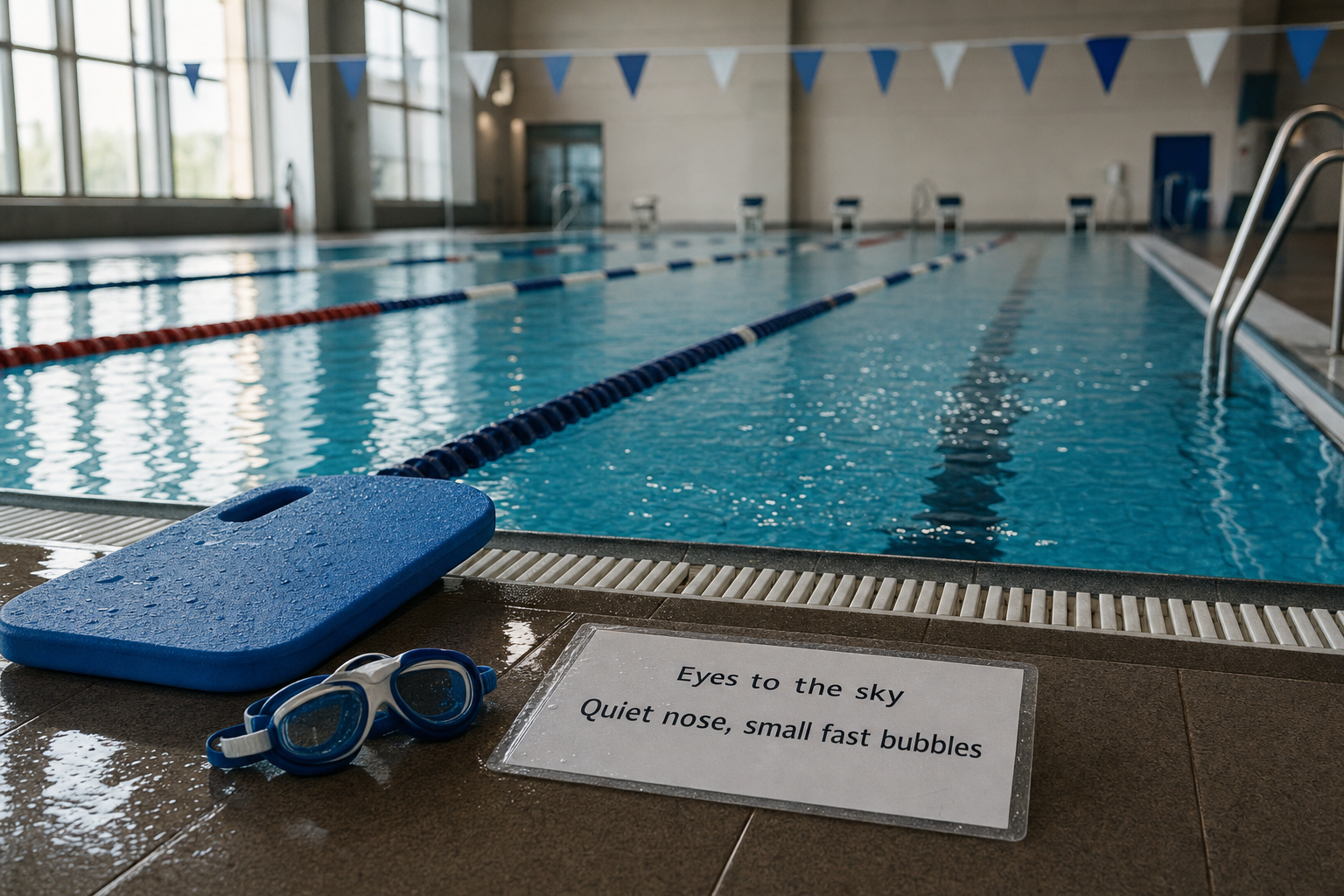
Cue 1: “Eyes to the Sky, Chin Just Enough”
Tell your kid to look upward at the sky or ceiling, not at their feet and not tipping their neck backward. Their eyes should face up; their chin slightly tucked—not pressing into their chest. This keeps hips high and prevents water from sneaking into the nose. It also helps with balance and reduces resistance.(sportssteps.com)
If you want a structured way to help your child progress at home, the 10-Week Plan guides you step by step.
Cue 2: “Quiet Nose, Small Fast Bubbles”
Remind them to keep breathing out through the nose gently and let small bubbles escape. If they blow fast or hard, water rushes in. Combine that with controlled kicks: toes just breaking the surface, but not splashing wildly.(sportssteps.com) With the nose gently exhaling, water has nowhere to enter—nose bubbles act like a little shield.
One Fun Drill to Make Breathing Automatic
[[ctakid]]
When busy with gala season, drills must be short, fun, and effective. Try this two-minute bubble set:
Set your child lying on their back at the shallow end. Arms rest flat by their sides. First, practice steady bubble blowing through both nose and mouth with the head still—“quiet nose.” Count “1-2-3” for each exhale. Then add gentle flutter kicks, keeping the body belly-up, chin just off the chest but not lifted. If hips sink or kicks are splashy, stop and correct the posture gently. Always rest once they lose control—no prolonged breath holds. In a full practice, repeat this drill 2-3 times with rest in between.
Integrating With Long-Term Learning
Drills work well, but consistency makes it permanent. For ages 5-12, you’ll see faster improvements when you follow structured plans. The 10-Week Plan from swimy.org provides a weekly roadmap—floating, kicking, arm-work, drills—that helps embed cues and breathing automatically.(swimy.org) Use that alongside lesson time so gala performances feel polished.
Safety Notes & Common Pitfalls to Watch
Keep drills short—three minutes or less focusing on breathing. Never force submerging or long breath holds. If your kid panics from sinus sting, back off and use very shallow water or flotation aids.
Here are pitfalls that come up often, and how to fix them:
- Chin too high: Neck over-arched causes the face to tip backward. Cue “look up and relax” so the chin drops just slightly.
- Erratic kicks: Big, sloppy flutter kicks send waves backward over the nose. Fix with “quiet kicks, small and fast” while focusing on hips staying near the surface.
- Holding breath instead of exhaling in nose: If breathing is paused until mouth rises, water will be inhaled through nose during face submersion. Teach nose-exhale reflex via bubble drills before advancing.
Making Backstroke “Breathing Automatic”—Gala Ready
When you’maybe two weeks out from a gala, begin combining the cues and drill into short race-pace backstroke sets. Start each set with the “quiet nose, small fast bubbles” drill, then swim laps focusing only on head stillness and nose bubbles. Praise every lap with no nose burn—positive reinforcement works wonders.
By gala day, backstroke breathing for kids should feel like breathing before each shout—automatic. Mouth free for air, nose gently pushing bubbles, body lined up belly-up, stable kicks, chin in the right place. The sinus sting stays away.
Backstroke nose water fix isn’t magic—it’s method: gentle nose bubbles, head still and aligned, well-coached drills, and consistent cues. Parents who use those elements help their kids leave the pool sore—for muscle work, not sinus burn. Your child swims into their gala with confidence, comfort, and clean technique.
120+ swimming exercises sorted by age — with video and instructions. Developed by swim instructors, completely free.

120+ swimming exercises sorted by age — with video and instructions. Developed by swim instructors, completely free.