Grandparent Pool Day: A Kind Briefing and Safety Checklist to Prevent Scares
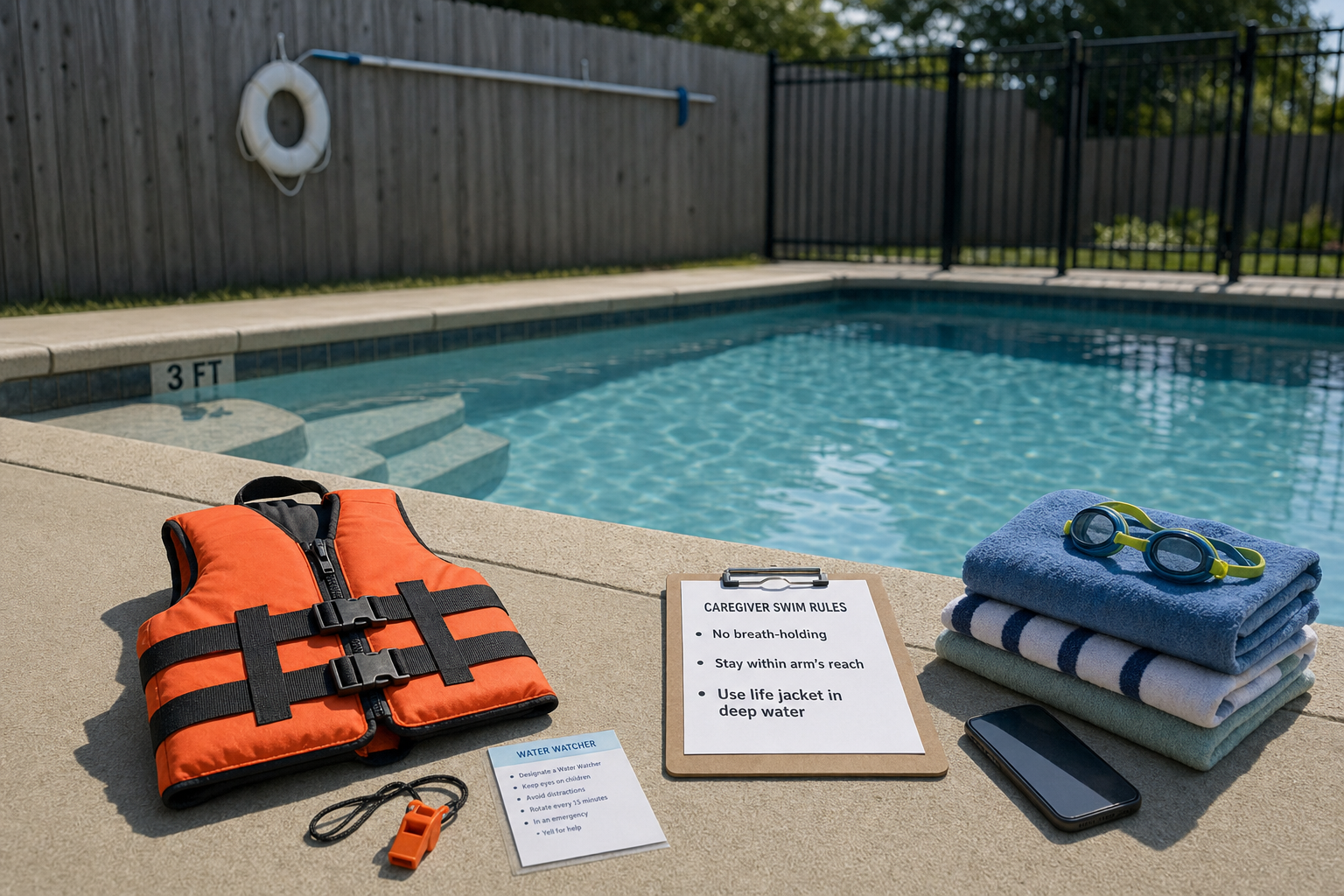
When kids aged 3-12 hit the pool with grandma, grandpa, or a caregiver, nothing should come between fun and safety. Here’s a grandparent pool safety checklist that lays out clear rules so kids know what’s expected and parents rest easy when they’re not poolside.
What Every Caregiver Should Know First
Supervision can’t be occasional or distracted—it must be close, constant, and attentive. The American Academy of Pediatrics (AAP) updated its drowning-prevention policy in mid-2026 stressing that adult supervision in or near water must be competent and undistracted, never left to someone who’s checking their phone or chatting far away.(publications.aap.org) Even children who have taken swim lessons need this level of supervision, especially in private pools or when there’s no lifeguard.(cdc.gov)
Use of properly fitting life-jackets or U.S. Coast Guard-approved personal flotation devices is part of the layered protection strategy the AAP recommends, especially for weaker swimmers or when in unfamiliar or open water.(publications.aap.org)
Grandparent Pool Safety Checklist: What to Cover Before Kids Jump In
Constant Supervision
Remind grandparents or caregivers that being a water watcher means giving their full attention. No phones, books, cooking—just watching. The supervisor should be close enough to reach the child immediately if needed. AAP data shows most fatal drownings for kids occur when supervision lapses by only moments.(publications.aap.org)
Safe Zones & Set Boundaries
“Safe zones” could mean shallow area only, pool edges, or a roped-off section. Caregivers should agree with parents where children aged 3-12 are allowed—always within reach. Teach kids to never swim alone, never enter the water without asking, and always stay where the caregiver can see them and use the edge or steps for entry and exit.(watersafetyusa.org)
Life Jacket Use
Even strong swimmers can find themselves in trouble. For non-swimmers and young school-age kids, a properly fitted life jacket adds a critical layer of protection. When boating, playing in deep or choppy water, or swimming beyond the shallow end, life jackets are not optional. Also, grandma and grandpa should make sure the equipment is in good shape and approved by safety authorities.(publications.aap.org)
If you want a structured way to help your child progress at home, the 10-Week Plan guides you step by step.
Strict “No Breath-Holding” Rule
Underwater competitions, holding breath for long distances, or games like “who can stay down longest” carry serious risks. Water Safety USA and swim safety manuals warn against breath-holding or underwater challenges—these can trigger hypoxic blackout, a dangerous loss of consciousness.(usaswimming.org) If a child wants to play games in the water, choose ones that don’t involve holding their breath for extended periods.
[[ctakid]]
Grandparent’s One-Page Caregiver Swim Rules
Child’s Name:
Date:
- Caregiver must stay within arm’s reach at all times when child is in or near water. No distractions.
- Child must always ask a responsible adult before entering the water.
- Life jacket to be worn in deep water, boating, or whenever child or caregiver feels unsure.
- Swim only in designated safe zone. Shallow and supervised only unless caregiver says otherwise.
- Absolutely no breath-holding or underwater distance holding games.
Sign here ___ (caregiver) ___ (parent)
Why These Rules Matter—and How They Reduce Risk
The AAP’s 2026 statement emphasizes “multiple layers of prevention”: swim lessons, barriers like pool fencing, life jackets, and supervision work together to prevent drownings. Relying on one method alone is risky.(publications.aap.org) Water safety programs like Water Safety USA explain that water competency includes more than swim strokes: it covers safe attitudes, avoiding hazards, recognizing risky situations, and being able to help in an emergency.(watersafetyusa.org)
If the caregiver feels unsure about how to teach or enforce rules, parents can look into structured swim lessons that combine water competency training. Organizations like swimy.org offer modular training—options such as their “10-Week Plan” for swim safety skills help children aged 3–12 gain confidence.(watersafetyusa.org)
Adding Extra Safety with CPR & Emergency Prep
Even with the rules, accidents happen. It matters that at least one adult on site knows CPR (including rescue breathing). The AAP says early rescue and resuscitation are fundamental in the drowning chain of survival.(publications.aap.org) Keep a phone poolside, know the address, and locate rescue equipment like a reaching pole or flotation device. Also post your caregiver swim rules somewhere visible by the pool.
Final Thoughts: Consistency Brings Confidence
Kids aged 3 to 12 understand rules, especially when they’re clear and always enforced. Grandparents and caregivers following a grandparent pool safety checklist create trust—kids feel safe, parents gain peace of mind. Make the “water watcher card” part of the routine. Remind everyone that supervision, rules, and safety gear are not optional—they’re life-saving. Stick with constant supervision, use life jackets when needed, define safe zones, and one rule they can’t break: no breath holds. That’s how holiday pool days become fun memories, not emergency stories.
120+ swimming exercises sorted by age — with video and instructions. Developed by swim instructors, completely free.

120+ swimming exercises sorted by age — with video and instructions. Developed by swim instructors, completely free.