Swim After Travel: First-Day Pool Rules for Babies 0–36 Months
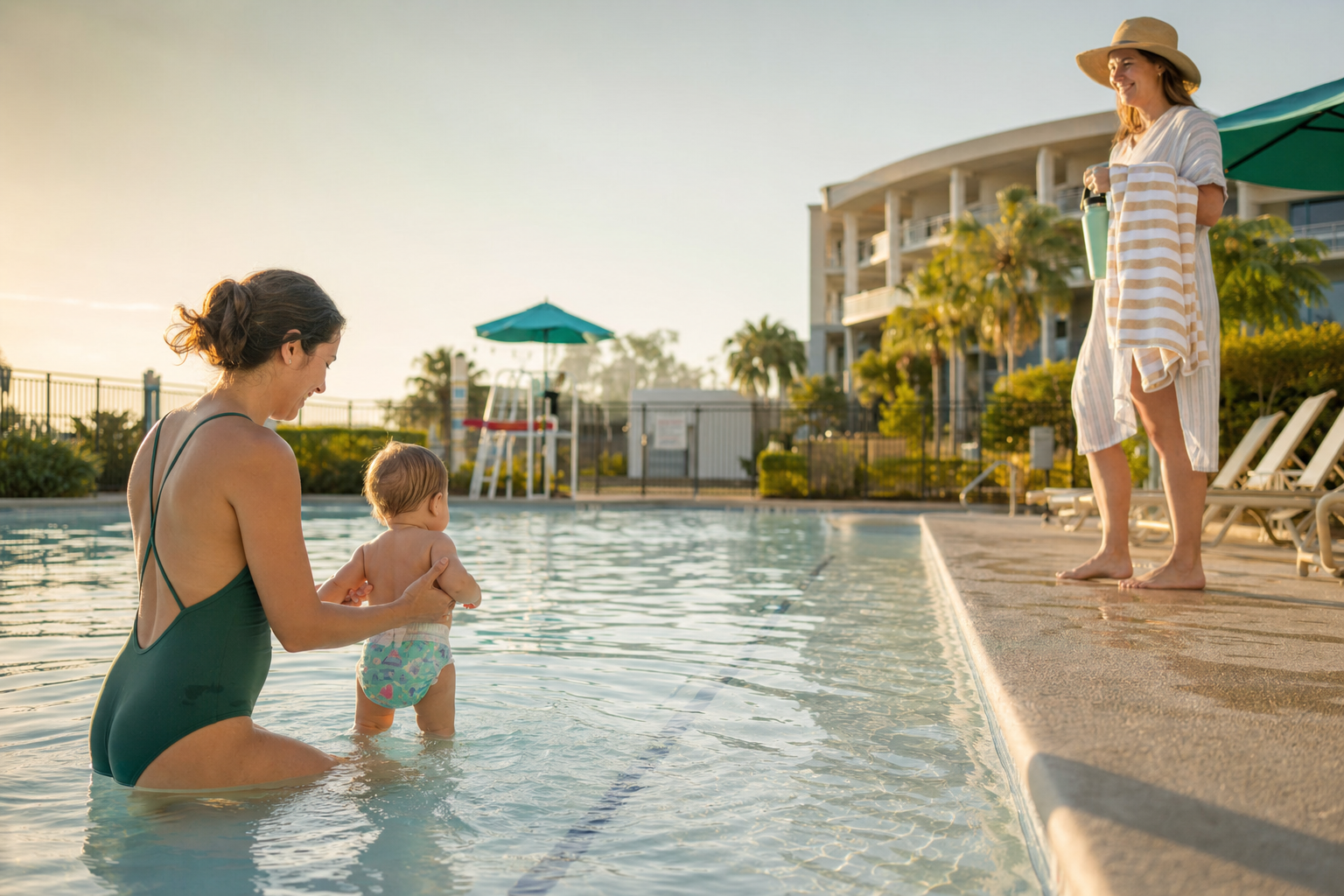
Heading straight for the pool the moment you unpack sounds tempting when you’re on holiday or visiting family. But before you let a tired little one dive in, there are some safety rules and timing tricks that protect both baby and parents. Here’s what you should do for your first swim with your baby after a long flight, drive, or change in routine.
Recovery Comes First: Timing, Rest & Hydration
Flying across time zones or sitting through hours on the road exhausts babies more than adults often realize. Jet lag or travel fatigue can leave them cranky, dehydrated, and low on energy. Studies show that crossing more than two time zones messes with sleep and appetite, and young children are especially vulnerable.(cdc.gov)
Before heading to a hotel pool with baby or relative’s backyard pool, aim to let them rest. A nap or two restores energy and helps reduce fussing or tantrums—both of which peak when babies are overtired. Also keep baby well hydrated: small, frequent sips of water (for over six months) or breast milk/formula help. Avoid heading straight into the pool after flying or long travel unless baby has had rest and proper fluid intake.
Inspect the Pool Area Before Swim Time
Once baby is somewhat rested, do a full safety check of the pool environment. Look at gates and barriers: make sure lookout doors are self-closing and self-latching; check fences are intact. Depth changes, slippery pool decks, missing drain covers, and unclear depth markers are all real hazards. Many hotel or motel pools are unguarded. According to a recent checklist from WaterWiseKids, most pools at lodgings post signs like “Swim at Your Own Risk,” meaning supervision is entirely your responsibility.(waterwisekids.com)
Also verify cleanliness—water that looks cloudy, or smells unpleasant, could indicate poor chemical balance. “Swim diapers” are often required and help cushion against illness and contamination. These inspections should happen before any child gets in the water.
Planning the First Swim: How Long, Where & With Whom
Keep the very first swim short. For babies and toddlers, 10–15 minutes is plenty. Spending longer when they’re already tired, hungry, or out of routine increases risk of slipping and drowning. For those aged 6 months to 36 months, doing parent-child water play classes can be a fun routine; the American Academy of Pediatrics notes that swim lessons usually begin after a child turns one year old.(healthychildren.org)
If you want a structured way to build water confidence at home, the 10-Week Plan guides you step by step.
Make sure an adult is always providing touch supervision—that means remaining within arm’s reach in the water for infants and weak swimmers. Avoid relying on floats, neck rings, or toys to keep baby safe. These can create a false sense of security and aren’t a substitute for direct supervision.(healthychildren.org)
[[ctababy]]
Some parents like to come with experience or training behind them. A structured swim-skill program such as the 10-Week Plan from swimy.org helps families build confidence, water adjustment skills, and safety awareness over time. (This helps for more than just bathing or vacation dips.)
Jet Lag, Routine Disruption & Safety Plan
Jet lag doesn’t only mean restless nights. It also means babies are more easily startled, may wander during day naps, or become inattentive in new spaces. When supervising at a hotel pool with baby, keep this in mind. If supervising adult is exhausted or distracted—perhaps by luggage, checking in, or settling into unfamiliar spaces—don't let baby go swimming yet. Wait until both caregiver and child are alert and attentive.
Missed naps or unfamiliar surroundings often lead to shorter windows of predictability. Plan swim time around baby’s usual schedule if you can. If nap is overdue, postpone pool time until they’ve rested. Calm supervision wins over rushing into water just because it’s hot or everybody else is swimming.
Safety Rules to Follow: Everyday Pool Habits
Whenever baby is near water—homes, hotels, relatives—these rules carry you through every season, be it summer travel, winter sun trips, or holiday breaks.
When you’re with baby at the pool, always assume you are the lifeguard. Even if other adults are nearby, or there appears to be staff around, only you can commit to full attention. Avoid multitasking—phones, books, or chatting loudly take your eyes off baby. Also walk, don’t run around pool decks, change swim diapers in the bathroom—not poolside. Sun protection, proper swim gear, and taking breaks matter, too.
The American Academy of Pediatrics recommends swim lessons for children after they turn one year old. Lessons help build skills and awareness, but they do not make children drown-proof.(healthychildren.org)
Putting It All Together: What You Do First Day
When you arrive after travel, first reset routine. Offer comfort, feed, hydrate, give a nap. While baby sleeps or recovers, unpack enough to identify hazards around your room and the pool area. Once baby is rested, dig into your pre-swim inspection. If everything looks safe and you’re alert and available for supervision, time a short swim session—15 minutes in shallow water. Use touch supervision. Use swim diaper. Use sun protection. After swim, towel off, offer snack or milk, and transition into familiar bedtime routine.
Swimming with your baby after you travel can be joyful and refreshing. When timed right—hydrated baby, alert parent, safe pool—you build positive experiences instead of risky moments. Safe and happy splashes await!
120+ swimming exercises sorted by age — with video and instructions. Developed by swim instructors, completely free.

120+ swimming exercises sorted by age — with video and instructions. Developed by swim instructors, completely free.