Swimming After Heavy Rain With Babies: What Parents Must Know
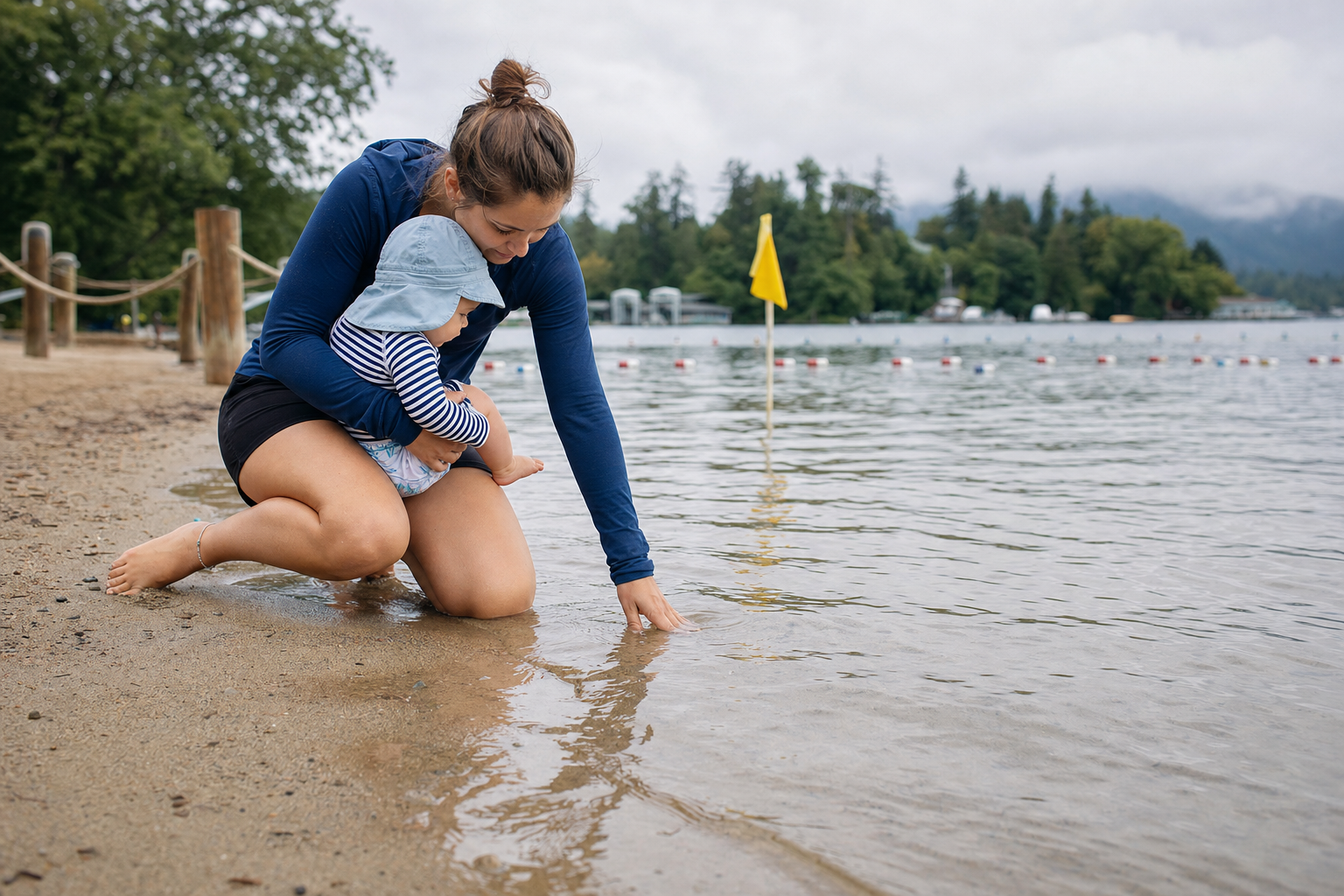
When you've got a baby aged 0–36 months, diving into water after a storm might seem harmless, but nature has other plans. Rain sends polluted runoff—animal waste, chemicals, untreated sewage—straight into beaches, lakes, and rivers. This poses serious risks for babies who are more vulnerable to germs because their immune systems are still developing. The Centers for Disease Control and Prevention (CDC) warns to not swim in water made cloudier by heavy rain, and to observe water quality advisories or beach closures. (cdc.gov)
Keep reading to find out how rain changes water quality, what specific dangers babies face, and a simple go/no-go checklist you can use so every water outing is safe.
Why Rain Can Make Natural Water Unsafe
Heavy rain washes pollutants off roads, lawns, farms, and urban surfaces. That runoff gets stirred up and carries bacteria, parasites, animal feces, and other harmful substances into natural waterways. (epa.gov)
This includes combined sewer overflows in older cities where sewage and stormwater share pipes. When overloaded, untreated sewage can spill directly into rivers and down to beach water. The result: elevated levels of bacteria like E. coli or Enterococcus. (hsph.harvard.edu)
Natural water affected by rain often becomes cloudy or tinted brown. It may smell musty, have visible debris, foam, or appear unusually discolored. These are warning signs that levels of pathogens might be high. (cdc.gov)
What Risks Do Babies Face After Rainy Storms
Babies are more likely to get ill from harmful germs because of their developing immune systems and smaller body size. Ingesting even small amounts of contaminated water can lead to gastrointestinal problems, skin infections, and ear or eye irritation. (epa.gov)
Harmful algal blooms (HABs) can sprout in warm, still water after rain. These blooms release toxins that can affect skin, respiratory system, and sometimes even liver function. Signs of a bloom include fuzzy green edges, foam, streaks, or discolouration. These toxins are not always visible or smelly. (cdc.gov)
After heavy rain, lake, river, or beach advisories often go up because naturally occurring bacteria multiply, and sewage or pet waste enters the water untreated. Babies who swallow water, have open skin or wounds, or even poor diaperginge practices are at elevated risk. (cdc.gov)
If you want a structured way to build water confidence at home, the 10-Week Plan guides you step by step.
Go/No-Go Checklist: Safely Deciding to Swim After Rain
Here are simple steps parents can use to decide whether to take a baby swimming outdoors after heavy rain:
Check for local advisories or beach closures. Always look up your city or county’s health department alerts before you plan any swim time. (cdc.gov)
30 minutes to 72 hours rule. Research like that from Southern California shows that bacterial levels soar after storms, often staying above safe limits for up to three days. (pubmed.ncbi.nlm.nih.gov)
[[ctababy]]
Inspect the water visually. Do not swim if the water looks cloudy, brown, contains foam or sediment, or smells unusual. If there are visible pipes emptying into the water, or dead fish or unusual algae, stay out. (cdc.gov)
Avoid fast-moving or floodwater. Rivers or lakes with rapidly changing flow after heavy rain can sweep young children off their feet and carry contaminants. (whoi.edu)
Skip natural water when unfamiliar or unmonitored. If the swim spot isn’t regularly tested and you have no way of verifying water quality, it’s safer to stay away—especially with babies. (oceanservice.noaa.gov)
Ensure good post-swim hygiene. Change wet clothes immediately, rinse baby’s skin, clean ears, and wash hands after swimming in natural water. (cdc.gov)
What Parents Can Do to Stay Water-Safe
If the atmosphere makes you nervous but you still want your baby to enjoy splashing, here are safer options and tools.
Public or private pools that meet safety standards are typically treated and filtered, so they are much safer after rain than natural water. If you're using a public pool, choose one that reports up-to-date water treatment maintenance. (cdc.gov)
Look for swim programs like the 10-Week Plan from swimy.org, which offers structured progressions for babies and toddlers to learn water safety in more controlled environments. This gives parents confidence and lets little ones build comfort without exposure to risky natural water conditions. (cdc.gov)
Teach babies to stay out of their mouths with water, avoid swallowing it, and avoid getting water in ears if possible. Use waterproof bandages over open cuts or healing skin. These small tips protect little bodies well. (cdc.gov)
Also, watch for signs of harmful algal blooms or water notices posted online, at entrances to swims areas, or through community alert systems. Even when markers are absent, using sight, sound, smell, and local weather patterns can guide your decisions. (cdc.gov)
Final Word: Prioritize Safety First
Parents deserve to enjoy playtime in water with their babies without worry. But after heavy rain, nature often shifts gears and makes swimming in lakes, rivers, or at the beach riskier. The CDC is very clear: you must know water quality before visiting natural water; avoid swimming in water made cloudier by heavy rain; and follow posted advisories or warnings. (cdc.gov)
Following the checklist above gives you practical steps to decide whether to go for that water outing or wait a few days until it's safer. Having that peace of mind is part of making every water moment with your baby a happy, healthy memory.
120+ swimming exercises sorted by age — with video and instructions. Developed by swim instructors, completely free.

120+ swimming exercises sorted by age — with video and instructions. Developed by swim instructors, completely free.