Two-Kick Breaststroke: A Timing Trick for Ages 7–10
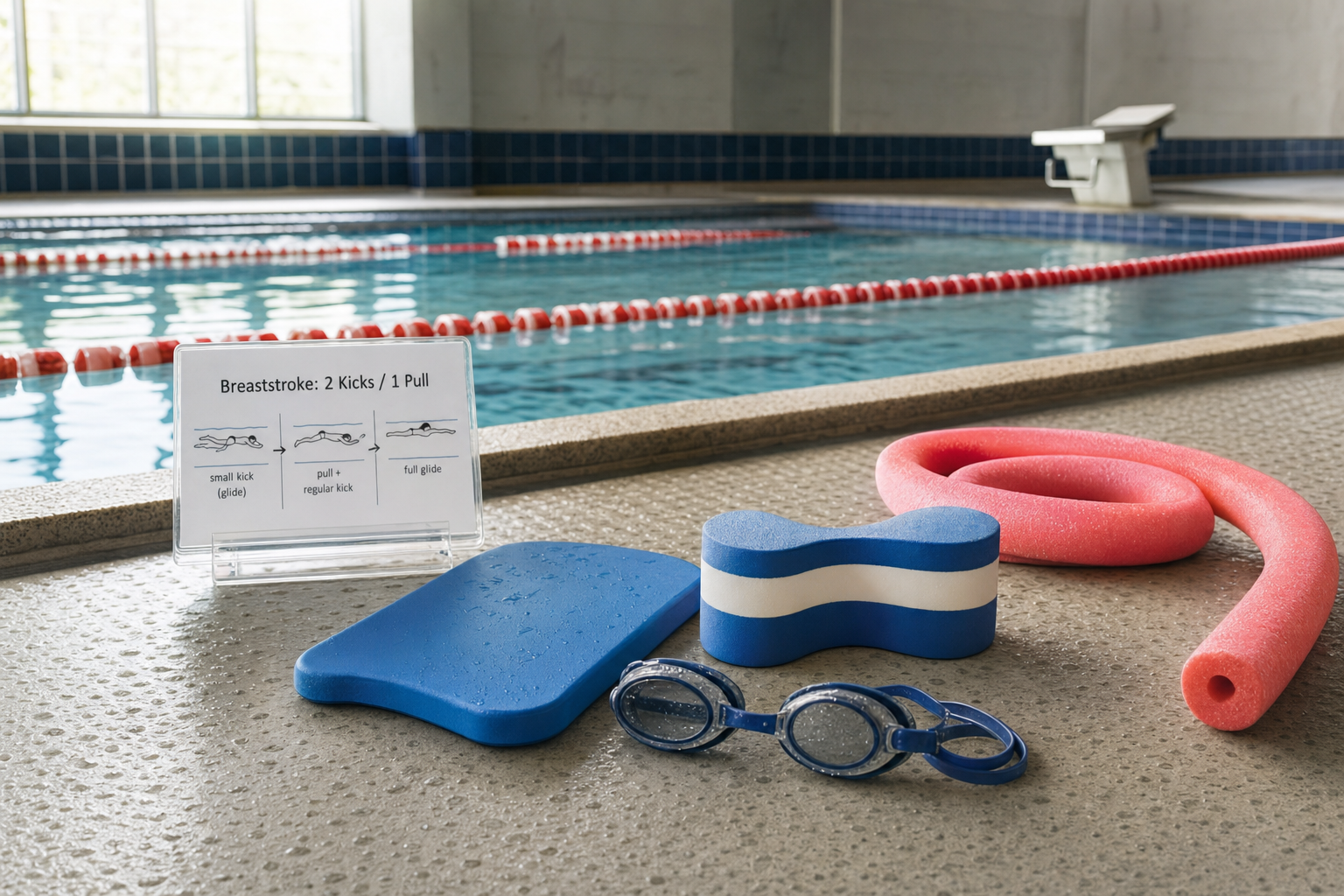
When your child ages 7–10 is learning breaststroke, it’s common for strokes to be rushed and glides cut short. To help them feel body stretch, rhythm, and smooth movement, try this two-kick pattern: a gentle kick during the glide, regular kick with the pull. This timing trick keeps knee action safe, encourages longer glides, and teaches rhythm without turning practice into a sprint.
What Exactly Is the Two-Kick Pattern?
A “two kicks, one pull” drill means your child pushes off in a streamlined position, then does a small kick while arms stay extended (glide-period), ahead of the real pull where they kick regularly. It slows the cycle and clarifies the proper order: small kick → pull → regular kick → full glide. Experts at SwimSmart Today call this the “No Arm Breaststroke” or Breathe-Kick-Glide (BKG) timing when focusing just on breath, kick, and glide without sweeping full arm pulls. (swimsmarttoday.com)
This drill helps enforce the idea that the best glide comes after the regular kick and that arms should stay extended until the legs finish their second kick. Coaches at Swim Wales designed a drill in their breaststroke progressions where “2 kicks / 1 pull” forces focus on streamlined position and clean timing—breathing and kick before the pull starts. (swimwales.org)
Why This Helps Children Aged 7–10
First, it builds stretch: with the body fully extended after each kick, kids feel how a straight, streamlined position glides through water. This reduces lumbar strain and keeps hips from dropping. Second, the rhythm becomes clear. The pattern prevents rushing: small kick during glide gives rest, then the pull + regular kick propels forward. Third, it is knee-friendly: the small glide kick reduces stress on knees because full whip kicks are done more consciously and with less force, never forcing wide recovery or letting knees flare outward. According to SwimBeat, keeping knees close under the water during recovery is part of avoiding drag and pain. (swimbeat.app)
How Parents Can Set It Up and Cue It
Set-ups should be simple and fun. Here are steps you can try with your child:
Start each lap from push-off with arms overhead in a streamline. Say “small kick, pull & big kick, glide” or use playful phrases like “tiny jiggle, power push, stretch out”. Let them practice just the timing first, without worrying about speed. You can use goggles so your child sees how feet come back under water instead of wide above plank level. Cue knees staying under the surface, feet flexed, toes pointed outward as they kick and snap together.
If you want a structured way to help your child progress at home, the 10-Week Plan guides you step by step.
Use tools: a pull buoy between thighs to feel proper knee width, or a pool noodle to help maintain body buoyancy so the glide feels easier. Work in short distances—say 10-15 meters—so focus stays on technique, not fatigue.
[[ctakid]]
A structured plan helps improve steadily. The 10-Week Plan at Swimy.org includes this drill among its weekly progressions. (swimsmarttoday.com)
Checking for Knee-Friendly Leg Action and Smooth Glides
Watch for knees tracking linearly: during the kick recovery (drawing heels toward hips), knees should stay fairly close together, not splayed wide or rising above the water. If you see knees lifting or legs pushing outward awkwardly, it can stress joints. Normalize that knees stay submerged and the feet flex outward then snap back to join.
Look for streamlined glides: after the regular kick, arms pressed forward, body stretched flat, head looking down. If hips drop or body sinks between strokes, the streamline isn’t correct. Correct by emphasizing “slide long, stretch tall”—loosen shoulders, tighten core to keep body straight. Checking from the side or underwater (if possible) helps. Coaches from SwimSmart Today use drills like “kick on wall” or “streamline kick” to give children feel for kicking with the correct knee and hip mechanics without compromising safety. (swimsmarttoday.com)
Drift Traps: What to Avoid
Don’t let this drill turn into a race. The goal is control, not speed. If you catch your child pulling too soon or rushing into the next stroke, remind them that pull only begins after both kicks done and arms are extended. Maintaining patience is key.
Also, be wary of letting hips drop between kicks or during glides. If body is collapsing in the middle, it adds drag and strains lower back. Cue the feel of stretching like a board between push-offs, keeping core engaged.
Avoid wide kicks that turn knees outward too far. Pain in knees or discomfort is a sign the motion is too aggressive. Keep feet flexed, kicks narrow, knees comfortable.
Putting It All Together: Practice Tips and Sample Sessions
Try sessions of 2-5 lengths focusing on the two-kick pattern. Warm-up with gentle free kicks and streamline floats, then add one lap with the two-kick drill. Alternate with normal breaststroke so children feel the difference. For example, in a 20-minute swim: 5 minutes warm-up, then 4×25m two-kick pattern, rest in between, then 2×25m normal stroke implementing what they felt. Gradually increase as comfort and timing improve.
Celebrate small wins: longer glide, smoother knee recovery, no pain. Remind them this is about form, not medals. When the knee-friendly leg action and rhythm become natural, the stroke becomes smoother, more efficient, and more enjoyable.
Aiming for body stretch, rhythm in breaststroke, and protecting knees is completely possible with the two-kick pattern. As you practice, you’ll see arms and legs work in harmony, each stroke stretched out, glide extended, knees safe. The payoff is a more elegant breaststroke, better speed without strain, and swimmers who feel confident in the water.
120+ swimming exercises sorted by age — with video and instructions. Developed by swim instructors, completely free.

120+ swimming exercises sorted by age — with video and instructions. Developed by swim instructors, completely free.