Ask-Permission Water Habit for Toddlers: A Safety Routine That Saves Lives
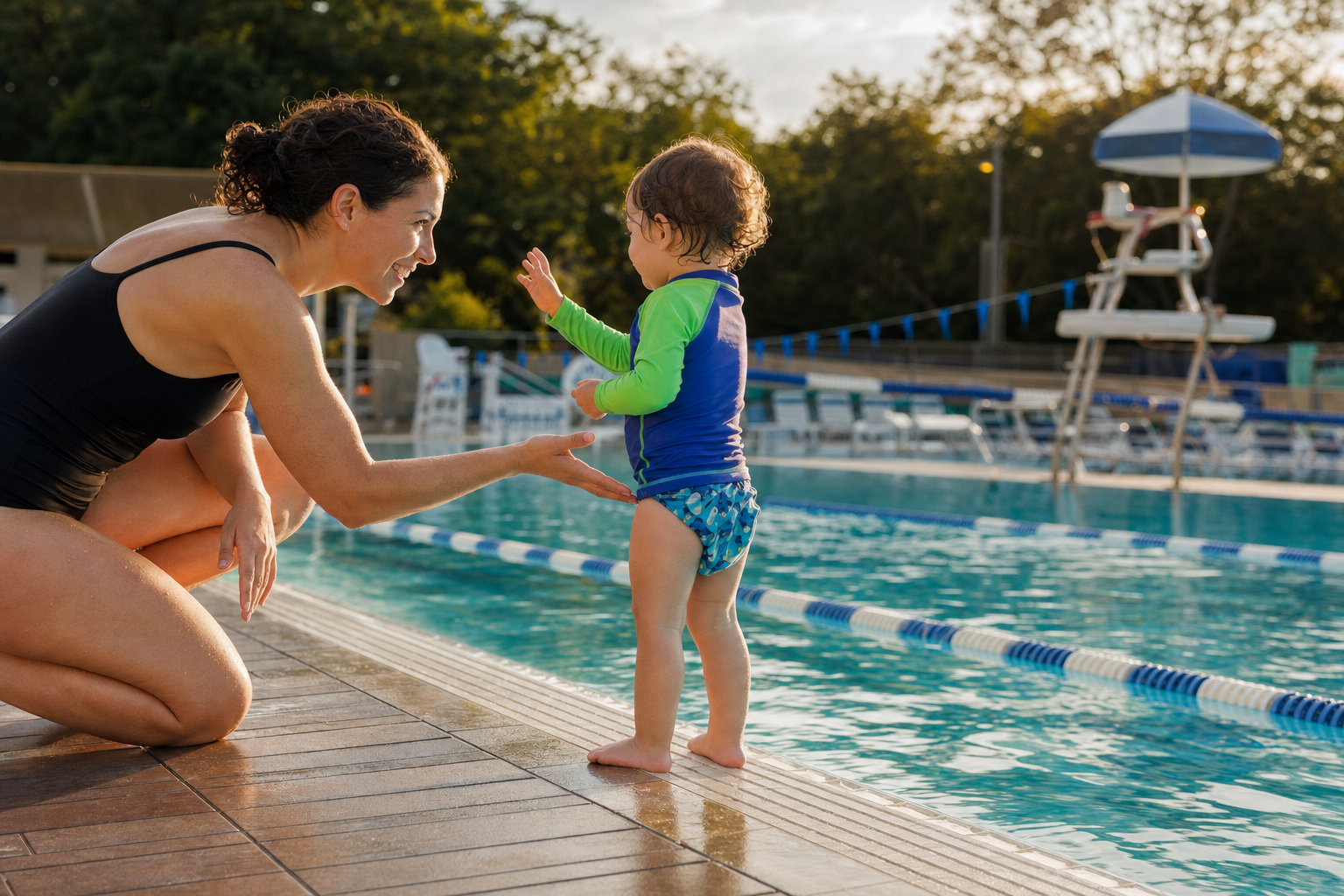
When a child learns early that they must stop, look at you, ask or signal before entering water—and only go in with help—they’re getting more than a rule. They’re training their impulse control and giving you more time to protect them. According to the American Academy of Pediatrics (AAP), requiring toddlers to ask an adult’s permission and having an adult present before entering water is a crucial safety practice decade in and decade out. (publications.aap.org)
What Does “Ask-Permission” Practice Look Like
It’s a simple routine that anyone can use at home, at swim lessons, or at a family pool. First comes Stop—no grabbing, no running toward water. Then Look at the Adult so the child becomes aware of what you’re saying. Next, Ask or Signal—a word like “Can I?” or a gesture like pointing. Finally, Enter Water Only with Help—either you guide them in physically or stay within arm’s reach. This habit teaches impulse control, which is part of the AAP’s guidance for reducing drowning risk. (publications.aap.org)
Even for babies aged 6–12 months, you can start using baby-friendly cues like “Wait” or holding their hand, adapted to their understanding. As toddlers between 12–36 months grow, they can practice louder, clearer communication—“Can I get in the pool?” or using a specific signal. The more consistent you are, the faster the habit sticks.
Why It Yields Real Benefits
Impulse control doesn’t just help toddlers avoid plunging into water prematurely. Early habits around pausing and asking teach emotional regulation too. Young children start to understand boundaries—and know who is in charge around water. The HealthyChildren.org swim lesson guidance explicitly states that even in formal lessons, toddlers should always ask permission from parents or lifeguards before entering pools or natural bodies of water. (healthychildren.org)
Statistically, not having permission or unsupervised access are major risk factors. According to one technical report, in 86% of toddler drownings at pools or spas, the child had entered without permission or surveillance. (publications.aap.org)
How to Build the Routine: Putting It into Practice
Start right away—at home, in splash pads, on trips. Pick a consistent phrase or signal. For instance: “Wait, look, ask, then water with me.” Use it every single time, in every setting. If you use different cues at swim lessons, copy those cues at home: consistency reinforces understanding.
If you want extra structure to guide you, the 10-Week Plan from Swimy.org offers step-by-step building blocks tying safety routines and swim skills, including safe entry cues. It mixes playful practice, safety lessons, and instructor-aligned goals. (swimy.org)
If you want a structured way to build water confidence at home, the 10-Week Plan guides you step by step.
At first, sessions should be short and very simple. You might role-play near the side of a bathtub. Pretend one edge is a pool, walk through stop-look-ask, then slide in your lap. Always praise even small compliance—your toddler will love doing it “right” when it earns your smile and attention.
Age Stages & Typical Pitfalls
- From 6 to 12 months, babies are just getting used to water. Use your cues and physical support—every entry should involve your presence. This prepares them for later years.
- Between 12 to 36 months, toddlers become more mobile, more thrillingly independent. This is the golden window to insist on ask-permission habits. At age one, the AAP says it makes sense to start swim lessons and teach that water entry always needs caregiver okay. (healthychildren.org)
[[ctababy]]
Common pitfalls include enforcing the permission rule only during formal lessons but relaxing it at hotels, splash pads, or friends’ houses. The AAP warns that all settings matter—same rule everywhere. Another mistake is letting fear or rush take over, and allowing “just this time” to lapse into routine relaxations.
Safety Reminders: Habits Are Not Enough
Even with perfect water safety rules, they don’t replace essentials. Barriers like a four-sided fence with a self-latching gate around pools are critical. The AAP also mandates close, constant adult supervision—within arm’s reach or touch supervision—for any infant, toddler, or weak swimmer around water. (healthychildren.org)
Other layers include swim lessons beginning after age one, life jacket use near any open water, and emergency readiness including CPR knowledge. The “permission habit” is one vital layer—strong, consistent, and repeatable—but it is not the only one. (healthychildren.org)
What The Experts Say
HealthyChildren.org emphasizes that lessons should instruct children to always ask before entering water, whether it is a parent, instructor, or lifeguard giving permission. (healthychildren.org) The AAP’s updated policy confirms the importance of requiring children to obtain adult permission and presence before entering water, regardless of whether they’ve had lessons or not. (publications.aap.org)
How to Reinforce the Habit Long-Term
Use repetitive practice: home baths, backyard's kiddie pools, beaches, family pools, splash pads. Every single time, cue stop-look-ask—and only allow entry with help. Praise compliance and gently correct missteps, always without shaming—toddlers learn through encouragement.
Model the behavior yourself: before you enter water, say “I’m asking for help” or “Should I?” loud enough to hear. When others visit with toddlers—grandparents, babysitters—share your cue and ask them to use it too. Even if it's tempting, don’t skip during vacations or parties—drownings can happen anywhere. In the technical report, many tragic incidents happen because rules were loosened in “casual” settings. (publications.aap.org)
Bottom Line
Teach your toddler a clear, consistent water safety rule: stop, look to you, ask or signal, and enter only with help. Start early—even around six months—with baby-adapted cues. Enforce this pattern in all places and at all times. While permission habits greatly reduce risk, they do not replace barriers, swim lessons, or arm’s-reach supervision. Following AAP guidance, this rule becomes a non-negotiable first layer in your toddler water safety rules. With it comes better impulse control, more peace of mind, and real safety—from pool, beach, splash pad, or grandma’s backyard.
120+ swimming exercises sorted by age — with video and instructions. Developed by swim instructors, completely free.

120+ swimming exercises sorted by age — with video and instructions. Developed by swim instructors, completely free.