Kick Sets Kids Love: Short, Fun, Faster Legs
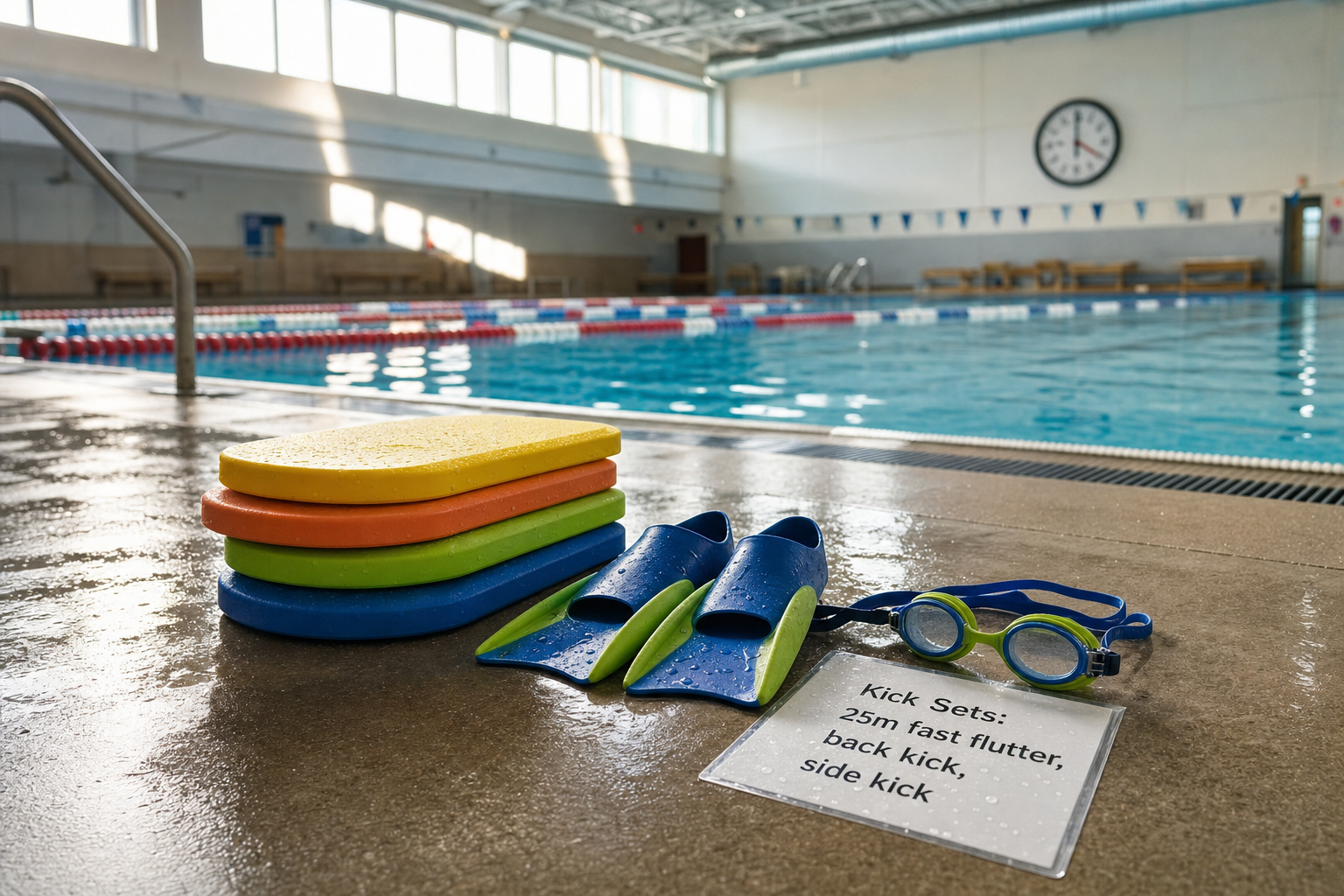
If your child groans at the idea of rigid kickboards and endless laps, this is for you. Flip the switch with quick, varied kick sets that build power, snap their flutter kick to life, and keep them coming back for more. Here’s how to spot progress fast, what a truly strong kick looks like, and some fresh sets parents and coaches can use between swim lessons or during team warm-ups.
What a Good Kick Looks Like & How You’ll Know It’s Getting Better
A strong flutter kick comes from the hips—not the knees. The legs stay straight with just a slight bend, ankles relaxed, feet pointing, creating a whip-like motion. Avoid big splashes, long wide kicks, or “bicycle” kicking—that wastes energy and slows things down. When done right, the kick keeps the hips high and the body aligned. It stabilizes rotation and helps the stroke flow together. These elements are well explained in guides such as “Flutter Kick - Master Your Swim with Proper Technique,” and "How to Improve Flutter Kick Fast" at Alpha Swim Club. (rillieux-natation.com)
You’ll see progress when your child spends less effort keeping their hips above water, kicks snappily with smaller, faster movements, and loses the tendency to lift their head to breathe—heads down or turned to the side during freestyle helps avoid straining the neck and shoulders. Add in back or side kicking to balance things out. Watch too for less knee bending and more ankle flexibility: pointed toes and fluid ankles make all the difference. (teachyourkidstoswim.com)
Short, Varied Kick Sets That Build Speed & Fun
Rigid boards and long, monotonous kicking sessions lose the attention of ages 6-12. Instead, slice the work into shorter pieces, mix in different positions, and switch in non-board work. Below are sample sets that work well between lessons or as warm-ups for teams. They’re safe, moderate in volume, and always include back or side kicking to reduce neck and shoulder strain.
Sample Sets (All Ages 6-12)
Set A: Kickboard + Body Position Mix
30 seconds rest between each. Do 2 rounds.
• 25m kick with kickboard, freestyle (“fast flutter kick”)
• 25m back flutter kick without board, streamline position
• 25m side kick on left side, arm extended, without board
• 25m side kick on right side, same
If you want a structured way to help your child progress at home, the 10-Week Plan guides you step by step.
Set B: Speed Bursts with Recovery Swim
Repeat 4 times:
• 10m freestyle kick all-out (with or without board)
• 15m easy freestyle swim, focus on using the kick rhythm you showed off in the hard part
Set C: Warm-Up Combo
Use a variation of the U.S. Masters Swimming “Freestyle Kick” guide set - mix back kick, side kick, vertical kick and swim to reinforce technique while keeping kicks snappy and varied. (cd2.usms.org)
You can also follow something like the 10-Week Plan at Swimy, which includes kick drills with land work, side kick, short board kicks, and phased progression so your child improves steadily without burning out. (swimy.org)
Avoid overusing long fins just to feel fast; they can conceal weaknesses in technique and give a false sense of speed. Short fins are better when used, and only sparingly. (swimy.org)
[[ctakid]]
How To Spot Quick Progress Between Lessons
Look for three main changes in performance: shape, speed, and endurance.
Shape means body line: hips stay higher in the water, less head lifting, feet barely breaking surface. Speed means quicker kicks over short bursts (25m or less), high effort with usable rest. Endurance means kicking well—not sloppy—toward the end of warm-ups or mixed sets.
You’ll also notice better posture: streamlined bodies, pointed toes, relaxed ankles. These tell-tale signs often show up before the child wins races—parents often report seeing smoother legs, less flailing, more confidence in turns and starts.
Monitoring a few key drills each week lets you compare. For example, try a timed 25m kick with board one week, and repeat after two weeks using the same rest. Even small gains of half a second tell you that things are improving.
Safety, Balance & Technique Pitfalls to Avoid
Knee-bending kicks: either during flutter kick or when trying to kick harder with a board, children may bend their knees too much. This throws off their body line and wastes energy. Keep knees just soft, not wide, and drive movement from the hips.
Head-up kicking only: staring forward instead of keeping face in the water (or breathing to the side) causes shoulders to lift and strain. Mix back kick and side kick so neck stays relaxed and shoulders gain balance.
Overusing long fins: they may deliver speed, but they can prevent the swimmer from developing ankle flexibility and sensitivity in the water. Use short fins sparingly, remove them often to keep technique honest.
Volume overload: volume that’s too big, too often, leads to fatigue and sloppy kicks. Moderate volume, focusing on quality, helps kids build sustainable strength and speed without injury or burnout.
Putting It All Together for Year-Round Gains
Whether it’s cold or hot, lessons or warm-ups, these kick sets work year-round. On low-pressure days, stick with Set A or combinations that mix board and non-board work. On harder practice days, use speed bursts or sprint-style kick sets. Always include back or side kicks to rest the neck and shoulders.
Parents: cheer for snap, hips up, relaxed ankles—not just distance or speed. Celebrate small wins like better form or cleaner finishes. Coaches: vary your sets, keep total kick yardage manageable, sprinkle in technique drills and reward precision.
When kids see progress—snappier kicks, less fatigue, better alignment—they take pride. And that’s when they want to train harder, not fewer laps. A strong flutter kick becomes not just a tool, but a joy.
120+ swimming exercises sorted by age — with video and instructions. Developed by swim instructors, completely free.

120+ swimming exercises sorted by age — with video and instructions. Developed by swim instructors, completely free.