School-Night Swim Lesson Times: Balance Focus, Dinner & Sleep for Ages 6–12
If your child is aged 6 to 12 and taking swim lessons in the evening, here’s what you need to know to help them learn best—and sleep well. Most school-aged children in this bracket need 9 to 12 hours of sleep every night to stay sharp in school, grow well, and avoid risk while swimming or doing any physical activity.(cdc.gov)
To keep school-night lessons from wrecking bedtime, it's all about timing: when lessons start and end, how the rest of the evening is scheduled (dinner, homework, screen time), and how quickly kids wind down post-pool.
Best Swim Lesson Time on School Nights
Pick Start Times by Age and After School Workload
For younger kids (6–8 years old), aim for swim classes that start no later than 5 pm. That gives time for swim, travel, shower, and dinner without squeezing bedtime. For older kids (9-12), 5:30 to 6 pm can sometimes work—but only if homework and dinner routines are short and predictable.
If lessons end less than 60 minutes before bedtime, you risk overstimulating the brain. Post-pool excitement, body temperature, or a big meal can push sleep back. Lessons that end 90 minutes before bed allow time for calm routines and recovery.
Consider Commute & Pool Change Time
Factor in changing out of swim gear, a quick shower, traffic or travel, and dry off time. If your pool is far or busy, buffer that in. A drift home with wet hair may wreck bedtime or wellness—especially when your child needs to be alert in water.
Sleep Recommendations: Why 9-12 Hours Matters
Children between ages 6 and 12 should get 9 to 12 hours per 24 hours of sleep, according to the American Academy of Sleep Medicine and others.(pmc.ncbi.nlm.nih.gov)
When they get less than this, it shows up fast: attention drops, reaction time slows, emotional control weakens, and the risk of accidents goes up—including around swimming pools. Experts found that even a week of cutting sleep to 6.5 hours caused measurable harm in kids aged 6-12.(pmc.ncbi.nlm.nih.gov)
Building an After-School & Evening Schedule That Works
An after-school routine helps move from school to swim to homework to bedtime with less chaos. Experts advise families plan after-school curves that include a snack, a break for activity or rest, swim lessons properly situated, dinner, homework, and a wind-down hour.(care.com)
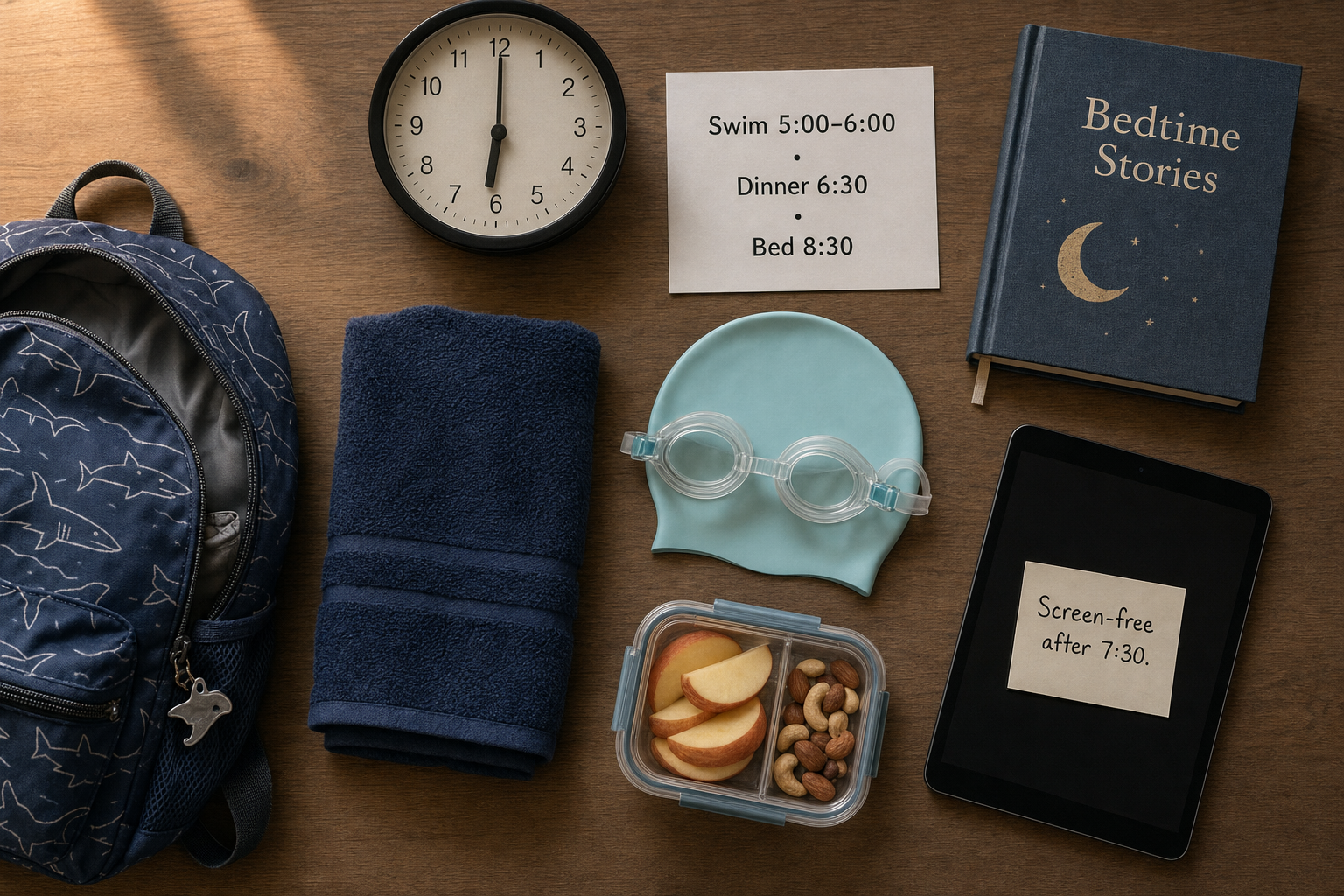
For example, say school ends at 3:30 pm. Parents can slot in snack and brief rest or homework until 4:30 pm, swim lesson from 5 to 6 pm, dinner about 6:30 pm, homework or prep until 7:30 pm, screen-free quiet time, then lights-out around 8:30 pm. This gives roughly an hour or more after active swim lessons before sleep.
Also, follow the swim school's own structured plans early in the season. If you want a program with ideal progression and consistent lessons, the 10-Week Plan offers routines and pacing that let children build skill without too much strain or overload, helping with planning around sleep. https://www.swimy.org/10-week-plan
[[ctakid]]
Sample Routines by Start Time
If lessons start at 4:30 pm: your child swims until 5:30 pm, changes and arrives home by 6 pm. Dinner by 6:30 pm; homework or reading from 7-7:30 pm; quiet time 7:30-8 pm; lights-out by 8:30 pm if morning school starts between 7 and 8 am.
If lessons begin at 6 pm: lessons end 6:45-7 pm, home by 7:30 pm; dinner quick or prepped early; homework limited; wind-down at 8 pm; bedtime by 8:45 pm. But late-lessons like this often cut dangerously close to bedtime and leave little room for eating or unstructured calming.
Simple Routines to Keep Evenings Calm
Snack first: something light and protein-rich about 30 minutes before swim, not a heavy dinner after swim that keeps digestion going.
Kit ready: pack swim bag, towel, goggles, change clothes in advance so there’s no scrambling after work or school.
Lights-out routine: Screens off at least an hour before bed. Warm shower or bath only if needed. Quiet reading or mellow conversation. Bedroom dark, cool, comfortable. Keep what happens in bed only about sleep—not homework, not screen time.(nationwidechildrens.org)
Pitfalls to Avoid (Especially in Winter / Back-to-School Season)
When daylight fades early, it feels tempting to push swim later to accommodate work or school schedules. But winter is when late lessons hurt sleep hardest.
Avoid scheduling lessons that end under one hour before bedtime. Avoid serving a full, heavy dinner just before class. Avoid screen time post-pool—screens emit blue light that suppresses melatonin, making it harder to fall asleep.(endo.pediatrics.med.ufl.edu)
When Lessons Help More Than Harm
When timed properly, evening swim lessons are a win: kids get physical activity, focus their minds, release stress, then recover with strong sleep. For ages 6-12, this can boost cognitive performance, help with school tasks, and build confidence—so long as the whole evening ritual supports rest, not racing.
Parents who align lesson times with sleep recommendations, build consistent routines, and stay alert to overtired signs are often the ones whose kids thrive in both water and classroom. It’s about learning, safety, and rest.
Ensure lessons end with enough buffer before bed, dinner is light and appropriately timed, workout transitions are gentle, and winds-downs predictable. With those in place, the best swim lesson time on school nights supports learning without wrecking bedtime.
120+ swimming exercises sorted by age — with video and instructions. Developed by swim instructors, completely free.

120+ swimming exercises sorted by age — with video and instructions. Developed by swim instructors, completely free.