Freestyle Breakouts: First Strokes That Don’t Stall (Kids 8–12)
Kids ages 8-12 can gain serious speed—and avoid slow, gasping starts—by mastering the freestyle breakout. A clean breakout means pushing off the wall, staying streamlined, making a few underwater kicks, surfacing at the right distance, and then pulling with good form. When done right, your child gets legal speed off walls without popping up too soon or breathing too early.
Key Rule Every Child Should Know: The 15 Meter Rule
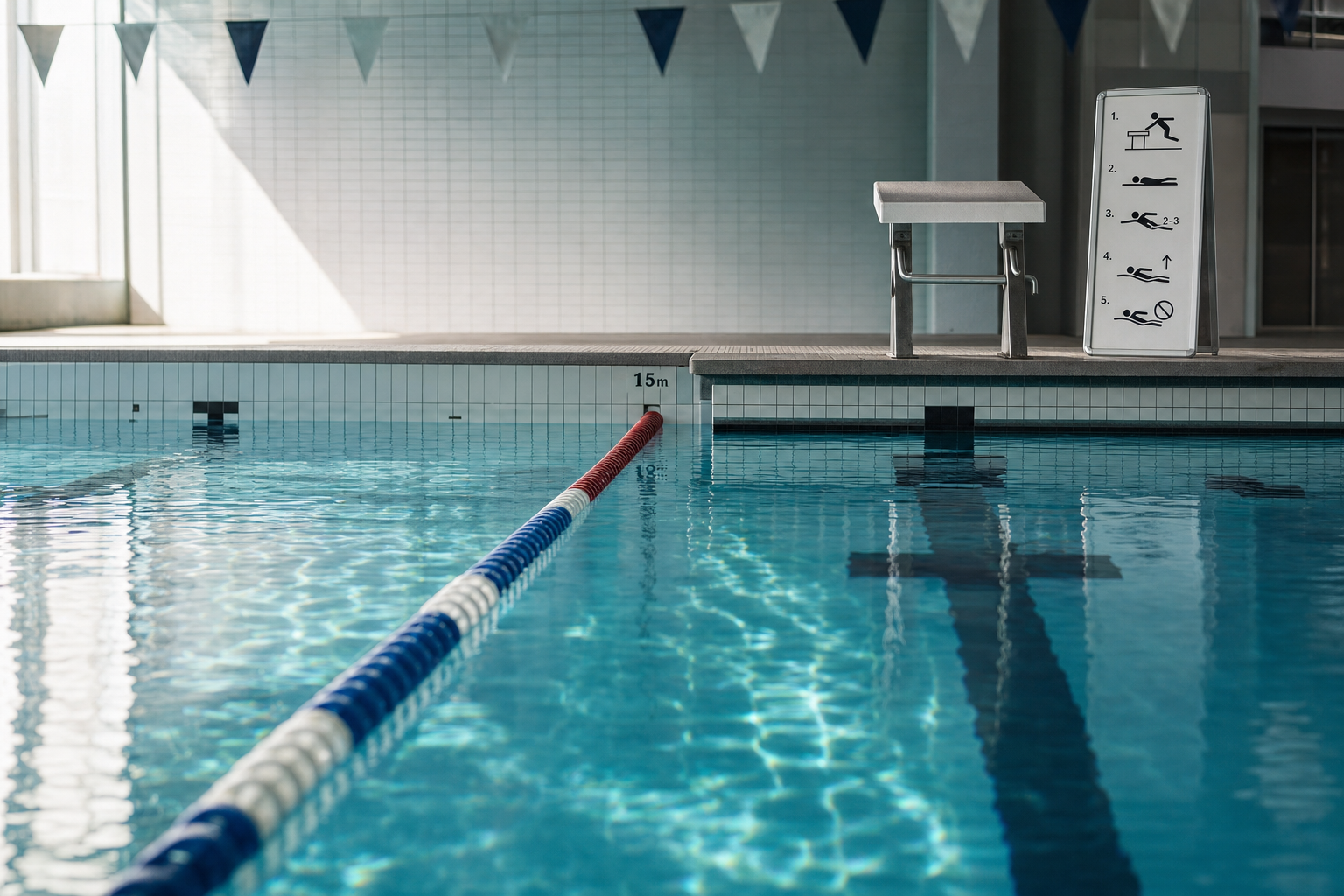
After every start or turn, children must break the surface by 15 meters. Freestyle (and backstroke and butterfly) allow underwater streamline and dolphin kicks—but only up to this 15-meter mark. If they stay submerged past this, they risk disqualification in competition.(usaswimming.org) For parents, this means teaching when to surface—not holding breath longer than necessary or gasping when the head comes up too fast.(sportsmonkie.com)
Breakout Steps for Kids
Below are clear, parent-friendly steps to teach the “freestyle breakout for kids.” Each stage builds on the last, so the first stroke after breakout comes naturally and doesn’t break rhythm.
1. Push Off & Streamline
First, the push off the wall or following a turn must be strong. Feet plant solidly, legs drive off. Arms are extended overhead, hands one over the other, head tucked between the arms. The body forms one smooth line—like a pencil. This streamline position is what carries speed.(classcardapp.com)
2. Small, Controlled Underwater Kicks
After pushing off, add two or three dolphin (or powerful flutter) kicks while still underwater. These kicks help maintain momentum and speed. The child should stay submerged only until the speed begins to fade.(swimmersbest.com)
3. Surface by 10-15 Meters
Make sure the child’s head breaks the water before or at 15 meters. Ideally, they start surfacing around 10-15 meters so the first stroke doesn’t happen too low. This respects competition rules and prevents “gasping up” at the surface.(strokelab.swimmetrix.net)
If you want a structured way to help your child progress at home, the 10-Week Plan guides you step by step.
4. First Three Strokes with Controlled Breathing
Once at or slightly before the surface, lift arms into the first stroke. The first three strokes should be powerful and rhythmical. Avoid the urge to breathe on the first stroke—let the breathing come after stroke two or three so the head stays low and body stays aligned. Controlled breathing at stroke two or three keeps speed flowing and avoids head lift or stalling.(swimmersbest.com)
[[ctakid]]
What Parents Should Watch For
Knowing what “good” looks like helps you give helpful cues to your child.
Pitfalls to Avoid
Breathing on the very first stroke after surfacing pulls the body upward, creating drag. An early head lift causes hips to sink and speed to drop. Losing the streamlined shape too soon wastes the momentum from the push.(birminghambluedolphins.com)
Cues That Help
Parents and coaches can use short, memorable cues. “Push, point, kick… kick… swim up” is one kids can chant to internalize the sequence: push off, hold streamline, kick underwater, then begin first stroke as you rise.(birminghambluedolphins.com) Another cue is “no breath till stroke three”—reminding them to control breathing without rushing.
Drilling & Training
Skills need repetition. Here are safe and effective ways to build the breakout:
Start each swim session with streamline push-offs. Let your child push off in streamline repeatedly, then add two kicks, rise, and swim three strokes with breathing delayed. Avoid hypoxic or breath-holding games—safety first. Keep CONTROLLED distance under water, never pushing the child past comfort.(birminghambluedolphins.com)
Parents following structured training can explore the 10-Week Plan from swimy.org, which helps improve freestyle kick, streamline, breathing control, and stroke timing. It gives drills and weekly goals so progress builds gradually and sustainably.(swimy.org)
Why It Matters
Getting the breakout right means faster walls, smoother strokes, more efficient breathing—and less fatigue. Children who pop up too soon lose the free speed off the walls and force their muscles to work harder earlier in each length. By contrast, those who master the push-off → streamline → underwater kick → surfacing → first three strokes sequence get legal, efficient momentum and swim easier. You’ll see improved lap times, less panic racing, and better energy through longer distances.
Final Takeaway
Freestyle breakout for kids ages 8-12 hinges on four simple steps: push off, hold streamline, kick underwater, surface around 10-15 meters, then begin first three strokes with controlled breathing. Respect the 15 meter rule, avoid breathing too early, and never let the streamline go. As a parent, your best help is consistent cues, safe drilling, and watching for head lift or stalling. Teach them this sequence, and they’ll gain speed off the wall—and swim more confidently from one stroke to the next.
120+ swimming exercises sorted by age — with video and instructions. Developed by swim instructors, completely free.

120+ swimming exercises sorted by age — with video and instructions. Developed by swim instructors, completely free.