Bilateral Breathing for Kids: A Fun, Simple Progression for Freestyle
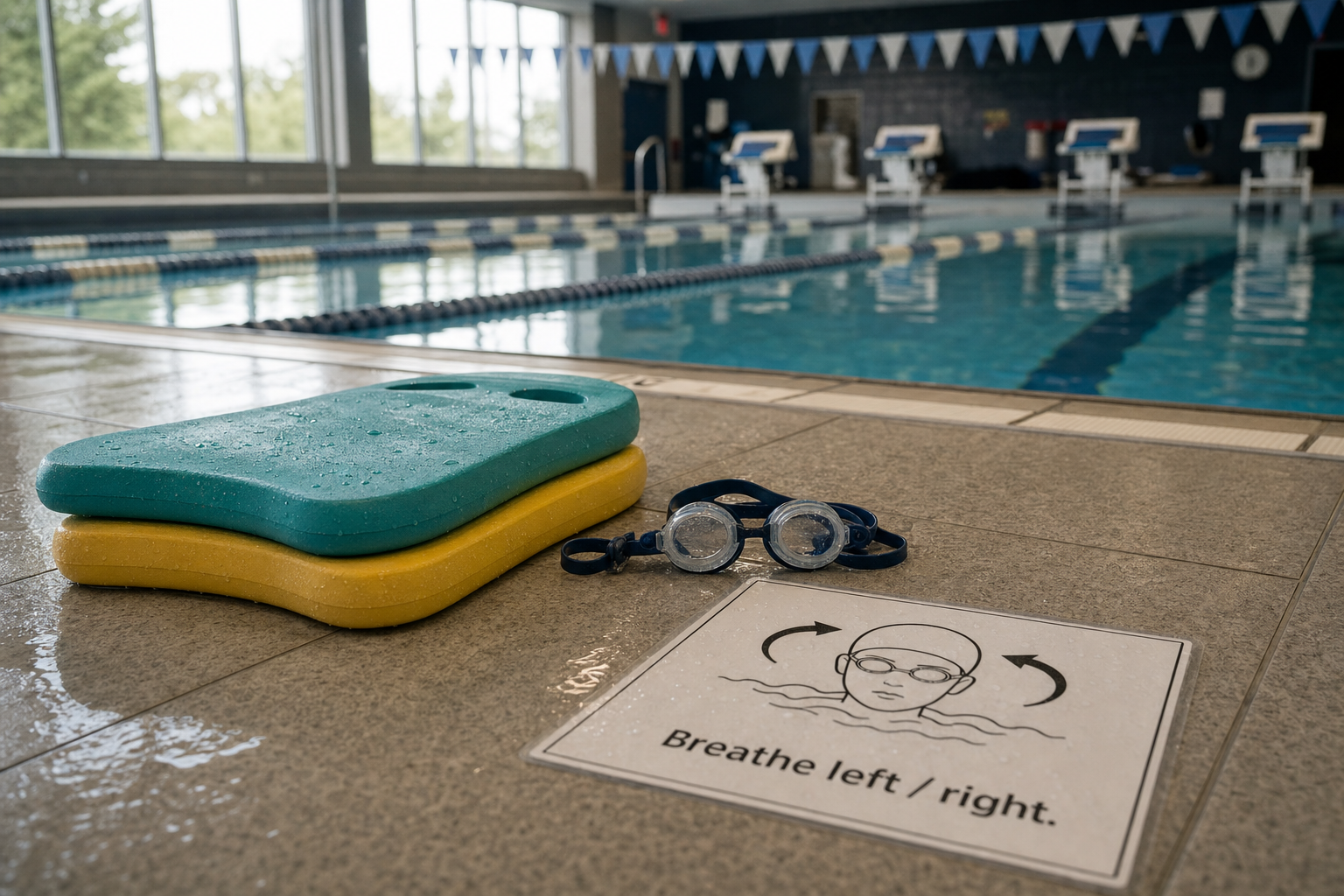
Want to help your 6-12-year-old swim freestyle with smoother rhythm, better balance, and more confidence? Teaching bilateral breathing kids style is the key. Below, you’ll get a parent-friendly plan coaches can use on-land and in the water: rhythm drills, side-kick progressions, and low-pressure patterns building comfort breathing to both sides. You’ll also learn what “good” looks like from the bleachers—and what to avoid.
Why Teach Freestyle Breathing Child to Breathe Bilaterally Early
When kids breathe only on one side, they usually lift their head, twist unevenly, and build muscle imbalances. Studies show that consistent one-sided breathing leads to asymmetrical strokes, extra drag, and even discomfort in shoulders or necks over time. Bilateral breathing—breathing on both sides—encourages even body rotation, better stroke symmetry, and usually a straighter swim path. It helps kids swim more efficiently and keeps growth balanced. (padlie.com)
Parents in the bleachers will see smoother hips, less head popping, and a child smiling instead of gasping.
What “Good” Freestyle Breathing Looks Like
Good breathing for kids is subtle, low-profile, and focuses on the exhale in the water. The head should rotate, not lift; one cheek should stay submerged while the mouth clears the surface just enough to inhale. Exhale continuously underwater so there’s no breath-holding or rush when the head turns. Timing should align with arm pull and rotation—not after the arm enters. (sportsreflector.com)
Pitfall alerts: Avoid head-lift breathing (lifting to breathe forward) and pushing every-3 strokes too early before your child has good control of single-side breathing.
Progression Plan: On-Land Rhythm Drills → Side-Kick → Full Freestyle
The plan below gives you and your child a gradual, year-round progression. Coaches can use it per session; parents can watch and know what they’re seeing. Somewhere around weeks 4-6, you might even refer to something like the 10-Week Plan from swimy.org to pace progress—focus week by week on mastering side breathing drills, rhythm work, and alternating breathing patterns.
Phase 1: On-Land Rhythm & Head Rotation Drills
Start sessions off-deck with playful rhythm exercises. Have your child lie on their side on a mat, pretend they’re floating in water: one arm extended, head on the arm. Practice turning head gently to breathe “to air” (just imaginary), then turning back. Use music or a slow count: turn-turn-turn breathe; breathe; rest. These rhythmic patterns help the brain learn breathing timing before water adds complexity.
If you want a structured way to help your child progress at home, the 10-Week Plan guides you step by step.
On land, also practice bilateral patterns: breathe every two counts (dominant side), then alternate—simulating breathing every three counts. Keep breaths soft and steady—not forced.
Phase 2: Side-Kick Drills in Water
Once comfortable on land, move into the pool with side-kick progressions. Begin with floaties or kickboard for support. Have your child kick while lying on one side: one arm stretched forward, the other by their side. Rest head on stretched arm and practice breathing on the lowered arm side with one cheek in water. Exhale underwater steadily, then rotate to inhale. (staging.swimrightglobal.com)
Next, remove the board so the child balances without propulsion help. Try side kicking on both sides equally. These drills build comfort without full stroke pressure.
Phase 3: Low-Pressure Freestyle Patterns
After side-kick drills, introduce low-pressure freestyle with breathing patterns. First, let them swim freestyle but only to their dominant side, focusing on good rotation and exhaling underwater. Once that becomes easy for 25 meters, introduce alternating breathing every 3 strokes. That means breathe on dominant side, then after three strokes breathe on the other side. Remember—don’t rush into every-3 if the skills aren’t solid yet. Patterns like every 3-breaths, then maybe every 5 later as strength and skill build. (swimy.org)
Encourage swim sets with: single arm freestyle (just one arm pulling, breathing on that side), catch-up drills (pause one arm before pulling with the other), and cool-downs with relaxed bilateral breathing to wrap up each session.
[[ctakid]]
How Parents Recognize Progress from the Bleachers
Here’s what you’ll see when bilateral breathing is improving. First, the head rotation will become subtle—only the mouth needs to clear the water. You’ll see one goggle stay underwater. Second, the body roll will even out: both shoulders will move gracefully during each stroke. Legs will stay horizontal; kicking consistent without dropping one side. Third, breathing pattern will be rhythmic: every 3 strokes (or similar), alternating sides, without gasping or rushing. Exhale bubbles underwater instead of holding breath until the last second.
Bad signs to watch: big head lifts, inconsistent breathing side, or a child trying every-3 before ready—leading to rushed stroke, fatigue, or sloppy form.
When and How to Cycle the Plan Through the Year
Teaching bilateral breathing kids style is best year-round. Early in the season focus more on on-land rhythm and side-kick phases. Mid-season, shift toward freestyle patterns with bilateral breathing drills. Late season or when building endurance, use every-5 or every-7 stroke patterns to reinforce exhale control and balance. Allow rest weeks where your child swims freestyle with what's comfortable—often returning to dominant side—so they get confidence too.
Expert Tips from Coaches
Coaches stress a few key thing: emphasize exhale underwater—this reduces panic and makes the inhale quick and calm. Make sure body rotation starts at the hips, not shoulders, so the whole torso moves together. Remind your child that breathing isn't a separate motion—it’s part of the stroke, tied to the arm pull. Also, avoid long underwater holds—exhaling should be continuous underwater; a breath should feel natural, not forced. Use playful, low-pressure drills so children feel success, not stress.
Summary: What Parents Should Remember
Bilateral breathing kids learn early builds balanced strokes, better comfort in the water, and smooth freestyle. Teach side breathing drill first; progress slowly through rhythm, side-kick, then full stroke. Avoid head lifting, avoid rushing into every-3 patterns too soon. Watch for subtle rotation, steady exhale, and alternating sides. Support your child by noticing these cues from the poolside, cheering on progress, and trusting the process. Over time, freestyle will feel more balanced, confident—and just plain fun.
120+ swimming exercises sorted by age — with video and instructions. Developed by swim instructors, completely free.

120+ swimming exercises sorted by age — with video and instructions. Developed by swim instructors, completely free.