Reach or Throw, Don’t Go: A Rescue Game Kids Love
Turn lifesaving into play
What is “Reach or Throw, Don’t Go” and why it matters immediately
When a child struggles in water, the instinct for kids (and adults) is often to jump in. But this can be very dangerous. The proven “Reach or Throw, Don’t Go” rule teaches that the safest ways to help someone in water are first to use a reaching tool or arm from the edge of the pool (Reach), and if that doesn’t reach, throw a flotation device (Throw). The “Don’t Go” means no one should enter the water to rescue unless they are trained. According to recent guidance from WaterWiseKids, this framework dramatically reduces harm because untrained rescues often lead to more victims. (waterwisekids.com)
For ages 5–12, Reach or Throw, Don’t Go becomes this lifesaving game that makes children confident around water and clear on what to do—and what not to do—if someone needs help. Parents can supervise it easily in backyards, pool parties, or at a local pool.
What you need: tools, rules, supervision
Every safe rescue game needs three key parts:
Tool kit
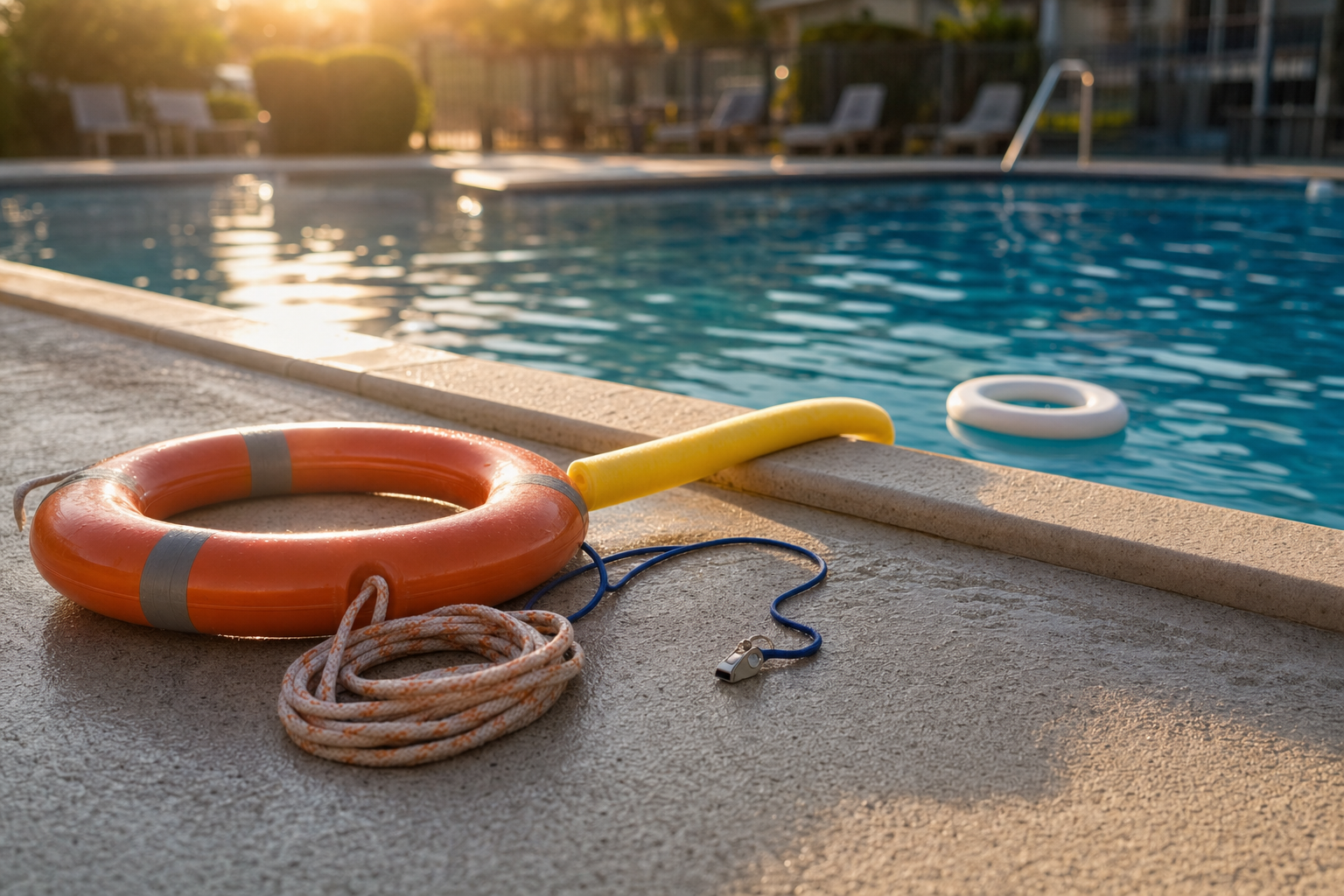
Give kids escape from the urge to jump in by offering pool noodles, rings, ropes, or even towels. Reaching aids like noodles let them stay safe while reaching out. Throwing aids like life rings, lighter rescue tubes, or foam rope floats teach both distance and accuracy. The YMCA has used foam noodles in its swimming classes to practice these skills. (ymcapkc.org)
Clear safety rules
Emphasize ahead: no one enters the water as the rescuer. An adult always sets boundaries. Choose a “Water Watcher”—an adult who supervises with no distractions. Make responsibility rotate so each adult gets a turn. Pool safety guides, like those from the Red Cross and Massachusetts safety departments, stress this adult supervision and a clearly designated watchperson.
Structured supervision and rehearsal
Simulated drills help messages stick. Play games where children react to a pretend friend struggling, practicing their reach, throw, or yell—not going in. Scouting programs do this: one child lies safely on deck and extends a reaching aid; the other is in the water. They swap roles so both learn. (scouting.org)
A mid-season bonus: swim skill building to support rescue play
Beyond home drills, well-designed swim lessons make this game more real. Programs like Swimy’s 10-Week Plan help children aged 5–12 build swim strength, confidence, and water safety awareness in structured lessons combining technique and play. When children have practiced getting in and out of water, floating, and treading, they’re more likely to stay calm in emergencies. (swimy.org)
[[ctakid]]
How parents set it up at home or for pool parties
Turn the rescue play into a fun, safe event by following this template:
- Designate a supervising adult as the Water Watcher. Remind them not to check phones, eat, or get distracted.
- Gather simple props: pool noodles, light-weight throw rings, rope with a floating release, light rescue tubes. Have options for short and longer distances.
- Explain the rules clearly to kids: no one enters the water for a rescue, always use reaching or throwing aids, call an adult or emergency services if necessary.
- Run drills: have a child pretend to be in shallow water, then play a round for reach; another for throw. Use play-acting so they learn what “struggling” looks like.
- Rotate roles: “rescuer,” “watcher,” and “simulated victim.” This gives all kids and adults practice.
In pool party situations, make it part of the entertainment. You might signal that after swimming and snack time, everyone plays the rescue game—fun, informative, and saves lives.
Pitfalls to avoid: what can go wrong and how to stop it
Even with best intentions, "Reach or Throw, Don’t Go" drills can go off track.
One danger is kids trying to jump in anyway. If the game becomes about speed or proving heroism, they may forget the rules. Always reinforce that “Don’t Go” is non-negotiable.
Heavy or wild throws are another risk. A life ring or rope tossed with power can hurt someone in the water, especially if it swings in and strikes their head. Teach underhand throwing initially, aim just behind the person so the float reaches their hands gently.
Lack of a designated Water Watcher is a serious oversight. Without someone always watching clearly, no one is responsible when something goes wrong. Rotate responsibility among adults to avoid fatigue or distraction.
Final thoughts: lasting safety that builds character
“Reach or Throw, Don’t Go” isn’t just a game—it’s a way to build bravery, responsibility, and responsible awareness in children ages 5–12. When kids practice these skills regularly, they don’t panic—they respond. Parents creating games around this framework help children internalize water rescue safety without fear.
As summer heats up, pool parties roll in, and holidays happen, making this game part of your family’s water safety toolkit pays off. Play, practice, supervise—and you have group of kids ready to help without risk.
120+ swimming exercises sorted by age — with video and instructions. Developed by swim instructors, completely free.

120+ swimming exercises sorted by age — with video and instructions. Developed by swim instructors, completely free.