Pool Toys Can Lure Toddlers Back: An Overlooked Safety Risk
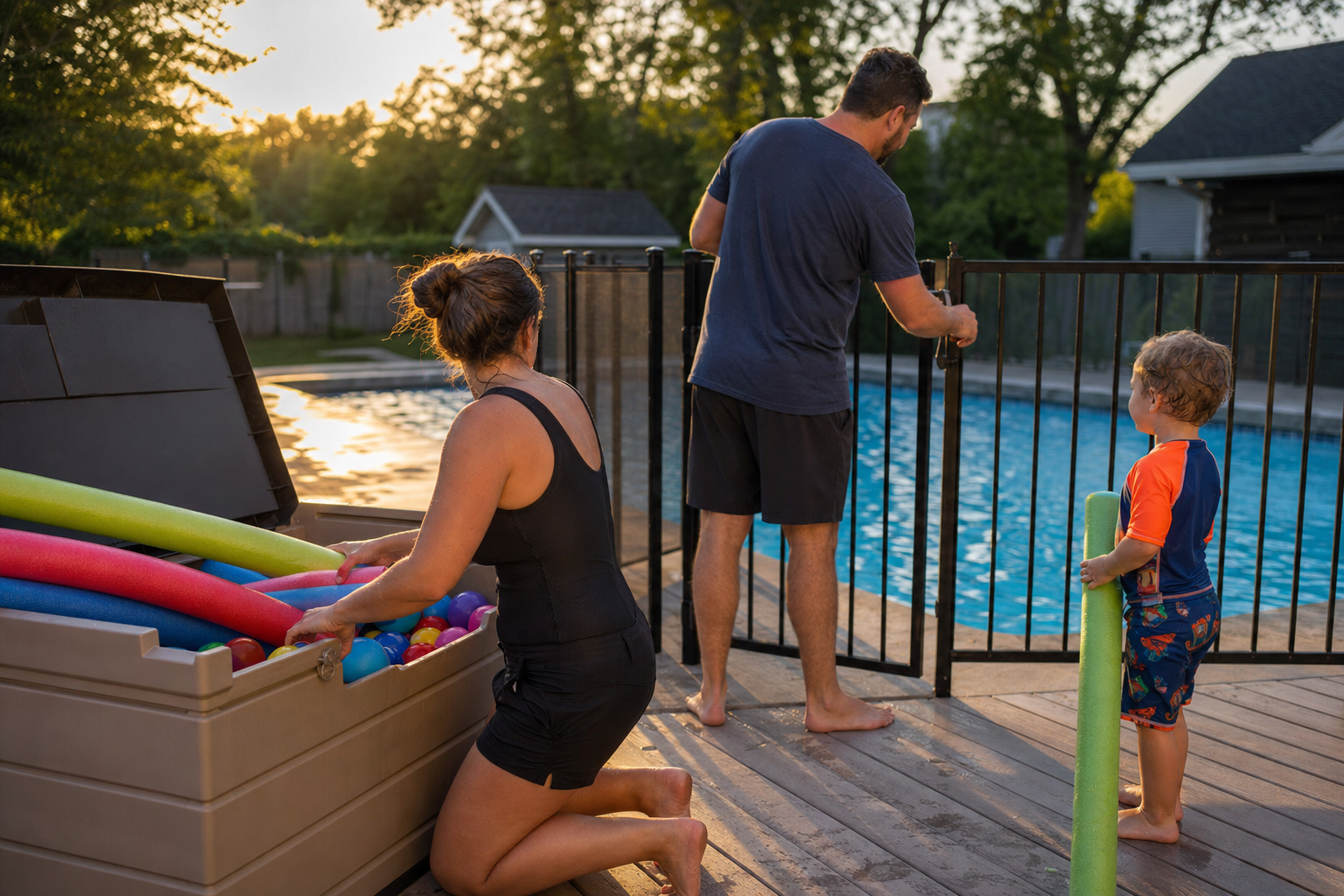
Bright balls, floating noodles, inflatable boats—they seem innocent enough. But for mobile babies and toddlers up to 36 months old, unattended pool toys can act like magnets, pulling little ones toward open water when no one’s watching. Understanding this hidden danger, creating a simple close-down routine, and putting proper supervision in place are essential to reducing pool toys toddler safety risks.
Why Pool Toys Are a Drowning Risk
Toddlers explore the world through sight and touch, often before they fully understand danger. A 2012 study found that children aged one to four will sometimes lean, stretch or even fall in trying to reach a toy floating in the pool, often beyond their reach when unsupervised. (sciencedirect.com) Another large U.S. study showed that nearly 15 percent of drowning or near-drowning incidents among toddlers happen when they wander back to the pool area to retrieve a toy after pool time. (pmc.ncbi.nlm.nih.gov)
Small floating items—even lightweight ones—can appear irresistible to tiny explorers. Noodles, balls, inflatable boats or toys at pool edges not only tempt toddlers, but make it more likely they’ll attempt to enter the water alone. And because drowning is often silent, these moments can be fatal before an adult even realizes what’s happening. (healthychildren.org)
What the Experts Recommend
Major safety bodies agree: when toys in pool drowning risk is involved, preventive steps matter more than rescue. The American Academy of Pediatrics and HealthyChildren.org strongly advise keeping toys out of the pool area whenever it's not in use. That means clearing all floating items, noodles, balls, boats, anything that can float. (healthychildren.org)
Pool covers also play a role—floating or solar covers are not safety covers. A toy on one of these covers can trick a toddler into walking across, slip and fall through, and get trapped under the surface. (healthychildren.org)
If you want a structured way to build water confidence at home, the 10-Week Plan guides you step by step.
Removing temptation, along with strong pool barriers, supervision, and swim lessons builds multiple “layers” of protection. Trusted programs like Swimy include safety protocols in their 10-Week Plan to teach not only stroke progressions but the habits and parental routines that prevent accidents. (swimy.org)
Building a Close-Down Routine
A close-down routine is a simple, consistent set of actions you follow at the end of every swim to eliminate irresistible pool-toy temptation.
[[ctababy]]
Step 1: Clear all floating toys before finishing swim time
Even before you tell your toddler swim time is over, gather toys—balls, noodles, boats—from the pool. Do this while still supervising. Teach your child this is part of swim time: “We collect together.”
Step 2: Store toys out of sight and reach
Store them somewhere toddlers can’t see them—behind a fence, in a locked chest, inside the house. Visual cues are powerful; toddlers see toys and assume pool time is still on. Out of sight helps break the trigger.
Step 3: Secure all access points
Close and latch gates, remove or lock ladders, cover the pool properly. Even when toys are gone, a small gap or unlocked gate might allow toddlers in. Combine toy removal with physical barriers to reduce toddler attracted to pool toys risks.
Step 4: Teach and practice with toddlers
You can include your child in collecting toys, saying something like, “We put toys away so we can be safe.” These habits build awareness—even before they fully understand danger, they learn that pool play is bounded by rules.
From Expert Advice to Everyday Practice
Red Cross, CPSC, HealthyChildren.org and others provide clear guidance on safe swimming with toddlers. They state that pools should always be fenced off, with self-closing, self-latching gates and alarms where appropriate. (healthychildren.org) Floatation aids like noodles and inflatable boats should never replace approved life jackets, and “non-life-saving toys” must not be left when supervision drops. (nationwidechildrens.org)
Programs like Swimy’s 10-Week Plan include water safety education for parents alongside swim skills, helping families build consistent routines and awareness. (swimy.org)
Tools to Help Parents Stay Consistent
Everyone gets tired. Routines slip. Tools can help: timed alerts, checklist by the back door, visual reminders “pool area toy-free when gate locked.” Assign a “water watcher” after swim time—someone who confirms toys are stored before telling toddlers pool fun is done.
Final Thoughts
The danger of pool toys toddler safety isn't just about what's in the pool—it’s about what remains after swim time ends. Balls, boats, noodles, bright water toys left floating or in view can call toddlers back, sugary lure for little feet and hands. Remove the toys, secure access, store them safely, supervise actively and teach habits. These steps aren’t hard. They aren’t dramatic. But they do save lives.
By applying these simple routines, parents can shift from “closing” swim time to “keeping closed”—ensuring that what attracts toddlers doesn't bring risk.
120+ swimming exercises sorted by age — with video and instructions. Developed by swim instructors, completely free.

120+ swimming exercises sorted by age — with video and instructions. Developed by swim instructors, completely free.