Baby Sun Protection for Outdoor Swim Days: Shade, UPF Gear & Safe Sunscreen
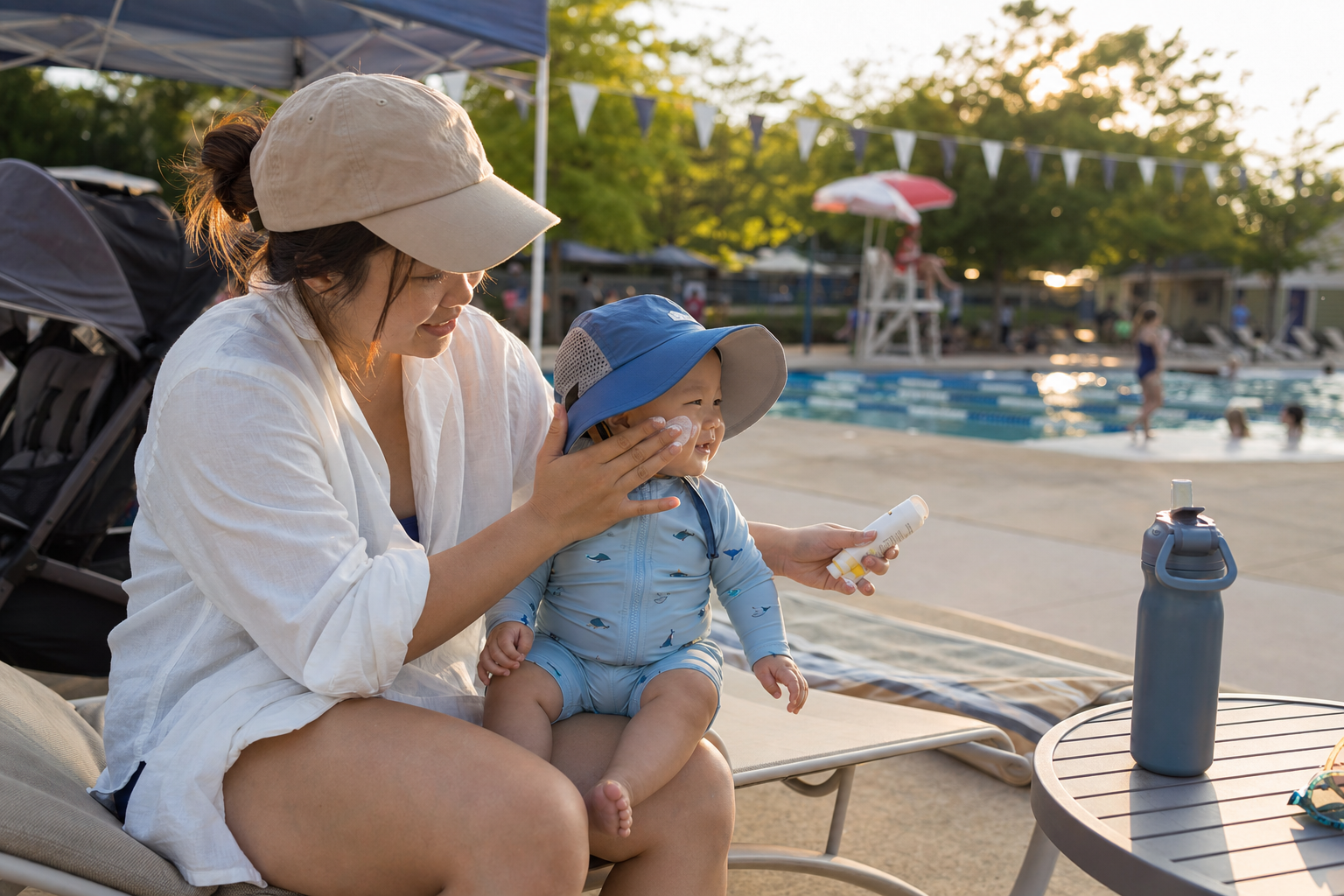
Your 3-month-old finally splashes in the pool for the first time. How do you keep that delicate skin safe while enjoying outdoors? The most effective way to protect infants from sunburn and overheating is to combine shade, UPF clothing, a good swim hat, timing your outings wisely, staying hydrated, and using age-appropriate sunscreen when the time’s right.
Safe Shade and Timing: Avoid Peak Sun Exposure
For babies under 6 months, it’s safest to stay out of direct sun altogether, especially between 10 a.m. and 2 p.m. when ultraviolet rays are strongest. Experts recommend keeping your baby in shaded spots—under strollers with sun canopies, portable umbrellas, or fabric shelters.(cdc.gov) Even older babies benefit from avoiding peak hours to reduce the risk of sunburn and overheating. When you can’t avoid sunlit times for swimming or holidays, aim for early morning or late afternoon sessions when UV levels have dropped.
UPF Clothing, Infant Swim Hats, and Other Physical Barriers
Clothing with UPF (Ultraviolet Protection Factor) is your baby’s first line of defense. UPF-rated swimsuits block both UVA and UVB rays, something regular swim fabric often fails to do—especially when wet or stretched.(mikouaimelaplage.com) A full-coverage UPF 50+ swim suit covering arms, legs, and torso lets you rely less on sunscreen. Pair it with an infant swim hat that shades the forehead, ears, and back of the neck. Lightweight long sleeves and pants made from tight weave fabrics can help shield skin more reliably than loose clothing. Sunglasses with side protection are a bonus if baby tolerates them.
Choosing the Right Sunscreen by Age
For infants younger than 6 months, pediatric guidance makes it clear: sunscreen is not the go-to. Use protective clothing and shade as primary strategies. Only use mineral sunscreen (with zinc oxide or titanium dioxide) on small exposed areas if absolutely necessary—even then, it's a backup, not your main defense.(health.clevelandclinic.org) Once your baby turns 6 months, it’s safe and recommended to apply water-resistant, broad-spectrum mineral sunscreen with SPF 30 or higher to all exposed skin.(health.clevelandclinic.org)
If you want a structured way to build water confidence at home, the 10-Week Plan guides you step by step.
What to Pack for Every Swim Outing
Get ready ahead: start with shade gear (umbrella, canopy), add UPF swimsuit, infant swim hat, and sunglasses. Bring an extra change of clothes in case wet swimwear leads to chills, plus full coverage options for changing time. For sunscreen, pick a mineral formula that’s broad-spectrum and water-resistant. Don’t forget lip balm with SPF, too. Pack enough to reapply every two hours or immediately after swimming or heavy sweating. Reflection from water can double your baby’s UV exposure, so even spots under umbrellas or trees may not be safe.
[[ctababy]]
Around four weeks into planning swim outings, you may want to structure your protection routine. If you’ve started baby swim lessons, following something like the “10-Week Plan” from swimy.org can help you build up comfort, layer protection properly, and understand how skin reacts over time. Incorporating swim schedule, shade strategies, and sunscreen timing into a weekly plan reduces the chance of forgetting anything.
Hydration, Temperature Checks, and Recognizing Overheating
Babies cannot tell you when they’re hot, dry, or overheating. Check their skin often. If it looks flushed, feels warm, or they’re more fussy than usual, bring them out of the sun immediately. Keep them well hydrated—breast milk or formula more frequently when weather is hot. Dress them in moisture-wicking fabrics where possible. Never assume sunscreen or shade alone prevents overheating.
Reapplying and Caring for Protection
Even water-resistant sunscreen fades fast in pool water or after towel drying. Reapply at least every two hours and immediately after swimming. Wash and rinse UPF clothing after each session in cool fresh water; avoid fabric softeners because they degrade UPF properties. Dry clothes in shade to preserve fabric integrity and color, which also helps maintain protection.
Putting It All Together: Day of Fun Checklist
On a sunny holiday or routine pool day, head outdoors when temperatures are cooler, mid-morning or late afternoon. Dress your baby in a UPF 50+ swimsuit, long-sleeved swim shirt, and a wide-brim or legionnaire infant swim hat. Use shade shelter. If baby is 6 months or older, apply mineral sunscreen 15-30 minutes before sun exposure, covering any skin that clothing doesn’t. Bring water or breast milk and check core temperature. At two-hour intervals—or sooner if wet—reapply sunscreen, check shade and garments, and adjust or move indoors if needed.
Protecting your baby’s skin takes planning and layering: shade, UPF clothing, correctly timed sunscreen, hats, hydration, and thoughtful outing timing. Following these steps gives your child the best defense against sunburn and overheating, while keeping family swim times joyful and safe.
120+ swimming exercises sorted by age — with video and instructions. Developed by swim instructors, completely free.

120+ swimming exercises sorted by age — with video and instructions. Developed by swim instructors, completely free.