High-Visibility Swimwear Colors That Truly Stand Out for Kids (Ages 3–12)
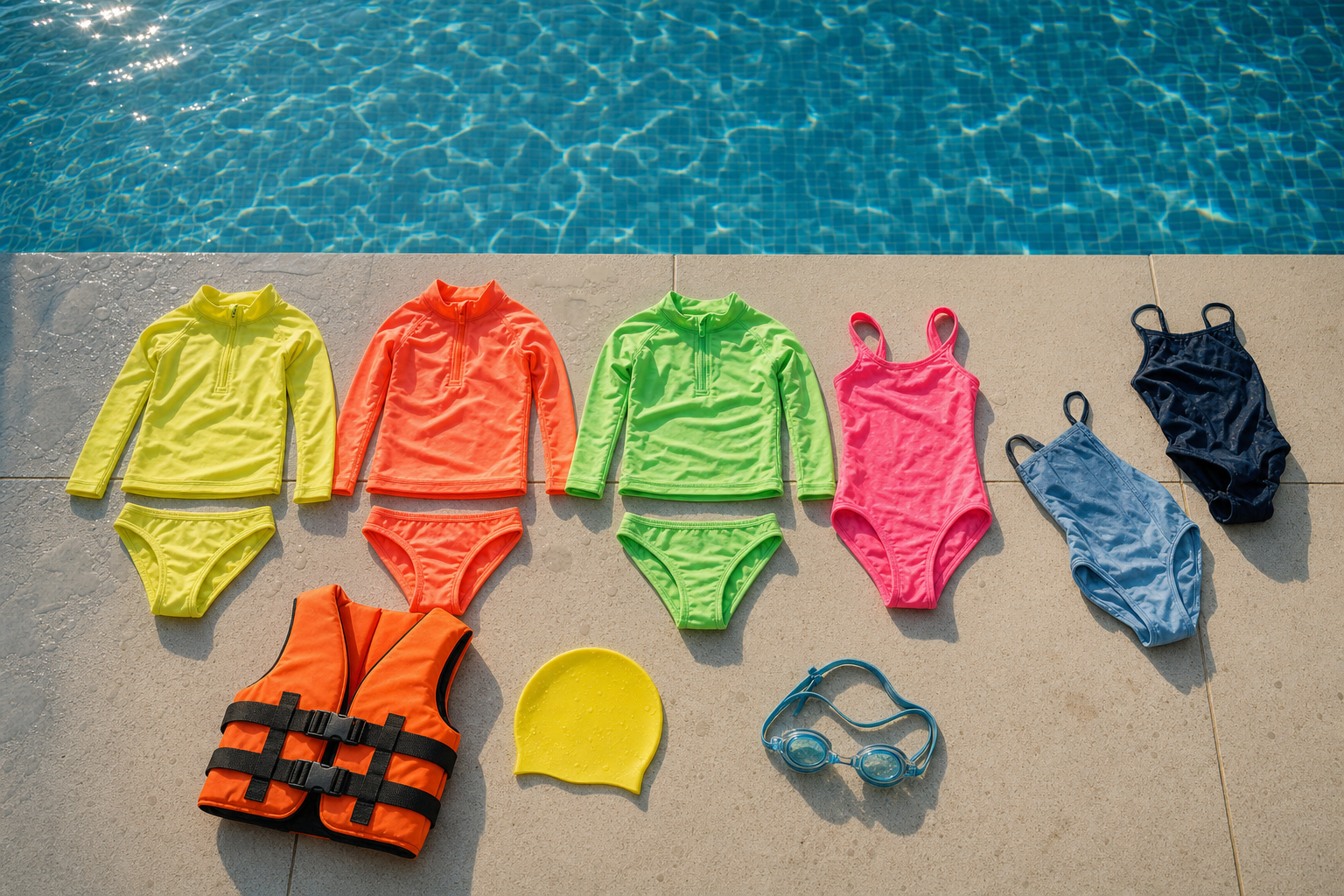
Bright neon colors aren’t just trendy—they’re lifesavers. When it comes to spotting kids in pools, lakes, or oceans, the right swimsuit color can make all the difference in those critical seconds. Neon yellow, green, and orange consistently come out on top for safety because they offer the strongest contrast under water. These colors cut through glare, match up with visibility tests, and outperform light blues, whites, dark tones, and busy prints that often disappear beneath the surface. (poolguardusa.com)
Neon yellow is the gold standard—it stays bright in shady corners, murky lake water, and dimly lit pool interiors. Neon orange is excellent too, especially in low-light or open water situations. Neon green also works well—though it may blend slightly where vegetation or algae are present. Neon pink is visible in most pool settings but drops in clarity in lakes or murky environments. (poolguardusa.com)
What Changes Under Water (and Why Color Matters)
Water changes how colors look. It absorbs red first—so reds and oranges fade quickly after just a few feet down. Meanwhile, blue and green light travel farther, but that’s where trouble begins: blue swimsuits blend right into pools that are lined with blue bottoms. Light blue or white suits vanish into glare and reflections. Dark tones like navy, black, dark green—even certain browns—don’t do much better because they mimic shadows or debris, especially in murky water. (biologyinsights.com)
Contrast is your friend. A neon yellow rash guard with neon orange bottoms—not matching blues—and keeping the shaft of the suit in solid neon will help parents and lifeguards see kids instantly. Avoid mixed prints, distracting patterns, and pale shades that break up the body’s outline. (swimzip.com)
Pairing Visibility With Sun Safety: UPF Rash Guards
Neon colors shine brightest under the sun, but that same sun can harm delicate skin. UPF rash guards—rated 50+ in many quality swimwear lines—block about 98% of UV rays and stay effective even when wet. They fit that fine balance of comfort and protection, and many quick-dry, stretch easily. (swimoutlet.com)
If you want a structured way to help your child progress at home, the 10-Week Plan guides you step by step.
For spring-summer shopping, look for a long-sleeve neon rash guard plus bright swim bottoms. Layering these keeps UV exposure down and visibility up. As you teach kids to swim—maybe through structured programs like the 10-Week Plan of swimy.org—you’ll want swimwear that supports learning in open water without sacrificing safety. (swimoutlet.com)
[[ctakid]]
Swimwear Colors That Pop: Best vs Worst Choices
Best Colors to Choose
Neon yellow: top performer everywhere. Neon orange: especially useful in murky water and low light. Neon green: still strong, though slightly weaker in vegetation-heavy water. Neon pink: excellent in clear pools, less so in lakes. bright red: okay in shallow pool water but loses vibrancy at depth. (poolguardusa.com)
Colors to Avoid
Light blue and white: these blend into pool bottoms or reflect too much glare. Gray, silver, pastels, muted shades: all fade under water, blend into shadows. Dark blue or navy: worse in deep ends or large pools. Dark green and black: nearly invisible in many conditions. And busy prints? They might look cute, but under water they break up the body’s silhouette, making kids much harder to spot. (biologyinsights.com)
Practical Tips for Parents Shopping This Season
When picking swimsuits for ages 3-12, go for solid neon colors and if possible, mix colors top to bottom so there’s contrast. Rash guards should have UPF 50+ ratings, tight but comfortable fits, flat seams to avoid chafing, and quick-dry fabrics. Bright accessories like swim caps or life vests are helpful, especially in open water. Always check that even accessories match the neon visibility theme.
Also, store swimsuits in shade, wash them gently, avoid chlorine damage, and replace them when colors begin to fade. Faded neon may look cute, but when brightness drops, so does visibility.
Safety First: Color Helps But Isn’t Enough
Even the brightest neon suit won’t substitute for active supervision. Lifeguards, life jackets, swim lessons—they’re all critical. Color helps reduce risk and speeds up recognition, but drowning prevention depends on multiple safety layers. Kids aged 3–12 need trained adult watchers, safe environments, and lifesaving skills. (cbsnews.com)
In spring and summer, parents should think of visibility color and sun protection as part of every swim kit. Stock up early, choose neon, avoid washes-out and patterns, include a life jacket where required, and prioritize UPF rash guards so kids can stay outside longer—and safer.
Color matters more than fashion when safety is at stake. Go bold. Go neon. Make sure swimwear gives you a visual leg-up in those moments when seeing is saving.
120+ swimming exercises sorted by age — with video and instructions. Developed by swim instructors, completely free.

120+ swimming exercises sorted by age — with video and instructions. Developed by swim instructors, completely free.