Sibling Swim Meets With a Baby: Keeping Toddlers Safe and Happy
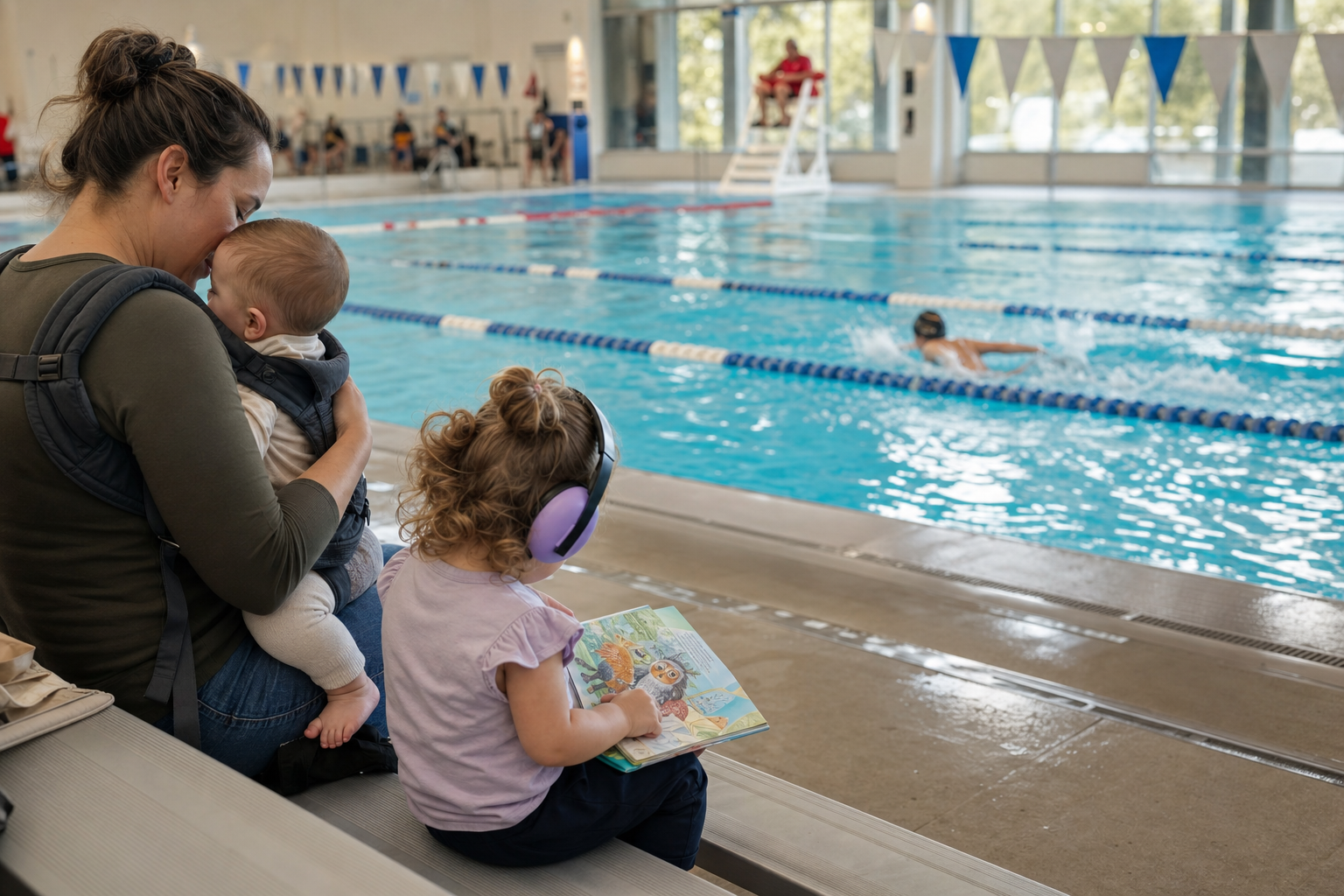
When you take your baby or toddler (0–36 months) along to an older sibling’s swim meet, lesson, or gala, safety and calm supervision must come first. The risk of drowning rises when multiple young children are around pools without focused attention. According to the CDC, “children ages 1–4 die from drowning more than any other cause of death,” and infants need a supervising adult within arm’s reach whenever they’re in or near water.(cdc.gov)
Let’s dive into how to manage having a baby at a swim meet, taking a toddler to sibling swim lessons, and ensuring pool spectator safety baby-style without sacrificing your peace of mind.
Choosing the Right Seat, Timing, and Supervision Strategy
Every swim venue is buzzing: echoes, whistles, splashing, excited crowds. Overstimulation can tire out or scare little ones. So first, pick seats where you can see both the pool and your baby. Bench seating a few feet back from the pool’s edge is ideal. If you can manage two adults, one should be assigned full responsibility for the toddler so your attention isn’t split. As per HealthyChildren.org, infants and toddlers must always have “touch supervision,” an adult close enough to physically assist if needed.(healthychildren.org)
Feeding and diaper timing matters. Feed your baby beforehand or aim for a natural quiet spot during the meet break. Long gaps between snacks leave energy dips or hangry fuss. Also, bring extra diapers—and swim diapers—and plan a diaper change away from splashing zones to avoid slips or water contamination. USSSA’s infant-toddler swim guidelines say caregivers must understand water hygiene like this and always supervise.(usswimschools.org)
Managing Noise, Strollers, and Supervision Zones
Babies are sensitive to noise: announcers, cheering crowds, other swimmers. If possible, pack noise-cancelling headphones or find a quieter corner during breaks. Let your toddler bring a quiet toy or book so they’re occupied when not watching their sibling race. These small comforts reduce overstimulation.
Strollers are handy—but only when used safely. Park well back from pool walkways or edges. Wheels can roll, tipping might happen, or arms might reach out toward the water. Never leave a stroller unattended near the pool’s edge. Supervising adults should avoid getting distracted by phones, chatting, or social media. The CDC recommends avoiding distractions when supervising children in and around water.(cdc.gov)
If you want a structured way to build water confidence at home, the 10-Week Plan guides you step by step.
[[ctababy]]
As a parent with two younger children, I once set up a rotation with my partner: I focused only on the baby the first half-hour, then we trade off. That way, each child got undivided attention in predictable blocks—less crying, less chaos.
Water-Access Boundaries & Rules to Clarify in Advance
Venues often have rules about spectator access near the water. Some pools ban non-competitors from the deck; others require non-slip footwear or swim diapers. Call ahead and ask: can a stroller come on deck? Is there a dry waiting area for toddler fun? What are spectator footwear rules? Also know where life-saving gear is kept: floatation devices, first aid kits, and if lifeguards cover deck spectators or just water zones.
Pediatric experts and instructors stress that swim lessons and meets are focused on participants. Adults can’t leave toddlers under instructor or staff care—they tentatively require caregiver supervision at all times. HealthyChildren.org says no child under 4 should be left without close supervision near water.(healthychildren.org)
Using Structured Plans & Home Routines to Ease the Load
Week by week, using a regular routine helps. The 10-Week Plan from Swimy.org shows how parents can build up water confidence at home with babies or toddlers. Incorporate short warm-ups, bath play, submersion exercises—this kind of practice makes real swim meets less overwhelming.(swimy.org)
Also, arriving early is key. It gives you time to settle your children, handle bathroom needs, get swim gear ready, and find your ideal spectator spots without rushing in. Lessons from Swimy suggest early arrival helps with transitions and reduces stress for everyone.(swimy.org)
When the Meet Day Arrives: Practical Safety Tips
When you’re at the swim meet, assign one adult whose only job is the baby or toddler. That person should be within arm’s reach and attentive without distractions. If possible, trade supervision shifts every 15–20 minutes to prevent fatigue. Studies show segmented supervision (focused time blocks) keeps young children safer near pool environments.(infantswim.com)
Watch for signs that your little one is overwhelmed—crying, shaking, turning away—these aren’t bad; they’re signals it’s time for a calming break. Having a quiet side area, a blankie, and maybe dim lighting helps. Also be mindful of the water environment: slip-resistant shoes, mitts or grips on stairs, and styling clothes to keep baby warm breaks between events.
Rounding Up: Emergency Preparedness & Peace of Mind
Make sure you know what to do in an emergency. Learn CPR and how to respond quickly. The CDC lays out that every supervising adult around pools needs to avoid distractions because “drowning happens quickly and silently.”(cdc.gov) Keep a first-aid kit handy, know where the nearest exits are, and memorize staff or lifeguard locations. Most aquatic facilities post emergency phone numbers, rescue equipment locations, and facility rules.
By planning ahead—choosing seats wisely, setting up shifts of supervision, confirming venue rules—you keep your baby safe, reduce overstimulation, and let your older child enjoy the swim meet, lesson, or gala too. It's not easy, but with steady routines and attentive care, bringing a baby to sibling swim events can work without turning into chaos.
120+ swimming exercises sorted by age — with video and instructions. Developed by swim instructors, completely free.

120+ swimming exercises sorted by age — with video and instructions. Developed by swim instructors, completely free.