Pool Plumbing 101: Skimmers, Inlets, Drains and Calm Corners
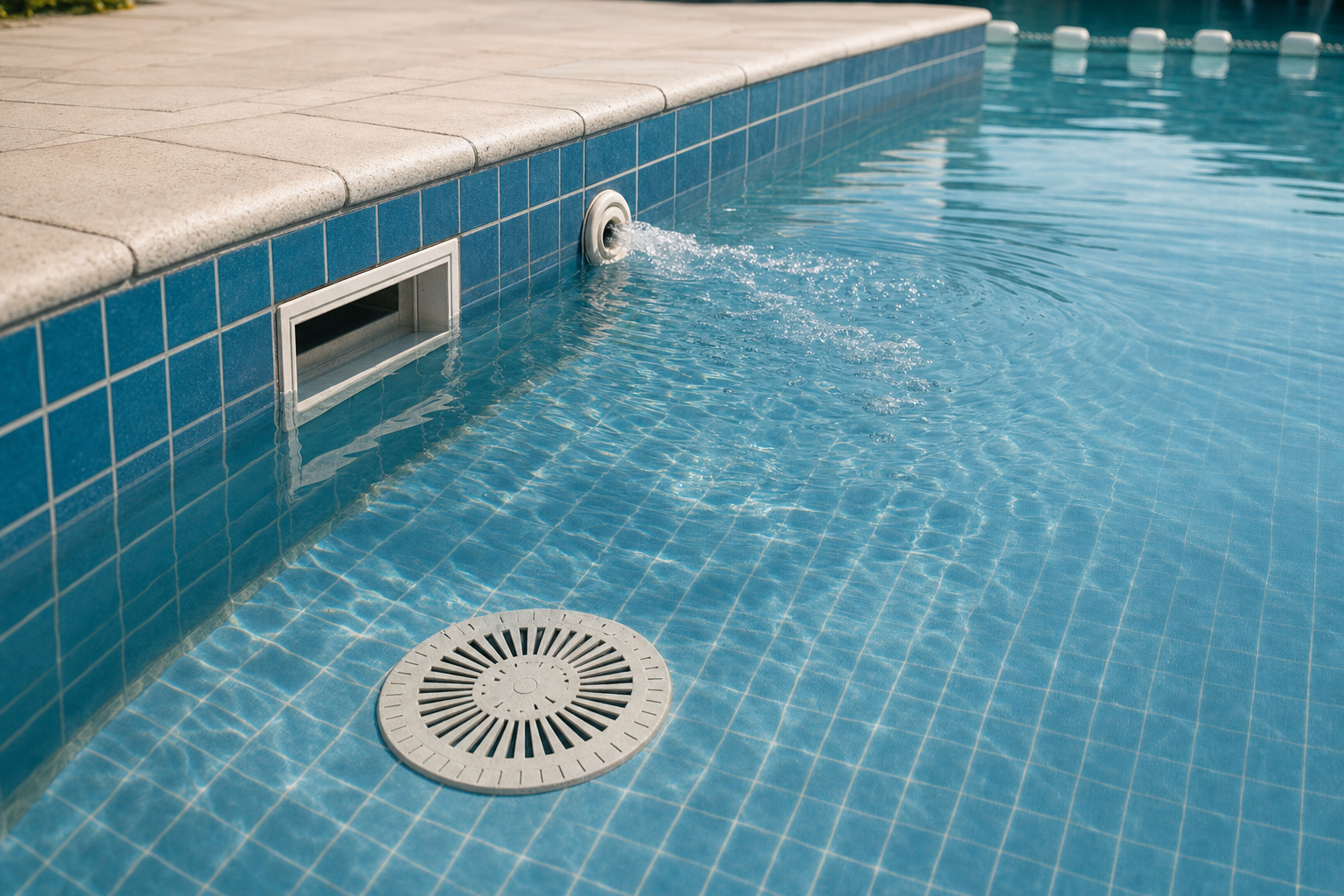
Every public or community pool you take your kids to has three key parts in its plumbing: skimmers, inlets (return jets), and drains. Understanding how these move water helps you pick the safest spot for your children—ages 3 to 12—to practice, play, or just float. Let’s break these down and show you where visibility, stability, and safety are best in the pool.
Skimmers & Drains: Spot the Suction, Avoid the Strong Pull
Skimmers are openings at the pool’s surface that suck in water, pulling in leaves and floating debris. Drains sit on the bottom or wall and are part of the “suction” system. Both must have covers that follow VGBA (Virginia Graeme Baker Pool & Spa Safety Act) rules. These ensure anti-entrapment protection so that no hair, limb, or swimsuit gets sucked in dangerously. If you can see a drain grate, check if it’s labelled VGBA-compliant or stamped ASME/ANSI standards—you’ll see this in the U.S. for any public pool. If it isn’t, that tells you to steer clear. (cpsc.gov)
Never let kids hang onto fittings like skimmer throats or through fittings along the walls. These are suction zones with strong pull that’s hidden underwater, and even though compliant covers make them safer, proximity still poses risks. Teach children to treat drains like hot stoves: look, but don’t touch.
Inlets (Return Jets): Where Water Comes Back In—And What That Means for Swimmers
Return jets are the spots where cleaned, treated water is pushed back into the pool. They help create circulation—pushing water toward skimmers to skim the surface clean. The flow from inlets—directional, adjustable “eyeball” jets—creates currents and turbulence in certain zones. (zwembadwijzer.nl)
For kids who are learning, playing or practicing, avoid areas right in front of return jets. Jets aimed strongly toward one direction produce turbulence that can upset little swimmers or reduce visibility. A good practice spot is a “calm corner” where you can see your child clearly, with mild currents and sunlight, away from strong inlets and suction fittings.
Calm Corners: Where to Practice Safely in Public Pools
A calm corner means somewhere your child can move safely and without being thrown off balance by strong returns or swirling water. Ideally, this spot is visible from the deck, away from inlets, drains, and skimmers, yet still within an adult’s reach or supervision line.
If you want a structured way to help your child progress at home, the 10-Week Plan guides you step by step.
Parents should use their knowledge of circulation patterns: returns create flow pushing toward skimmers, skimmers pull surface water inward, drains pull from deep zones. The safest spots are usually shallow ends removed from both the inlet turmoil and drain suction. Visibility is best where light penetrates well and water is less agitated.
If your child is working through a swim program like the swimy.org 10-Week Plan, picking the right places to practice laps, floats or skills matters: use corners with gentle flow first, then move gradually into more active zones as confidence and skill grow. This kind of progression helps reduce fear and improve control. (For more details, see the swimy.org 10-Week Plan.)(portal.ct.gov)
[[ctakid]]
VGBA Compliance Without Fear: What Parents Need to Know
Since public pools are legally required under U.S. federal law to have VGBA-compliant drain covers—or alternative safety systems if suction zones are risky—parents shouldn’t panic when faced with mention of drain safety. Instead, become familiar. Ask questions if drain covers look broken or missing. Inspect the pool’s listed certifications or speak to pool operators. If you can’t confirm VGBA compliance, assume a risk zone and avoid letting kids swim near drains. (poolsafely.gov)
Common Pitfalls to Watch Out For
Don’t let kids climb onto grate fittings or play near skimmers. Hanging or pulling on skimmer throats is unsafe. Also avoid setting up gear—like goggles holder, kickboards, or floater toys—over or too near return jets. These can pull gear into fittings, blocking flow, creating turbulence, or increasing suction in unintended areas.
Watch where the return jets are angled. If they send water directly into a swimmer instead of flowing gently along the wall toward skimmers, that’s trouble. Trainers, instructors, and pool staff typically aim jets so they help debris move toward skimmers, not send jets across open swim lanes where children are practising. (zwembadwijzer.nl)
Quick Safety Checklist for Parents Going Poolside
Start by scanning where water is coming in (inlets) and where it’s going out (skimmers and drains). Identify zones of strong current and suction. Choose practice spots: shallow, well-lit, calm water. Teach your child to avoid touching drains, cover-less grates, or skimmer components with hands or limbs. Encourage swimming near the middle of calmer zones, not close to walls until they're strong enough to handle currents. Above all, always keep your eyes on them—supervision makes all the difference. Guidance from trusted resources like Pools Safely is valuable here.(poolsafely.gov)
Knowing how skimmers, inlets and drains shape the flow of water helps you and your child identify the calm corners worth practicing in. Pick spots where suction and turbulence are minimal, visibility is high, and safety features like VGBA covers are intact. With this knowledge, you help build skill—and the confidence that lets swimming feel fun, not frightening.
120+ swimming exercises sorted by age — with video and instructions. Developed by swim instructors, completely free.

120+ swimming exercises sorted by age — with video and instructions. Developed by swim instructors, completely free.