Shark-Fin Freestyle: The Balance Game Kids Love for Smoother Strokes
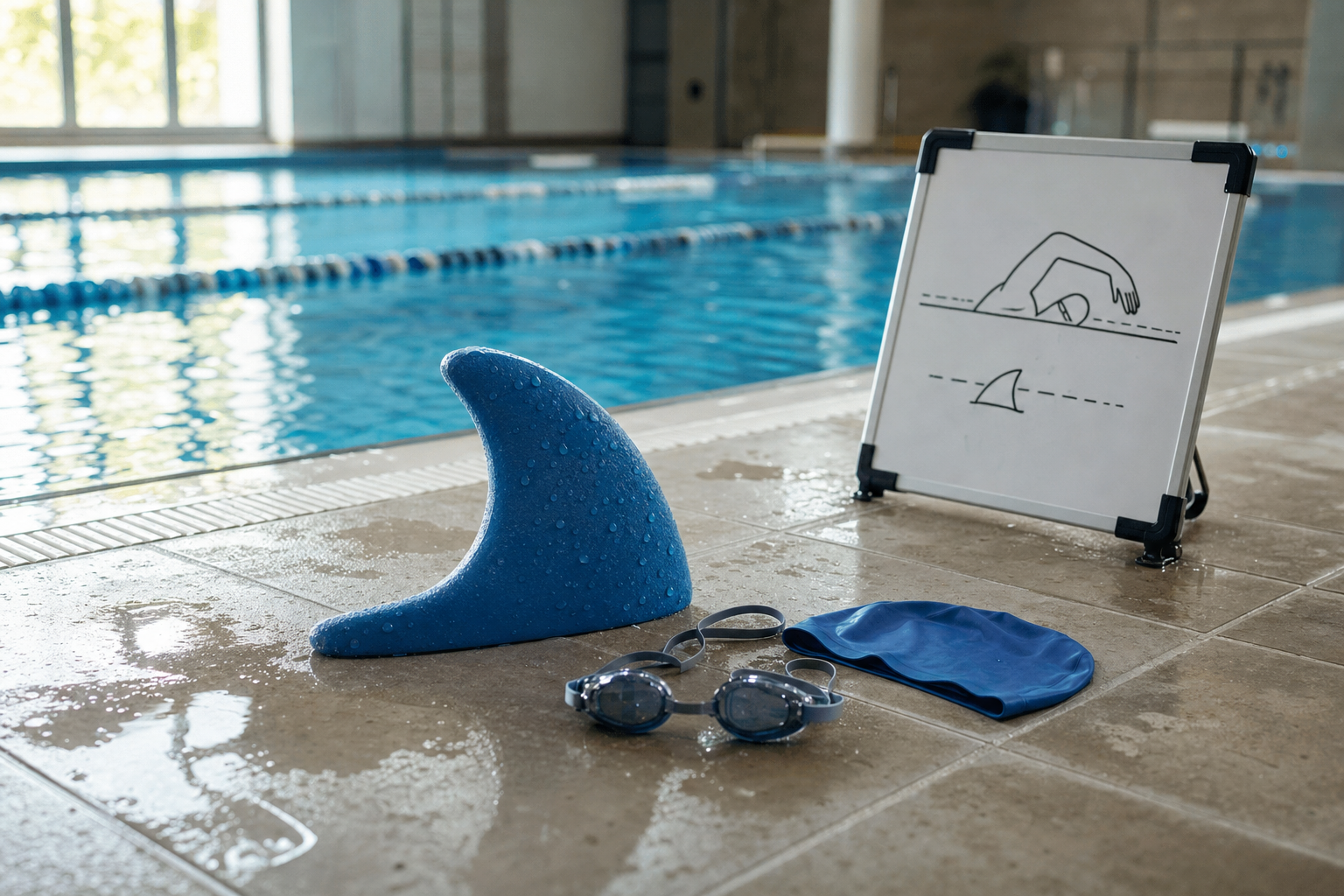
You want your child to get smoother, stronger freestyle strokes fast. The Shark-Fin Freestyle balance game does exactly that—nurturing side balance, elbow-up recovery, and clean hand entry without complicated terms. Ideal for school-age swimmers (5-10 years) who already do a front float and basic kick. Let’s dive into what this game is, how to do it right, and how to avoid common pitfalls like head lifting or crossing the midline.
How Shark-Fin Freestyle Works: Game Setup & Key Focus
Begin by having one hand resting flat on the child’s head, mimicking a ‘fin’—hence “shark-fin.” The other arm remains free to swim freestyle. This setup forces the body to stay balanced on its side, strengthens the elbow-up recovery, and encourages a straight hand entry in front without jargon. Reps are short, use a safe distance, pause at each wall so they catch their breath, and keep things light and fun.
Start in shallow water, with distances of about 5–10 meters (or yards depending on your pool) for each “fin” swim. Use one length or two per side, letting them rest at the wall each time. When they feel confident, gradually increase distance or alternate sides more frequently. Each session can include two to three short rounds of Shark-Fin Freestyle mixed back into full freestyle to reinforce the carryover.
Why It Works: Technique Gains Kids Feel Quickly
Shark-Fin Freestyle gives immediate feedback to kids without a lot of talking. With one hand fixed on the head, they naturally balance better on the side, and their elbow on the free arm must stay high during recovery to allow smooth movement. That encourages a cleaner entry and helps them develop an elbow-high recovery pattern, which coaches label an important part of efficient freestyle. Sources like “Fingertip Drag” drills echo this same feel: hand low, elbow high, and smooth recovery path (parentedge.com).
These balance drills also prevent common errors such as head lifting, which drags the legs down, and crossing the midline of the body on arm entry, which wastes energy and affects direction in the water (usatriathlon.org). Because kids can see and feel when the free arm incidents one of these faults, Shark-Fin Freestyle helps them self-correct.
Build this into your swim schedule using week-by-week progressions. If you follow something like the swimy.org 10-Week Plan, you can introduce Shark-Fin Freestyle early, then extend its use alongside other drills so that improvements stick and grow gradually (swimy.org).
If you want a structured way to help your child progress at home, the 10-Week Plan guides you step by step.
[[ctakid]]
How Parents Can Coach: Distance, Safety, and Progressions
Aim for 5–10 meters per rep at first. Keep reps very short—in many cases just one length, or halfway across if full length feels tough. Let kids pause at the wall, take in breaths, reset posture, and talk about what felt better. Always supervise closely; balance games can be disorienting in deeper water or for newer swimmers.
Then build up: alternate Shark-Fin Freestyle left side, then right side. Once both sides feel smoother, let them try one free stroke then back into the fin setup. Eventually you’ll go from the balance game back into full freestyle posture and strokes, using the feel they built. That’s how you use progressions to move from drill to natural swim.
Common Pitfalls: What to Watch and Fix
Be alert for head lifting—kids often raise their chin toward the surface when trying to breathe, thinking it gives them air. In fact, lifting the head sinks the hips and flattens the body line. Correct this by reminding them to keep their face down, look toward the bottom during each stroke, and only turn the head slightly to breathe, not lift it (justswim.com.sg).
Another issue is crossing the midline at arm entry—when the free hand enters the water too far across the body, past the opposite shoulder. This twists the body and causes inefficiency. Cue entrances in line with the shoulder, imagining parallel tracks, one for each arm. Combined with the high elbow recovery taught by Shark-Fin Freestyle, this helps the hand enter cleanly in front of their shoulder (usatriathlon.org).
Also watch for elbow-drop during recovery. If the free elbow drops, the arm recovery path becomes wide and inefficient. Shark-Fin helps kids feel that—one arm on head means the other arm must lift the elbow higher or the body tilts. You can supplement with drills like Zip-Up or Fingertip Drag, which also reinforce a high elbow and relaxed recovery path (parentedge.com).
Season-Agnostic Fun & When to Use It
Shark-Fin Freestyle works all year round—indoors or outdoors, heated pools or local swimming holes. There’s no need for special gear aside from goggles. Use it during swim lessons, private lessons, family swim time, or with local swim clubs whenever your child is warm up for freestyle or needs balance work.
Sessions of 15-20 minutes including a few rounds are enough during a swim class or a weekend swim time. It doesn’t replace full freestyle; it supplements skill-building.
Seeing Change: What Smooth Stroke Looks Like
After a few weeks of practice, parents should see smoother strokes, more even hips, and less splashing on one side. Breathing should feel more natural—no big head lift. Elbow recovery height improves, the free arm comes through above the water without flailing. Hand entries should land in front of each shoulder instead of drifting across midline.
Children often say it “feels like flying” or “gliding,” because the resistance drops and everything links together more naturally. And that’s what this does: makes freestyle feel smoother, safer, and more fun.
120+ swimming exercises sorted by age — with video and instructions. Developed by swim instructors, completely free.

120+ swimming exercises sorted by age — with video and instructions. Developed by swim instructors, completely free.