Single-Arm Backstroke: Fix Timing for Kids Without Overwhelm
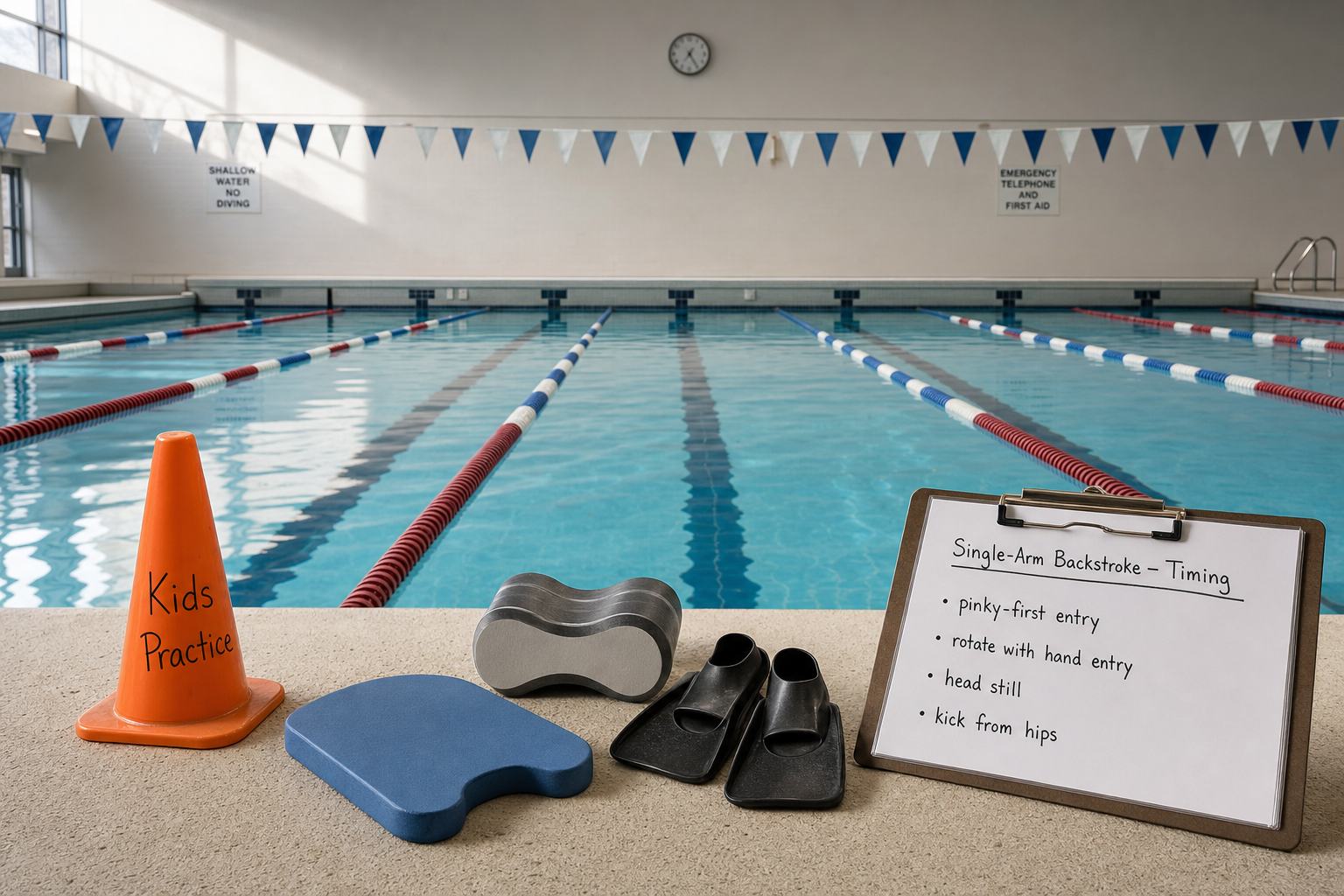
Want to see your 6- to 12-year-old glide through the water with cleaner strokes, straighter lines, and fewer shoulder wobbles? The single-arm backstroke drill is one of the best tools for getting backstroke timing right without overwhelming young swimmers. Let’s dive into how this simple switch can teach kids shoulder-to-hip rhythm, smooth pinky entry, and safer, cleaner technique.
How Single-Arm Backstroke Boosts Timing Fast
When a child swims backstroke using only one arm (the other resting alongside the body), it forces their torso and hips to work harder to balance and rotate. Coaches teaching the Single-Arm Backstroke – Alternating Arms drill highlight that the “primary focus is timing” by connecting hand entry with hip rotation: as the stroking hand enters the water, hips should rotate downward.(goswim.tv) That link between hand entry and hip turn builds the shoulder-to-hip rhythm vital for smooth backstroke. At the same time, resting one arm lets your child feel their body roll and control their recovery arm, helping clean up shoulder wiggles and reduce flat swimming.(swimatlas.com)
What To Watch For: Key Movements & Pitfalls
Pinky Entry, Straight Arm, Clean Recovery
The hand should enter the water pinky-first, just above the shoulder, not over the centreline or thumb first.(birminghambluedolphins.com) The recovery arm swings straight overhead, not flopping or dragging. If arms bend too early or the hand slaps in flat, that wastes energy and can harm shoulders.(birminghambluedolphins.com)
Proper Rotation & Core Engagement
Over-reaching across the centerline or letting the torso stay flat causes imbalance and flat swimming. Good timing links hand entry to the hip and shoulder roll. Hip rotation helps with power and keeps the swimmer aligned.(goswim.tv)
Kicking from the Hips, Not the Knees
A flutter kick should start from the hips with long legs and relaxed ankles. If the knees bend too much, the hips drop, leading to drag and instability.(birminghambluedolphins.com)
Head Position, Counting Strokes
Keeping the head still, with eyes up and ears in or near the waterline, helps stabilize the body and keeps hips high.(birminghambluedolphins.com) Also, teaching kids to count strokes from the backstroke flags helps them know when the wall is coming without turning to look or risking collisions.(birminghambluedolphins.com)
If you want a structured way to help your child progress at home, the 10-Week Plan guides you step by step.
Drills & Tips for Fixing Timing Without Overload
Start every swim with warm-ups that emphasize body position (like streamline kicking on the back) so the child can feel a long line with hips near the surface. Once they’re comfortable, introduce single-arm sets: swim half lengths using the right arm only, and then the left, alternating every few repetitions. Go slow; speed will come later.(swimmersbest.com)
[[ctakid]]
Use small, kid-friendly coaching cues: tell them to “reach pinky into the water first,” “rotate your hips when your hand enters,” or “lift chest and hips toward the ceiling.” These cues are clear, visual, and helpful for little swimmers.(birminghambluedolphins.com)
If you're helping at home, set up very short sets so the child doesn’t get tired or sloppy. Use the single-arm backstroke drill for maybe 25 meters (or yards, depending on your pool), rest, then swim normal backstroke and feel the difference in timing and alignment. Also try alternating two strokes right arm, then two left arm, then full stroke.(mvm.org)
If you like structured plans, the 10-Week Plan from swimy.org includes single-arm backstroke progressions along with body rotation drills and timing fixes. It helps families build improvements in stages over time.
How Parents Can Cue Body Roll Safely
Focus on body roll like twisting a ribbon. As the stroking arm recovers overhead, the opposite shoulder and hip rotate gently toward the ceiling, then return centered. Never force excessive swing-sides or push kids beyond what their core can support. Let the rotation come naturally as part of the arm-hand-entry rhythm.
Watch for the non-stroking side: is the resting arm tight and close to the body or hanging awkwardly? Relaxed non-stroking side helps balance. Always keep the head stable—use the “cup on the forehead” image: if they spill, their head moved.(birminghambluedolphins.com)
Safety & Practical Tips for Swim Sessions
Make sure there’s clear lane space—avoid crowding or sudden lane changes. Teach your child to count strokes from the flags (usually about 5 meters from walls) so they know when to turn or finish without hitting anything. Monitor shoulder stress: do not over-train single-arm drills every session. Mix in full stroke work.
Never allow kids to kick from the knees, over-reach across the centerline, or swim flat with hips sinking—all common pitfalls. If those happen, simply regress to simpler drills (like streamline kick on back) and reintroduce timing cues slowly.
The Big Picture: What Kids Get Out Of It
By using single-arm backstroke drills with good timing, children gain cleaner pinky entries, straighter lines, fewer shoulder wiggles, and a smoother shoulder-to-hip rhythm. They build confidence in their body roll, learn how to balance, and control recovery. As they do, full backstroke becomes more efficient and feels less frustrating.
Parents who watch, cue, and support with warm-ups, structure, and safety will see their children swim better backstroke, faster, and with less risk of injury. Stick with it, take it step by step, and the timing fixes will take hold without overwhelm.
120+ swimming exercises sorted by age — with video and instructions. Developed by swim instructors, completely free.

120+ swimming exercises sorted by age — with video and instructions. Developed by swim instructors, completely free.