Comfortable, Secure Holds for Plus-Size Parents in Baby Swim Classes
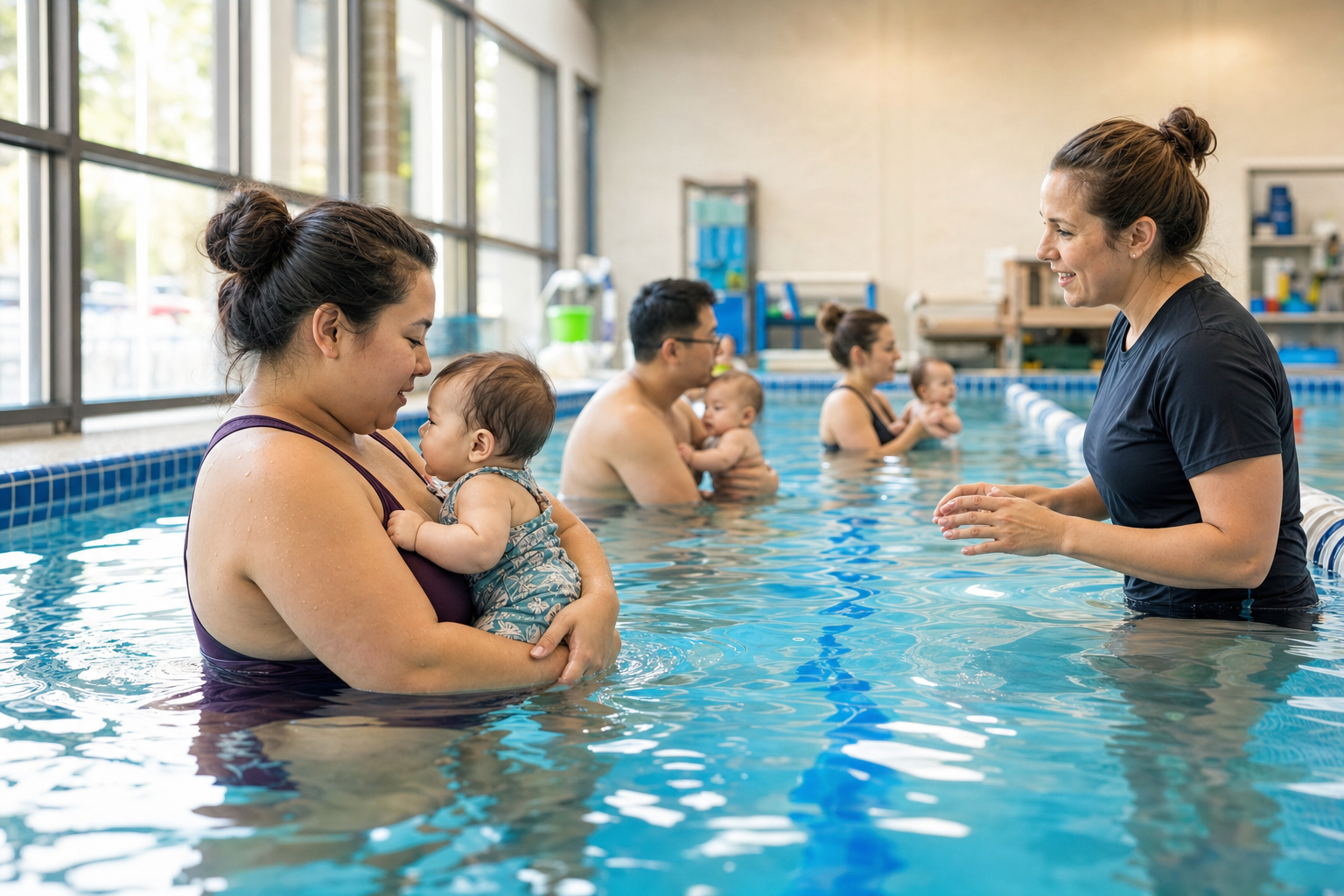
If you're a plus-size parent, a bigger‐chested caregiver, or someone with limited shoulder mobility—or simply someone who feels exposed in parent-baby swim—it's totally possible to find or adapt swim holds that are both secure for your child (age 0-36 months) and comfortable for you. The right hold helps your baby get steadier support, helps you feel more confident, and lets both of you enjoy the water.
Which Holds Feel Secure and Comfortable When You Have a Larger Body or Limited Mobility
Face-to-Face Hold, or Chest Hold, is often the most grounding place to start. The baby faces you with their chest resting against yours, your arms beneath their armpits and maybe across their chest. For larger chests, let the baby rest their cheek off to one side, not squashed, so there’s no pressure on their airway. This hold gives you both eye contact, feels warm, and makes breathing easier. In crowded or noisy pool sessions, it’s a reliable hold because you control what the baby sees and feels most.
Hip or Side Hold becomes easier for babies who are about 6-24 months old, as they build core strength. You nestle them on your hip or against your side; one arm supports their back or bottom, the other can support their torso. This hold gives you more freedom of movement, puts less strain on shoulders if you stagger your arms, and for larger bodies, you can brace yourself against the wall or rail for more stability.
Supported Back Float or Cuddle Hold gives baby a rest. You support their head (resting gently on your shoulder or in your hand), their back and hips. Water at shoulder height helps hold them comfortably. If you have limited shoulder mobility, let their head lean into your chest or neck—not too far back—and have the instructor help you modify the position so your arm positions don’t strain.
Rolling-Aware Holds are important once the baby can twist or roll (typically around 4-10 months). Holds that support both chest and upper back, but allow hips freedom, work best. Cuddle hold is excellent here: you support neck and upper thigh while letting baby’s torso move. Avoid rigid upright newborn holds after they start rolling; those can accidentally bury the face or push the chin down. Adapt gradually as the baby’s control improves. (swimy.org)
Tips for Comfort, Confidence, and Moving Safely
Pick swim gear that works with your body. A supportive, well-fitting tankini or one-piece with thick straps helps you feel secure. Avoid slippery lotions just before class; wet fabric or skin on skin gives better grip. When entering or exiting, always use two hands (you and baby) or hold the rail—never reach down from the deck and squat, and always support baby with both hands when walking in or out. These simple steps reduce risk of slips. (waterwisekids.com)
If you want structure, routines, and safety built in, a guide like the 10-Week Plan of swimy.org walks you through progression week by week—practicing holds, cues, entrances and exits, floating—while helping you grow parent baby swim confidence. It’s especially helpful for parents who want predictable progress without discomfort. (swimy.org)
[[ctababy]]
If your shoulders are limited in mobility, try staggered arm positions. For example, for the chest hold, use one arm under baby’s torso and one across their back rather than both up at shoulder height. Ask the instructor to show every hold on your body so they can suggest modifications—perhaps a side-leaning posture or using poolside supports. Practising in calm water builds muscle memory and confidence so that crowded or noisy classes feel more manageable.
Stay alert for your baby's comfort signals: stiffening, arching the back, turning away, or suddenly going quiet can mean they’re uncomfortable or overwhelmed. When those cues show up, switch back to a more secure hold (face-to-face or chest) and pause. Frequent breaks, warm voice, consistent cues help both of you feel safe. (swimy.org)
How to Progress Safely & Build Confidence Together
As baby grows and you both get stronger, gradually introduce more dynamic holds. Begin with basic chest or cuddle holds, then add hip holds, side holds, or gentle forward glides when both of you are ready. Holds that allow baby to be more horizontal or to float supported become possible only when head control and core strength are solid. Until then, avoid submersion exercises or breath-holding on a schedule—you decide it together. (swimy.org)
Safety Caveats: Holds You Should Never Compromise
Never let go of either hand to adjust clothing, shoes, or phones. Always use both hands when supporting the baby. The baby’s face and airway should always be kept clear—avoid pressing under armpits only, lifting too high, or letting chin drop. Avoid slippery lotions or oils before class. Ask your instructor to demonstrate holds on your own body so you can ask for modifications. In parent-child swim classes, it's expected that you, the caregiver, do most of the holding and practice—you’re not a bystander. Always stay within arm’s reach; instructors, flotation devices, and life jackets help—but they don’t replace your support or judgment. (swimy.org)
Real Confidence Comes From Feeling Prepared and Seen
You deserve classes where instructors recognize all body types, not just one. If possible, choose parent-baby swim classes advertised as inclusive or adaptive. Look for small group sizes—3-6 parent-child pairs—where the instructor has time to observe you, adjust holds, and offer feedback. When swimming becomes a trust-building ritual—not just a skill-building class—you’ll find steadier support for your child and more confidence for yourself.
You’re not just holding your baby in water—you're holding space for connection, learning, and joy. With thoughtful holds, realistic progress, and respect for both your body and your child’s safety, swim time can become where you both feel safe, strong, and free.
120+ swimming exercises sorted by age — with video and instructions. Developed by swim instructors, completely free.

120+ swimming exercises sorted by age — with video and instructions. Developed by swim instructors, completely free.