Breaststroke Glide Game for Ages 7-10: Count, Slide, Breathe
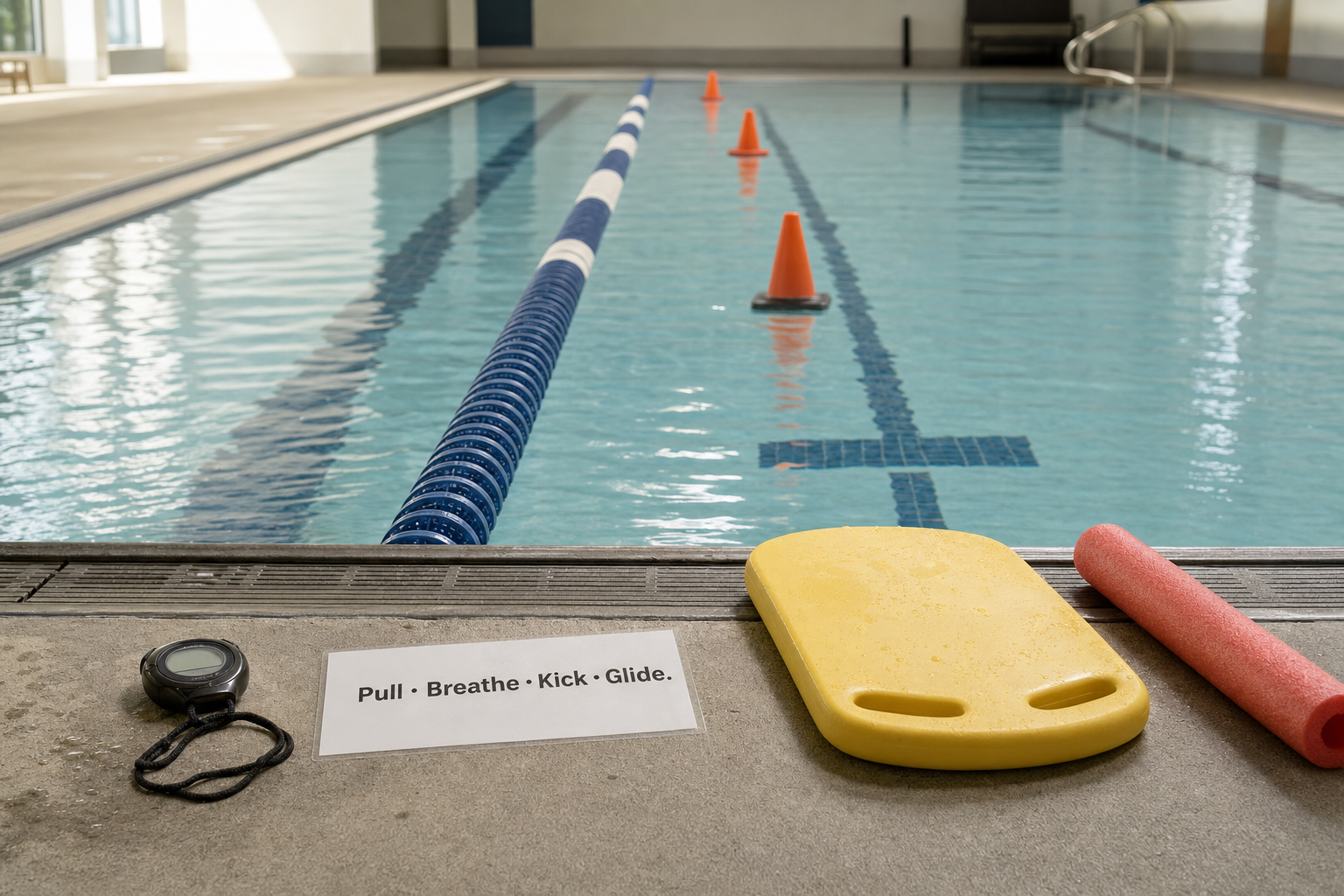
If your child is between seven and ten and struggling with breaststroke that feels rushed, choppy, or cloudy with too much splash, this mini-set will help make pull-breathe-kick-glide click. By using timed glides and cone targets, your kid will bond with the rhythm naturally, without drowning in technical jargon. Parents will gain simple cues and tools to spot poor timing, rushed kicks, or over-gliding. Read on—and you’ll be able to run this in shallow lanes any season of the year.
How the Game Works: Fun Mini-Set With Glides and Cone Targets
Right from the start, you need equipment: a couple of traffic-cones made for poolside or floating, a stopwatch or timer, and maybe some pool noodles.
Begin by placing cones in the shallow end, at intervals (say every 5 meters or every lane marker). The game is this: swim from wall to cone following the full cycle—pull, breathe, kick, and then glide—and see if they can touch the cone during the glide without rushing into the next stroke. You time the glide: the arms finish the pull, the breathing happens as they pull in, then the kick completes, and hands push forward into a streamlined glide. Hold the glide for about two seconds at first. If that’s easy, you can stretch it a little. This small pause helps teach the feeling of momentum and rest, something many young swimmers skip. According to a breaststroke pull-and-glide drill guide, holding the glide helps gain speed and reduce effort. (parentcoachdesk.com)
Cues Parents Can Use Easily
You don’t need to say huge technical things. Use short cues that a 7-to-10-year-old can understand and remember.
Cue “Pull, Breathe, Kick, Glide” each cycle. The pull is arms sweeping out and in. Breath should happen during or right after that insweep—don’t wait until the arms end past the head (which causes the dreaded head lift). Kick follows when the arms return, then stretch forward and glide. Many breaststroke guides emphasise that this timing is what makes the stroke smooth and efficient. (waterwisekids.com)
Watch out for these signs of rushing: arms and legs moving at the same time without pause, head lifting too early, or kick being weak or scattered. When you see that, stop and ask: “Did you pull first? Did you glide?” A simple call to freeze (on the glide) helps a child feel exactly where they lost it. Use playful cone touches or whistle cues for this. (swimy.org)
If you want a structured way to help your child progress at home, the 10-Week Plan guides you step by step.
The Setup: How to Run the Mini-Set
Here’s a sample format you can try during a regular swim session. It’ll take about 15-20 minutes once warmed up.
Start with a warm-up: easy swimming or back float, just to get the body moving. Then:
Slide into "Pull-breathe drills": swim just the arms (pull + breathe); legs resting or using a board. Then do the kick-glide piece: legs only, hands at sides, swim a short distance and hold the glide after each kick. Combine full cycles with cones: swim to cone, touch during glide, back to wall, rest.
Try something like: 4 × 25 meters (or yards) where first 2 lengths are pull-breathe only, next 2 combine all four steps with glides to cones. Rest in between. Keep safety in mind: shallow lanes, allow rest, no breath holds. When fatigue sets in, reduce distance or stop. (parentcoachdesk.com)
Also worth exploring is the 10-Week Plan at swimy.org, which gives structured drills, practice days, and timed feedback so kids can internalize legal breaststroke timing in bite-sized pieces. (swimy.org)
[[ctakid]]
Common Pitfalls and How to Fix Them
Parents often ask, "What goes wrong the most?" Here are the major pitfalls for kids this age, and simple fixes you can coach.
Over-gliding: Holding the glide too long or trying to stretch too far makes momentum die and stroke rhythm breaks. The aim is long enough to feel the glide, not stretching until form collapses. Teach them that arms stretch forward and legs line up—body like a pencil—then gently go into the next pull.
Pulling past the shoulders: When arms sweep too wide or pull beyond where shoulders allow, it causes drag and overloads the shoulders. Cue “small pull, wide hands” or “elbows stay up” during the pull. Using drills where arms are restricted (like between cones or near the wall) helps teach controlled pulling. (swimsmarttoday.com)
Head lift too early / breathing late: If breathing happens before the pull finishes, or head rises too high, the hips sink and body loses streamline. Cue “breathe during insweep,” not after arms recover. Use drills where kids just lift chin slightly, then streamline head back quickly. (waterwisekids.com)
Safety Notes, Seasonality & Fun Extras
Always use shallow lanes for these games so children feel secure and can stand if needed. Let them rest between lengths. Avoid holding breath for long lengths. Game style timer glides should be short—just seconds, not stretched breaths. This helps prevent fatigue and makes breathing calm. These drills work year-round: indoor pool or outdoor, summer or winter. The key is consistency over time.
To keep it fun, turn the set into a challenge: set up cone targets, time the glides, maybe a race where winner reaches the cone with best glide. You can use noodles or kickboards for support early on. Celebrate when glides feel smooth or breathing stays calm. Feedback like “Loved that glide!” or “Nice slow pull!” helps.
Why This Matters
A child who learns breaststroke with correct timing will swim more efficiently, tire less, and develop better breathing habits. Overwhelming swirl of moves becomes a clear-pattern in their mind: pull first, breathe just after pull, kick, finish with glide. This sequence, over time, shifts from “thinking about it” to “just doing it” without stress.
You as a parent, with simple cues and cone-targeted mini-sets, can spot problems early—rushed kicks, improper head lift, over-pulling—and fix them before they become habits. It makes lessons more productive, swimming more enjoyable, season after season. Use the tools here: cues, drills, glide-games, safety precautions. You’ll see smoother, calmer breaststroke emerge—and hearing that “Pull-Breathe-Kick-Glide” become second-nature.
120+ swimming exercises sorted by age — with video and instructions. Developed by swim instructors, completely free.

120+ swimming exercises sorted by age — with video and instructions. Developed by swim instructors, completely free.