Breaststroke Pullouts for Ages 9-12: Safe and Legal
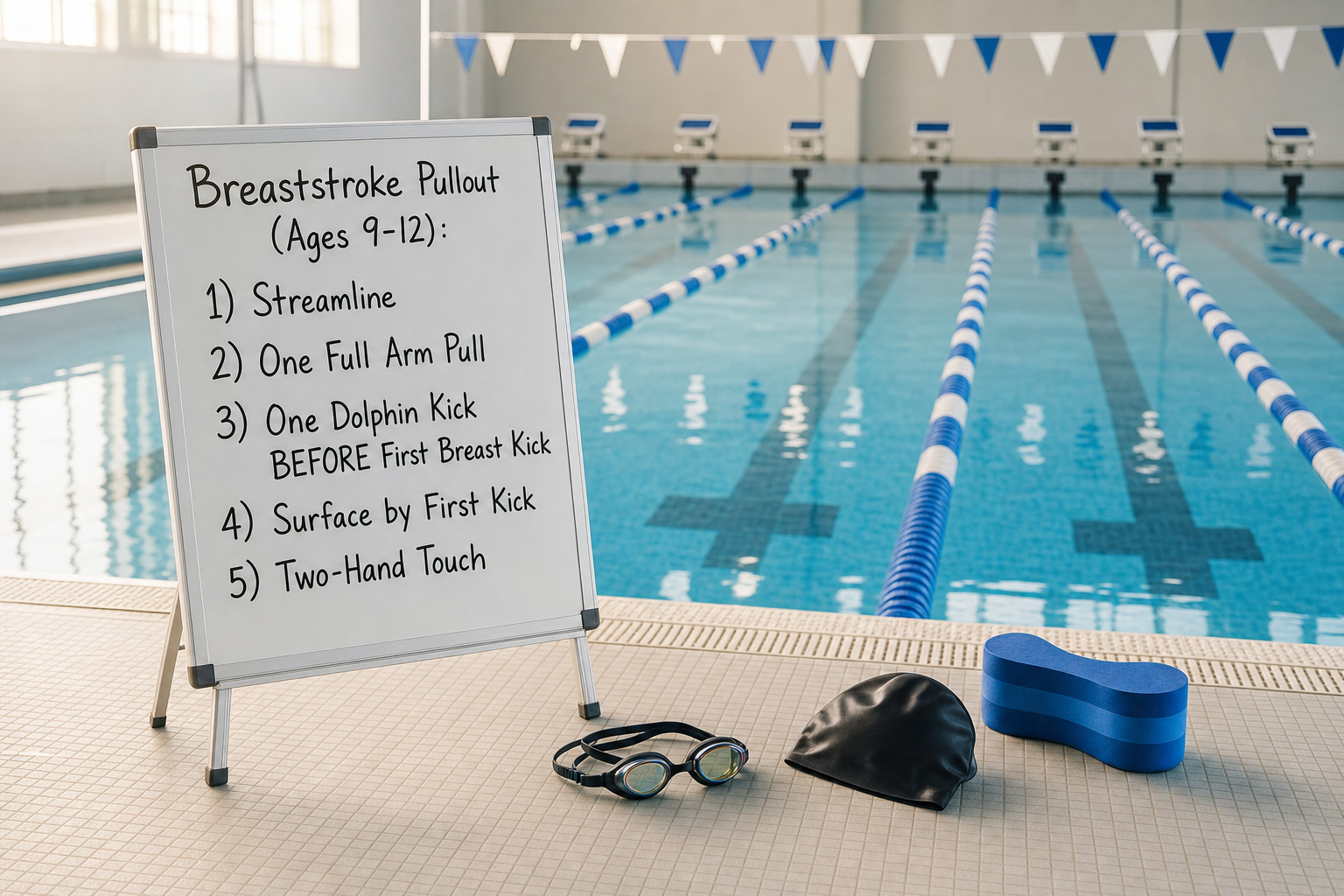
Every young breaststroker wonders: how far can I go beneath the surface after the start or a turn? What exactly am I allowed to do—especially when it comes to that sneaky dolphin kick? Parents, here’s what kids ages nine to twelve should know about breaststroke pullout kids, legality, safety, and avoiding disqualifications.
What’s a Legal Dolphin Kick & Underwater Pullout?
After the start or wall turn in breaststroke, competition rules from USA Swimming and World Aquatics permit one complete underwater arm pull back to the legs. You may include exactly one dolphin kick (both legs together, like in butterfly), but only before the first breaststroke kick. Once that breaststroke kick occurs, the swimmer must break the surface and begin swimming. Any extra dolphin kicks outside of that narrow window can lead to disqualification. (resources.fina.org)
The sequence looks like this: push off in a streamlined position, glide, full arm pull, one dolphin kick (optional but legal right after the pull as long as it’s before the breast kick), surface to breathe, then a breaststroke kick before the breakout stroke. (waterwisekids.com)
Why Short, Efficient Pullouts Help Older Beginners
Efficiency under the water sets the tone for the whole lap. A good pullout for school-aged swimmers delivers speed without wasting energy. Too long underwater means you hold your breath longer, fatigue picks up, and rhythm suffers. Short, well-timed pullouts help athletes 9-12 push off fast, keep momentum, and pop up right when they need oxygen, so the next stroke starts strong. Coaches often begin drills focusing just on the pullout to build safety and form first. (usms.org)
If you’ve seen programs like the 10-Week Plan from swimy.org, it builds pullout skills gradually—starting with pushes off the wall and glides, then adding arm pulls and the legal dolphin kick as kids get comfortable underwater. That kind of structured progression safely introduces these techniques. (usaswimming.org)
Safety Limits: Breath Holds & Depth
Underwater pullouts carry a risk if kids stay down too long. In age-group practice and competition, coaches track time from push-off until the head breaks the surface. For ages 9-12, underwater sections should be brief—often no more than three to five seconds, depending on the swimmer’s comfort and experience. Never push a child to hold breath for longer than feels natural.
If you want a structured way to help your child progress at home, the 10-Week Plan guides you step by step.
Depth matters too. Too deep in dive or wall pushes means both pressure and anxiety can increase. Aim to break the surface just before or by the first breaststroke kick. Breath should come before hands reach their widest point in the breakout stroke. If they surface too late—after arms are already wide—it can be an off-line pull or even cause a DQ. (pmc.ncbi.nlm.nih.gov)
Common Disqualifications (DQ) Parents Should Watch
[[ctakid]]
Errors around the pullout are frequent but preventable. Here are pitfalls parents can help their child avoid:
In breaststroke, except during the legal pullout phase, hands must stay above the hips during arm pull. If arms pull past hip level while doing regular strokes, that's illegal. Similarly, legs must move together in a correct whip kick; splitting feet or doing flutter or scissor kicks result in DQ. One dolphin kick is allowed only after the pulloff or start—not in the middle of the stroke. (usaswimming.org)
Another mistake: breathing too late. Head must break the surface by the first breaststroke kick after the underwater pull. If the child takes air only after pulling wide arms or after hands fully open, that's likely off-line or even illegal under some judges’ view. Also, failing to touch the wall with both hands simultaneously at turns and finishes is a frequent DQ reason. (usms.org)
Lastly, timing issues: pulling and kicking at the same time instead of pull → dolphin kick → break → breaststroke kick messes up speed and risks a technical violation. Encourage drills that separate each part so that transitions are clean. (lanemate.usms.org)
Breaking Down the Underwater Pullout Sequence
Here’s how a safe, legal breaststroke pullout looks for a 9-12 year old:
- Push off wall or block in streamlined shape with arms extended forward, hands together, body tight.
- Glide passively — enough to feel momentum but not too long that breathing is delayed.
- Begin one full underwater arm pull. Hands must sweep outward then inward under chest or to hips but must complete before surfacing.
- After or during the arm pull (but before breaststroke kick), execute one dolphin kick. Keep motion tight and body in line.
- As feet finish dolphin kick, prepare for the breaststroke kick. At that same moment, break the surface of the water.
- Once surfaced, take a breath, complete one breaststroke kick, recover arms, and continue with regular breaststroke rhythm.
Practicing each phase separately—glide, pull, dolphin kick, surface, breast kick—makes it easier to avoid mistakes on the whole pullout.
Tips for Parents: Helping in Practice and Races
Watch your child participate in swim practice. Ask coaches for feedback on whether underwater times feel safe. Encourage mental cues like “pull first, kick then breathe”. Don’t let kids compete if they feel uncomfortable underwater.
In races, remind them: don’t stay under until they’re gasping. Don’t let large hands-wide breaks or early kicks ruin their breakout. Often, judges see the head breaking surface too late or arms flaring outward before the breath—that’s visible to officials.
Practice often, with video if possible. Celebrate clean breakouts. Reduce pressure to go far underwater before the child is ready.
Pullouts are powerful tools in breaststroke when used safely and legally. For 9-12 year olds, short, clean underwater phases built step-by-step protect safety and build speed. Avoid extra kicks, breathe on time, keep arms legal, and touch the wall with both hands. With practice, your child can start strong and swim better every lap.
120+ swimming exercises sorted by age — with video and instructions. Developed by swim instructors, completely free.

120+ swimming exercises sorted by age — with video and instructions. Developed by swim instructors, completely free.