Shy Baby, Busy Class: Choose Calmer Water
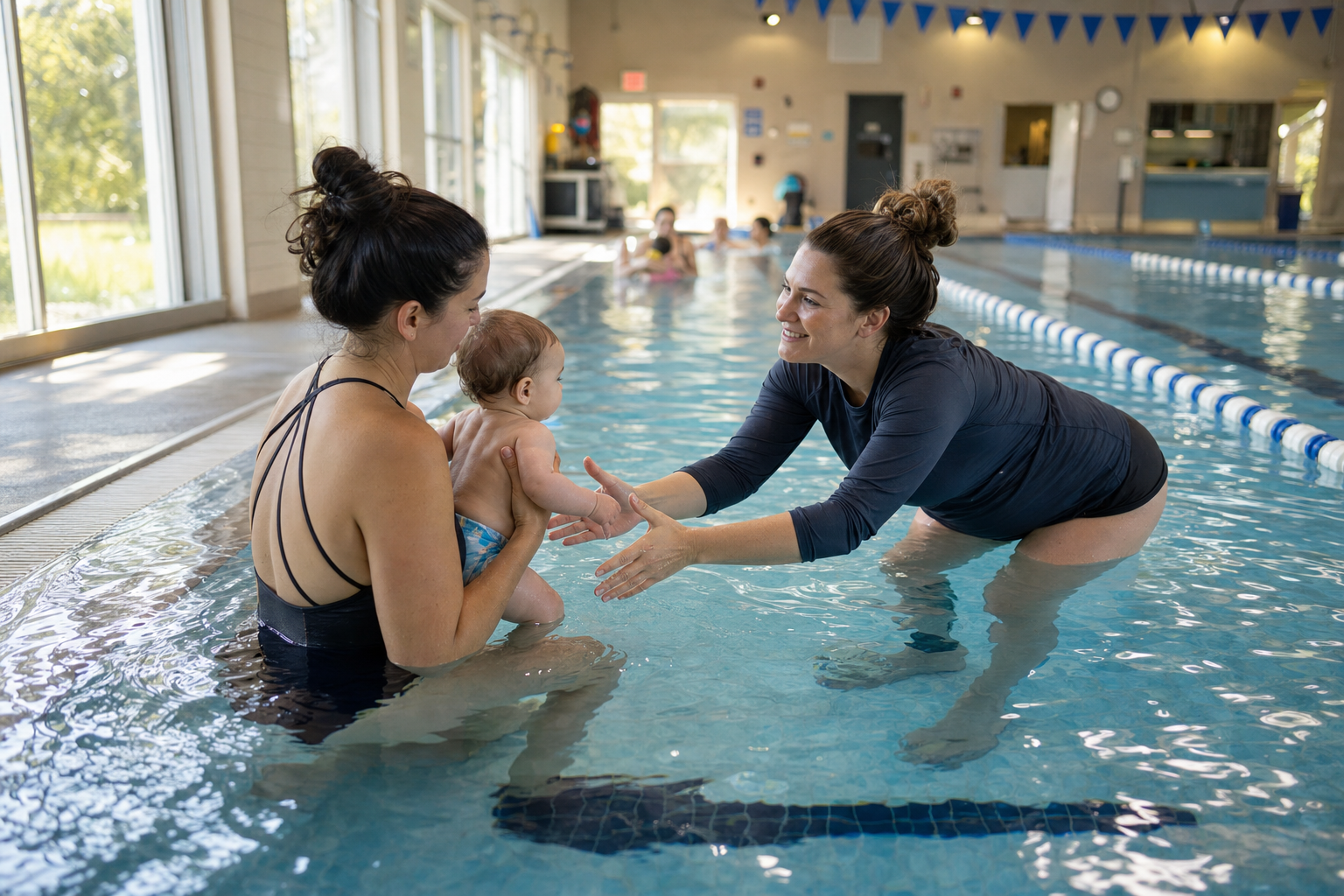
Some babies seem scared at swim class—not because they hate water, but because the environment does. Between loud splashes, echoing walls, fast transitions, and crowded lanes, even a 4-month old can feel overwhelmed. If your baby is insecure rather than water-phobic, a quieter space might make all the difference. Let’s get into what to try now and how to find swim classes built for calm.
Why Some Babies Seem Scared at Swim Class
When babies are about 4-36 months old, their senses are highly sensitive. If the class has echoey ceilings, strong overhead lighting, or constant splashing and whistles, even simple things like putting their face in the water can become a crisis of overstimulation. Parents often assume this fear is just “temperament” — it’s not. Many toddlers freeze, refuse face wetting, or cling when the pace is too fast or when transitions are sudden. These are signs of stress, not misbehavior. Recognizing those cues—turning away, stiffening up—is the first step to helping the baby feel safe. (swimy.org)
What Parents Can Do Right Away
Start by choosing times and classes designed for quieter experiences. Family swim hours or public swim sessions with fewer people tend to be calmer. Evening or weekday early morning slots often mean fewer kids and less noise. Make sure to arrive early so you can settle in, warm up, and let your child adjust before the lesson begins. Short exposure and warm water matter: cold water or lengthy time underwater can intensify fear. Holding baby close, talking through the steps, and introducing each new sensation slowly can build positive associations. These aren’t just suggestions—they’re supported by experts observing what works. (safesplash.com)
Private lessons or very small groups are especially helpful. In small classes, instructors can move at the child’s pace, noticing when they need a break or extra reassurance. Larger group classes often hurt more than help when a baby is overwhelmed because there’s less time for individual support. One swim school limits classes to three children so each gets attention and feels seen and safe. (shapland.com.au)
Using Structures for Success
No one wants to gamble on what environment will work best week by week. That’s why structured plans help. For example, the 10-Week Plan from swimy.org offers a week-by-week guide so you can build up routines, schedule around naps and feeding, and practice short pool visits. It’s not about pushing for performance, but about readiness and consistency. Between weeks three and five, many babies show measurable improvement in comfort—and often parents and instructors notice the fear lessening. (swimy.org)
[[ctababy]]
Adjusting Class Format
Consider switching to a private session or small group if the usual class feels overwhelming. If instructor pacing is too fast—lots of songs, sudden submersion, or many children splashing at once—ask if lessons can be broken into smaller steps. Maybe limit the group to two or three children, avoid rush at transitions, or ensure familiar caregivers stay in close contact during the lesson. These changes can help your baby feel more secure. (llms.cannonballacademy.com)
Safety Caveats and Gentle Care
Never force participation just to build toughness. That usually backfires by increasing fear. Babies learn when they feel safe. Use warm water (around 87-94°F or 30-34°C for under-3s), predictable routines, and support from touch and voice. Watch for signs of fatigue or freeze: if baby stops responding, seems glazed or pulls away, it’s time to pause or end the session. If tearfulness persists over many classes, talk with your instructor about adjustments. Sometimes shifting to a private class or slower paced environment helps more than sticking with group format. (healthychildren.org)
spotting the right class for your baby
When choosing a swim school, ask what class sizes look like, what the ratio of instructors to children is, whether drop-offs are allowed, and whether parents are in the water. Temperament is only part of the story; the pace, crowding, pool design, and acoustic environment matter a lot. You want a lesson where transitions are gentle, noise is managed, and you aren’t hustled through submersion or face wetting. Find places where instructors let you stay close until your child builds trust. Watch a lesson if possible before you commit. (healthychildren.org)
Why This Matters Long-Term
A calm baby swim class isn’t just less stressful in the moment—it sets a foundation. When babies feel secure, they build positive water memories. Those early wins mean confidence grows, not fear. Those toddlers who once resisted face wetting or cried at class may, over time, start to splash, float, even enjoy it. And parents who learn how to spot overwhelm, choose class format, and practice routines carry that skill forward: so many later challenges trace back to early stress. You don’t need a bold, loud lesson. You need one that listens to your baby.
In managing fear of water, what the pool looks like, how many children are in a lesson, how loud everything is, when transitions happen, and how much control your baby has—all of those matter more than simply blaming their temperament. End of the day, what helps most is choosing calmer water.
120+ swimming exercises sorted by age — with video and instructions. Developed by swim instructors, completely free.

120+ swimming exercises sorted by age — with video and instructions. Developed by swim instructors, completely free.