Windy Pool Days: Warmth, Wind Chill, and When to Bail
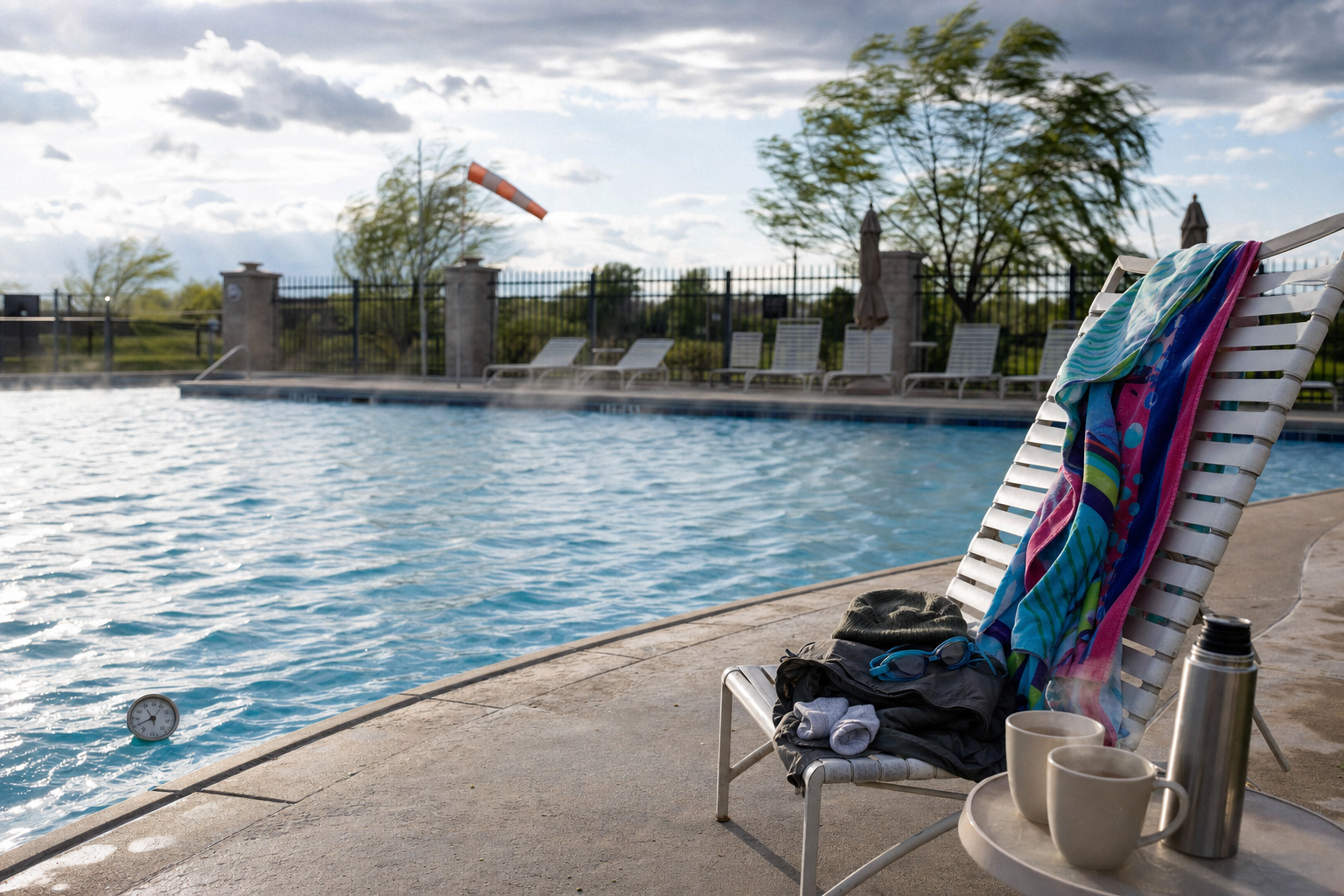
When kids come out of the pool wet on a windy day, even if the air feels mild, they can lose body heat fast. As parents of 3- to 12-year-olds, your go/no-go decisions and warm-up plans make all the difference between a fun swim and a risky one. Here’s how to safeguard against wind chill swimming kids problems: learn what to watch, when to pause, and how to re-warm quickly so that outdoor pool fun stays safe and happy.
How Wind Really Packs a Chill
Wind increases heat loss from wet skin dramatically. Wind chill doesn’t change water temperature, but it speeds up evaporation and makes kids feel colder than the thermometer says. According to the U.S. Weather Service, wind chill measures how fast exposed skin loses heat due to wind and cold air. Wet skin makes that process much faster. (weather.gov) Even mild breezes of 5-10 mph blowing over wet towels, hair, or suits can make a 75°F day feel like 60°F or lower to a child sitting still. The damp becomes the danger zone.
Know the Critical Thresholds: When to Go, When to Stay
Water temperature matters, but so does how often kids exit the water into wind and cold air. The Council for the Model Aquatic Health Code recommends that children’s swim lessons be held in water around 82°F to 86°F (28°-30°C). Anything much lower, especially outdoors with wind, increases risk of chill and hypothermia. (cmahc.org) If the air temperature is under 70°F (21°C) and windy, outdoor pool sessions should be much shorter, and towel break opportunities should be built in frequently.
Watch for early warning signs — shivering is your body’s alarm system, and changes in skin color (pale, bluish lips or fingers) are serious. These are indicators your child is losing heat fast. If either shows up, it’s time to bail or head indoors.
Smart Warm-Up and Re-Warming Strategies
You want to plan ahead so that when your kid is wet and the wind comes, you have what’s needed to get warm quickly. After water time, swap out wet suits right away. Damp suits or stay poolside in swimwear under wind is a fast track into chill. Head and feet lose heat fastest: pack a dry towel, warm jacket, knit cap that covers ears, and dry shoes or socks in a bag ready to go.
Also plan indoor warm‐ups during the swim season. For example, many outdoor swim programs (for ages 3-12) use structured training or lesson plans that include warm breaks, warm clothes and hot drinks. For instance, programs similar to the 10-Week Plan at swimy.org include dry breaks and uniform warm-ups. Hyperlinking the specific plan helps parents see how others structure safe, gradual exposure across spring and autumn seasons. Have warm blankets on the rental chairs or in your car and a thermos of warm (not hot) drink to restore core temperature.
If you want a structured way to help your child progress at home, the 10-Week Plan guides you step by step.
[[ctakid]]
Go/No-Go Decision Guide
Deciding whether to swim outside should be based on a few simple checks. First: check air and water temperature. If water is below 80°F (26.5°C) and air under 68°F (20°C) with any wind, you might be pushing it. Second: consider wind speed. Even 10 mph wind when kids are wet and sitting still means heat loss triples compared to calm conditions. Third: check kids’ signs. Shivering, pale or blue extremities, complaints of being cold, slow speech, low energy — these are no-go signals.
Season matters: in spring and autumn, or in coastal areas, weather swings quickly. Clothing that works at noon might be soaked and icy by late afternoon. Always plan for that shift. If the forecast includes wind or sudden drop in temperature, shorten the session or move swim indoors.
What to Do If They’re Already Chilly
Imagine your child bursts out of the pool, shaking, teeth chattering. Here’s how to respond fast. First, get them out of wet clothes immediately. Put on something dry, ideally layers that trap air. Then cover their head — a few degrees can be saved with a towel, dry cap or hoodie. Dry their feet and hands, as extremities lose heat quickest. Use warm drinks (like water warm to touch, not hot), and cuddle under blankets or inside the car if needed. If you have a warm shower available, a brief rinse with warm water helps restore skin feeling and color without shocking the body.
Watch for deeper symptoms: very slow breathing, confusion, or extreme drowsiness could point to hypothermia. The U.S. Department of Health advises seeking medical attention when those show up. (cdc.gov)
Keeping Kids Happy in Spring, Autumn & Coastal Zones
In areas by the sea or during shoulder seasons, winds often gust off water or through open spaces, making chlorinated or even heated pools feel freezing once wet. Plan picks: find or schedule warmer water or sheltered pools when possible. Bring windbreaks or umbrellas to cut wind on pool decks. Use swimsuits made for cold: thicker materials, full-coverage rash guards or even wetsuit pieces help during brief dips out of warm water. Don’t let kids hang out in wet suits or bare feet until the car ride home without those extra layers.
Wrap-up
Wind chill swimming kids face real risk even when it feels “just cool.” Wet skin plus wind equals rapid heat loss — the same conditions that bring hypothermia. Parents get the best outcomes when they know safe water temps, watch for early signs like shivering and color change, and plan warm-ups and emergency re-warming steps ahead of time. Set your thresholds beforehand (air temp, wind, water temp), stop the swim if those are crossed, and make dry, covered clothing for heads and feet non-negotiable. That way outdoor pool days in spring, autumn or coastal chill can still stay wonderful rather than dangerous.
120+ swimming exercises sorted by age — with video and instructions. Developed by swim instructors, completely free.

120+ swimming exercises sorted by age — with video and instructions. Developed by swim instructors, completely free.