After the Storm: Flooded Parks Aren’t for Play
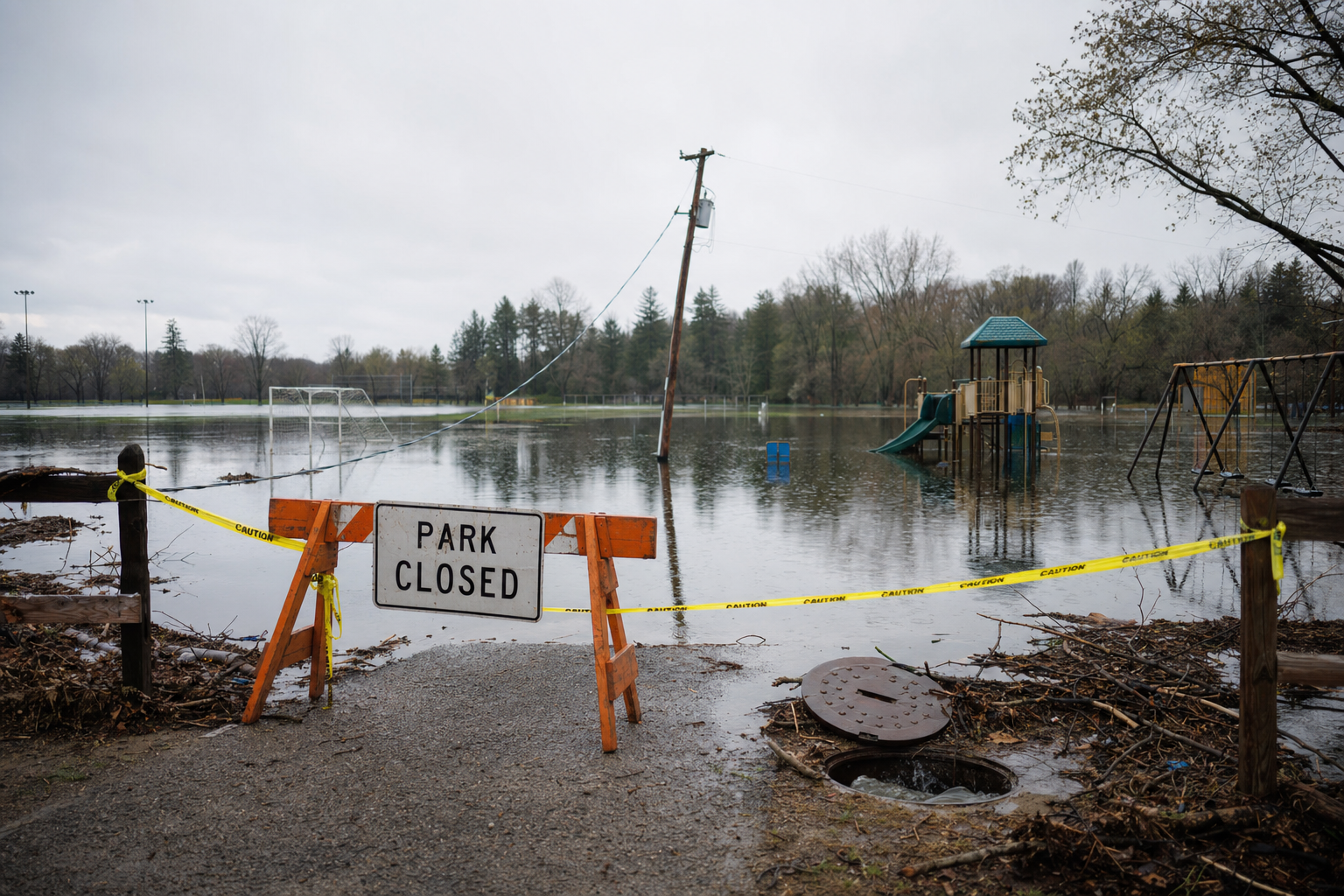
The Clear No-Play Rule After Heavy Rain
When storms hit and parks, fields or streets flood, the most important thing parents can do is make a firm “no”—children must stay out of floodwater. It isn’t just water, it’s fast-moving, dirty, full of hazards, and unpredictable. The U.S. Centers for Disease Control and Prevention (CDC) warns that floodwater often contains human waste, industrial chemicals, sharp debris, bacteria like E. coli or Salmonella, viruses, even sewage spills. Children playing in this water can suffer from infections, gastrointestinal illness, skin rashes, or worse. (cdc.gov)
Electrocution is another risk parents rarely see but should know about. Downed power lines, submerged electrical devices, or flooded outlets can energize water. The CDC cautions: never touch fallen power lines and never drive through standing water if power lines are involved. (cdc.gov)
Importantly, floodwater is nothing like a clean, chlorinated pool. Young kids may think it looks fun, but treating puddles, streets or fields full of post-storm water like pools is a mistake. They aren’t safe and never are until authorities say so.
Why Dirty, Fast, or Hidden-Hazard Water Is Different
Contamination Risks
Floodwaters often mix with overflowing sewers, pet or animal waste, pesticides or oil from roads. These contaminants carry microbes and pathogens dangerous for children, who tend to breathe in dust, put hands or objects in mouths, or have cuts. The U.S. EPA stresses that children absorb more harmful substances than adults through skin and ingestion. (epa.gov)
Electrocution Hazards
Even shallow floodwater becomes risky if it hides live electrical sources. Downed power lines can be submerged, nearby electrical equipment damaged or active. The risk that some object in the water is energized and conducts electricity is real. Always assume water could be live until you’ve confirmed otherwise through authorities. (cdc.gov)
Hidden Physical Dangers
Under floodwater, dangers lurk you can’t see: broken glass, sharp metal, open manholes, unstable ground. Currents can store debris that catches ankles. Small children can easily slip even in thin water. Flash floodwaters can move quickly and wash away anything or anyone in their path. (cdc.gov)
When and How Authorities Declare Areas Safe Again
Some parents build confidence in water skills long before anything bad happens. For instance, swim-training programs like the “10-Week Plan” help kids learn swimming basics in a safe pool environment. Putting off water fun until then makes post-storm risks clearer. (You can check the 10-Week Plan at https://www.swimy.org/10-week-plan.)
Parents want to know: when is a park, field or street safe after flooding? There is no exact time, but some markers help decide.
Authorities often use risk-assessments to test soil and water for bacteria, viruses and chemicals before reopening outdoor public spaces. The CDC notes microbes can stick around in soil for 2-3 months after floodwaters recede, especially in shaded or damp spots. (cdc.gov)
[[ctakid]]
In the UK, environmental health services evaluate sports pitches, playgrounds and gardens. They wait until water has drained, visible contamination and debris removed, and dangerous surfaces fixed. Sunlight and drying help break down pathogens naturally. Once soil is restored and hazards taken away, health agencies may declare the area safe. (gov.uk)
Parents can check official channels—local councils, health departments or national agencies—for announcements about reopening. Don’t assume safety because the water is gone; follow official updates. Signs, alerts or notices should signal full clearance. (cdc.gov)
How to Make a Clear No-Play Call
Be firm and consistent. Sit down with children (ages 3-12) and explain clearly: after a heavy rain, no wading, swimming, kayaking or boogie-boarding in floodwater. No exceptions. Use simple comparisons like “this water is dirty and dangerous, not like our pool.”
Choose safe alternatives: lifeguarded pools that have officially reopened are the best after storm periods. Encourage kids to swim or splash only in places with trained lifeguards, clear rules, and properly treated water.
What Parents Should Watch For in Kids
If a child comes into contact with floodwater, even just muddy puddles, watch for symptoms. Skin infections, redness, swelling, or rashes may follow. Digestive illness—vomiting, diarrhoea or stomach pains—can begin a few days later. If there are open cuts or wounds, clean them thoroughly, use waterproof dressings, and ensure tetanus shots are up to date. (cdc.gov)
If any signs of electrocution (tingling limbs, burns, shock) or more serious issues appear, seek medical help immediately. Don’t wait.
Bringing Children Back After the Flood
When you get the “all clear” from local authorities, proceed slowly. Inspect play equipment for damage. Check surfaces for sharp debris. Let kids wear shoes until you are absolutely sure the ground’s safe. Encourage handwashing with soap and using clean water after playing outdoors. Using clean, lifeguarded pools when they reopen is safest for water play.
Amid all this, parents can be role models. Show consistent behaviour: don’t enter floodwater, follow alerts, check trusted local authority sources. Kids pick up what they see. With storms or hurricanes, safety begins with you.
Playing in floodwater may feel tempting—kids love puddles and splash zones. But the risks—contamination, electrocution, hidden debris, illness—are very real. When you make a “no” clear, explain it simply, model safer options, and wait for the official okay. Once parks, fields and streets are clean, dry, declared safe, and lifeguarded pools reopened, you can bring back water joy with peace of mind. Safety isn’t about fear, it’s about making smart choices that protect your family.
120+ swimming exercises sorted by age — with video and instructions. Developed by swim instructors, completely free.

120+ swimming exercises sorted by age — with video and instructions. Developed by swim instructors, completely free.