Team Hotel Pool Rules: A Safety Code That Actually Works
Who Watches the Watchers? Designating Water-Watchers at Tournaments
Imagine this: a hotel pool full of 8–12-year-olds, all laughing, diving, chasing after cannonballs, and nobody seems in charge. That’s a recipe for disaster. The first rule of youth sports travel pool safety is to assign one adult supervisor—a “water-watcher”—for every small group of kids. This person’s job is simple yet critical: eyes on the pool at all times, no distractions. Phones down, no chatting away from the poolside. If possible, rotate watchers so no one gets burned out. Remember, the act of supervising can’t be shared among several adults in turns; someone must always be actively watching.
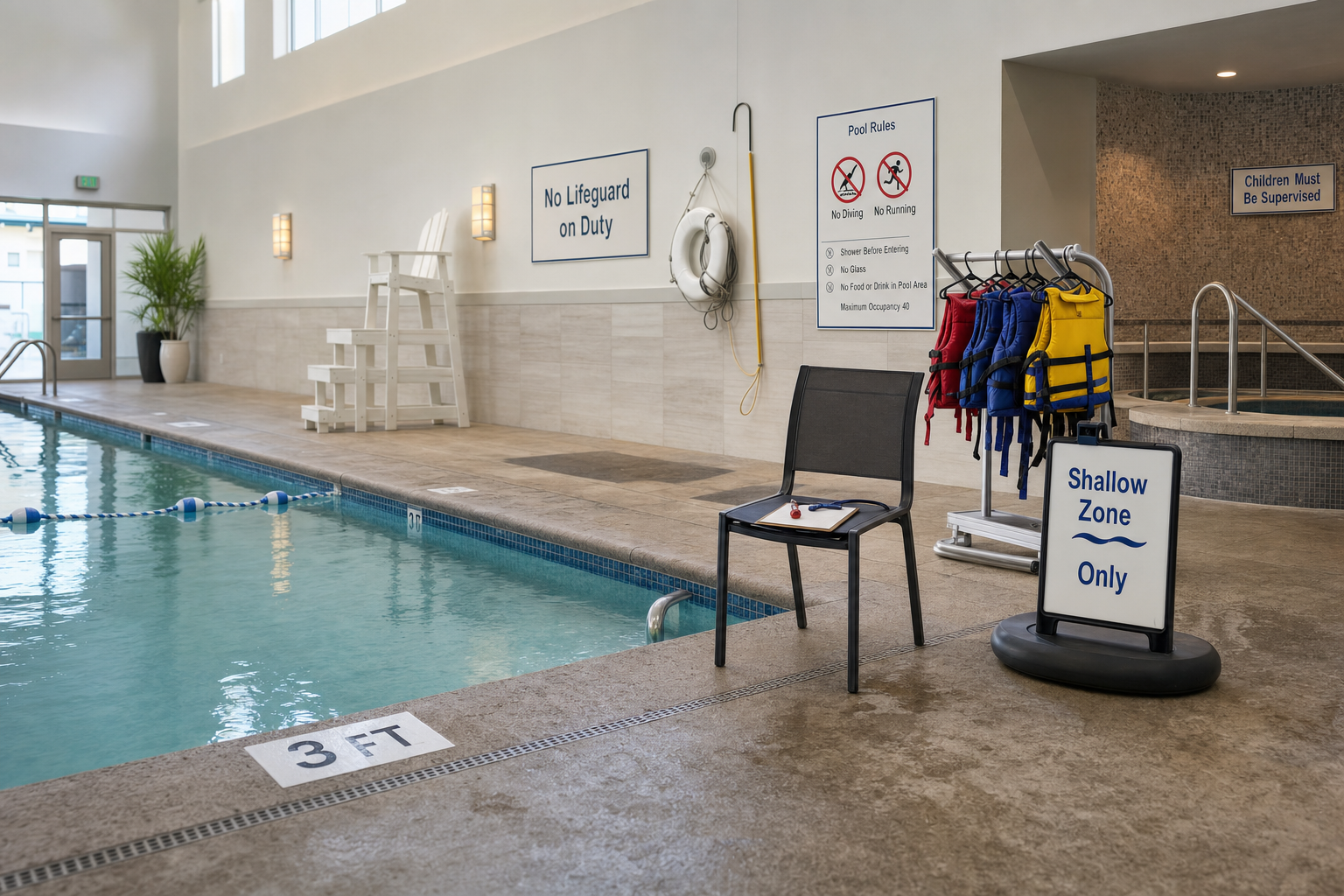
Always assume there is no lifeguard. Many hotel pools do not hire lifeguards, or the lifeguard shifts may end early. Laws vary by state or country, but often hotels are only required to post “No Lifeguard on Duty” signs and ensure safety gear is present. (lifeguardandsafetytraining.com) Without a lifeguard, rules need to be stricter: children can swim only when a supervisor is present, open hands on the deck, no running, and no horseplay.
Shallow-Only Rules & Lifejackets for Weak Swimmers
Pools with varying depths are tempting, but mixing deep ends with young or weaker swimmers is risky. During tournament weekends, set a shallow-only rule: only allow swimming in areas where all kids can touch bottom comfortably. If the hotel pool has a shallow end marked, restrict usage to that unless there’s proof that each child is a strong and confident swimmer.
For kids who are weak swimmers, assign U.S. Coast Guard-approved lifejackets or buoyant personal flotation devices. Floaties and arm bands are fun, but they are not substitutes. These devices should be fitted properly, fully fastened, and used whenever the child is in water over their head or in deeper zones. (nps.gov)
No-One-Alone Policies & MAAPP-Style Rules
Youth sport safeguarding principles make clear that one-on-one supervision of minors by adults must be observable and interruptible. That’s central to the Minor Athlete Abuse Prevention Policies (MAAPP) used in U.S. youth sports. (maapp.uscenterforsafesport.org) Translating that to the hotel pool means no child should ever be alone with an adult in the pool or changing rooms—even a coach or parent chaperone. Always keep interactions open to others.
If you want a structured way to help your child progress at home, the 10-Week Plan guides you step by step.
Also, no closed-door hot tubs or spas when kids are present. Such settings can create privacy risks; someone should always be visible and within hearing distance. Signs should be posted about maximum capacity, supervision requirements, and hot tub use policies.
Ratios, Age Mixing & Clear Rules
When teammates span ages 8–12, mixing them without plan adds risk. Younger kids need closer attention. Experts recommend stricter adult-to-child supervision ratios in water activities than for land sports. For example, one adult for every four young children in higher-risk settings. Ratios may loosen for older, stronger swimmers—but only if you can monitor those assumptions. NSFCC guidance: small groups, trained supervisors, activity risk, age, and facility type all shape ratio decisions. (sport.nspcc.org.uk)
[[ctakid]]
Set clear rules: no diving into shallow water, no swimming when tired, no pushing or dunking, no unsupervised use. Put them somewhere everyone can see—pool gate, hotel room, team meeting—and go over them at check-in.
“Swim Time” Protocols and the 10-Week Plan to Build Skills
It’s tempting to let everyone dive right after games—but exhaustion and delayed reactions increase danger. Set discrete “swim times” rather than open pool hours. Signal start and end clearly so watchers stay alert, and kids know when to get out.
Also invest in swimming lessons or structured skill builds before tournaments so weaker swimmers gain confidence. For example, the 10-Week Plan from swimy.org gives a solid structure for young athletes to improve swimming safety over time. This plan helps improve technique, stamina, and comfort in the water—all essential for travel weekends. (usaswimming.org)
Enforcement: Supervisors + Consequences
Rules mean nothing without enforcement. Here’s what parents and team organizers can do: assign clear accountability (who is watcher, who counts as backup, who owns rule-breaking), enforce consequences (no swim for kids who ignore supervision or shallow-only rules), ensure that lifejackets are always on weak swimmers, restrict ages or mix by comfort levels. Also do a run-through at check-in: inspect pool signage, depth markers, life rings or floats, gate locks. Don’t assume everything’s safe just because it’s in a hotel.
Summary: How Parents Get Golden Post-Game Swims
When tournament clubs, coaches, and parents agree ahead of time on supervision, shallow-only zones, one-on-one policies per MAAPP, lifejackets for weaker swimmers, and firm but fair rules, the pool becomes less a hazard and more a reward after intense games. Yes, travel makes it harder. Yes, age and swimming ability vary. But with these six pieces in place, team hotel pool rules can actually work—ensuring that fun splashing doesn’t lead to chaos or risk for 8–12-year-olds.
Start by designating water-watchers, enforce shallow-only plus lifejackets, adopt no one alone, mix ages carefully, and keep rules clear. That’s your real safety code—one that lets kids enjoy their swims, rest between games, bond with teammates, and parents sleep easier.
120+ swimming exercises sorted by age — with video and instructions. Developed by swim instructors, completely free.

120+ swimming exercises sorted by age — with video and instructions. Developed by swim instructors, completely free.