Surface Pour Games Before Face Dips: Gently Building Water Confidence for Babies
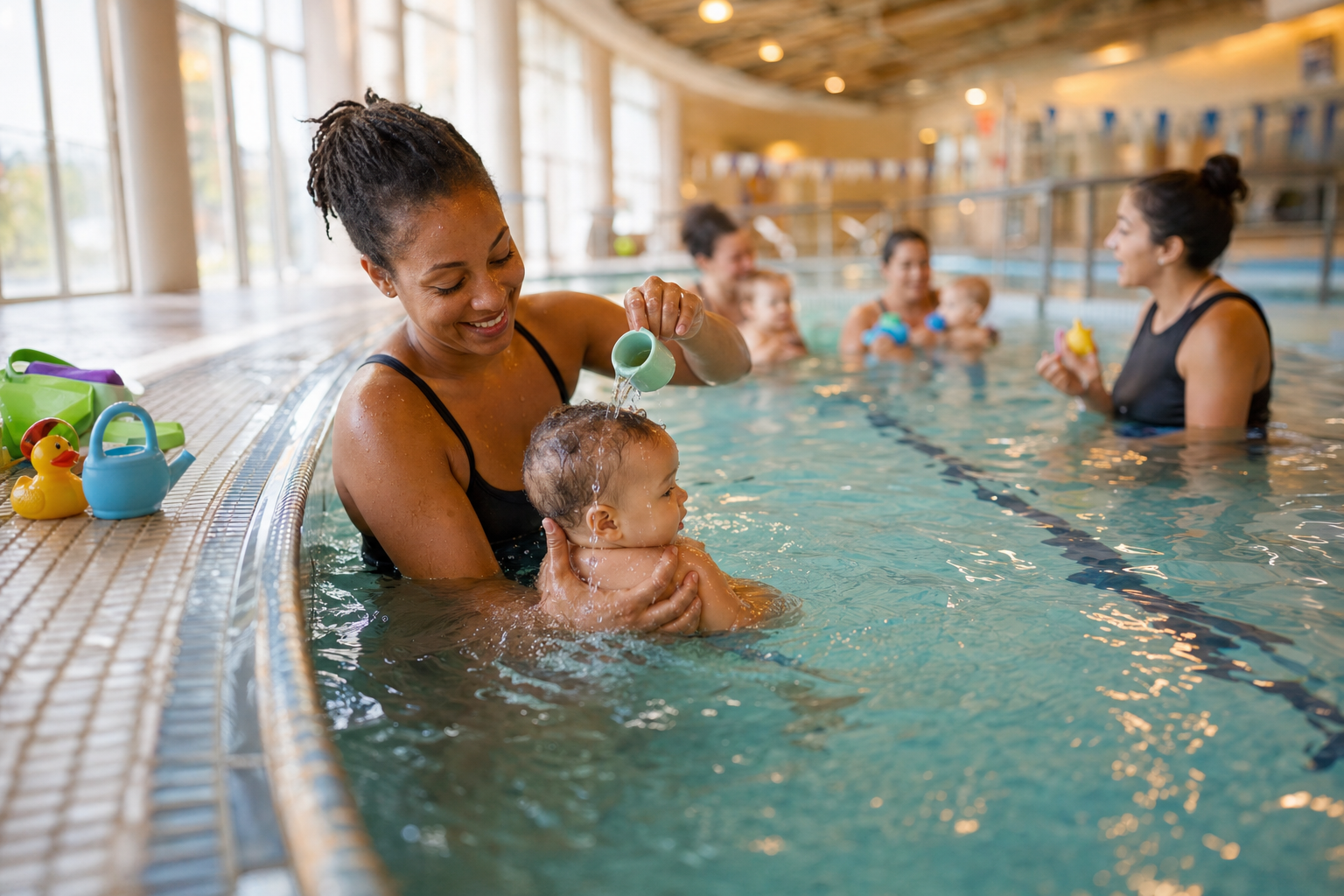
Getting your baby used to having their baby face in water doesn’t mean suddenly dunking them or following viral dunking trends. Instead, starting with gentle, predictable exposure — pouring water over the cheeks, shoulders, or hairline — offers safer stepping-stones than full submersion. These kinds of sensory progressions help babies (ages about 4-24 months) feel warm, alert, and calm before trying deeper face wetness. Trust grows, tantrums drop off, and when your child is ready, more advanced skills like baby swim face dips become possible — and more enjoyable.
Why Gentle Water Exposure Matters More Than Dunking
When a caregiver or parent pours water gently over a baby’s cheek, shoulder, or hairline, the baby learns what to expect. That builds predictable sensory exposure, reducing fear. According to the Infant Aquatics Program by Royal Life Saving in Western Australia, part of learning areas like breathing is helping babies develop confidence in getting their face wet, blowing bubbles, and learning to submerge — but only after simpler steps like warm water exposure and water on skin. (royallifesavingwa.com.au) This growth is gradual and based on readiness, not pressure.
In contrast, surprise pours or copying viral dunking videos often startle babies and can lead to coughing, stiffening, or turning away. These reactions are signals to stop — continuing through them can damage trust and make later swimming skills much harder to teach. The same official guidelines emphasize that infants must be warm, calm, alert, and eager before doing anything involving deeper water contact. (royallifesavingwa.com.au)
Stepping-Stones Before Any Face Dips
Here are gentle progressions to try, in sequence and only when your baby shows readiness:
Warm up with gentle pours
Begin by pouring warm water over the shoulders, hairline, and cheeks. Support the baby’s head so nothing surprises them. Use a soft cup or your hand. Say a cue like “warm water” as they feel the trickle. Babies experience this before trying anything involving first the front of the face. This helps introduce having their baby face in water without rushing into dips. Royal Life Saving suggests that under 12 months, water over the head or face should only be introduced slowly and always respecting the child’s comfort. (d1dhn91mufybwl.cloudfront.net)
Encouraging bubbles and breathing control
Once your baby accepts pours, you can play games involving blowing bubbles at the surface. These games build comfort with breath holding and water-on-face feelings. The Infant Aquatics program frames this under breathing and shows it improves confidence. (royallifesavingwa.com.au) Wait for cues like closing eyes or mouth, or the baby leaning into you — signs they’re ready. When they cough, stiffen, or turn away, stop. Recover with skin contact, calm words like “safe,” and return later. Don’t push through discomfort.
If you want a structured way to build water confidence at home, the 10-Week Plan guides you step by step.
Safe Framework and Class-Based Practice
Parent-child classes should always focus first on play and water familiarisation, not just pushing toward underwater skills or face dips. The Swim and Survive program in Australia, for babies and toddlers 6 months to around 3 years, builds water enjoyment, getting wet, floating, body orientation, and basic breathing or submersion only when the child is ready. Water familiarisation is part of the foundation. (royallifesaving.com.au) Instructors act as guides, not drivers.
[[ctababy]]
Homes can follow a similar approach. Use bath time or warm shallow pools to practice pouring water gently, blowing bubbles, back floats, and slow movement. Between classes, you might use the 10-Week Plan by Swimy.org which introduces cues, voice, breathing rhythm and similar gentle progressions through warm water exposure before moving toward deeper face wetness. It gives parents structure without forcing things. (swimy.org)
Recognizing the Right Moments and Red Flags
Only attempt more face wetness or a dip when your baby is alert, warm, fed, and calm. Babies aren’t ready for face dips if they are tired, under-stimulated, chilled, or after a big meal. Watch for nonverbal cues: turning away, crying, stiffening, or persistent coughing all mean “pause.” When these happen, go back to simpler steps.
Avoid copying viral videos that show babies being dunked without protection or warning. Such videos often skip the buildup of water confidence and might misrepresent baby cues. Experts warn that lessons do not make young babies “drown-proof,” and unpermitted submersion can harm development or safety. Maintain constant, close adult supervision in water at all times. (publications.aap.org)
Tips for Success: Practice, Trust, and Consistency
Warm water (around 30 °C / 86-90 °F) helps babies relax. Keep sessions short — five to ten minutes is plenty. Repetition of cue words like “safe,” “warm,” “float,” “soft touch” builds predictability. Praise effort when baby allows water, or even simply plays with water at their hairline. Trust comes gradually.
Take baby swim face dips only when your baby shows multiple readiness signs: stable head control, lack of fear with water on head, interest, and previous success with smaller exposures. Even then, always support face dips gently, allow recovery, and don’t push through protest.
How Gentle Exposure Supports Long-Term Water Confidence
Over time, gentle surface pour games create a strong foundation. Babies who have experienced consistent, safe exposure are less likely to fear water. They tend to trust their caregiver more, collaborate in classes, and learn breathing and submersion skills more smoothly. Early motor control, breathing regulation, and sensory comfort all benefit according to recent meta-analyses of aquatic interventions in infants younger than 36 months. (frontiersin.org)
Water confidence learned with respect and care makes baby swim face dips feel like natural steps, not scary surprises. By starting with the face, shoulder, hairline, then bubbles, then dips, parents help babies not just tolerate, but enjoy water.
If you care to try, the best path is always a gentle, structured plan: warm, calm times followed by small steps. With patience, your little one’s trust in you and in water will grow — so those milestone face dips become moments of joy.
120+ swimming exercises sorted by age — with video and instructions. Developed by swim instructors, completely free.

120+ swimming exercises sorted by age — with video and instructions. Developed by swim instructors, completely free.