Tide Pools with Kids: Wading Rules to Keep Them Upright
When you plan a visit to rocky tide pools with children, the first rule is simple yet lifesaving: don’t turn your back on the ocean. Especially when exploring slippery, wave-washed rocks with kids aged 4–12, that rule becomes a cornerstone of tide pool safety. This guide gives parents exactly what you need: what to wear, how to scan for waves, identifying safe zones and exit routes, as well as basic tide timing. With a reliable plan step-by-step, you’ll help children explore without fear—and keep them upright.
What to Wear and What to Bring
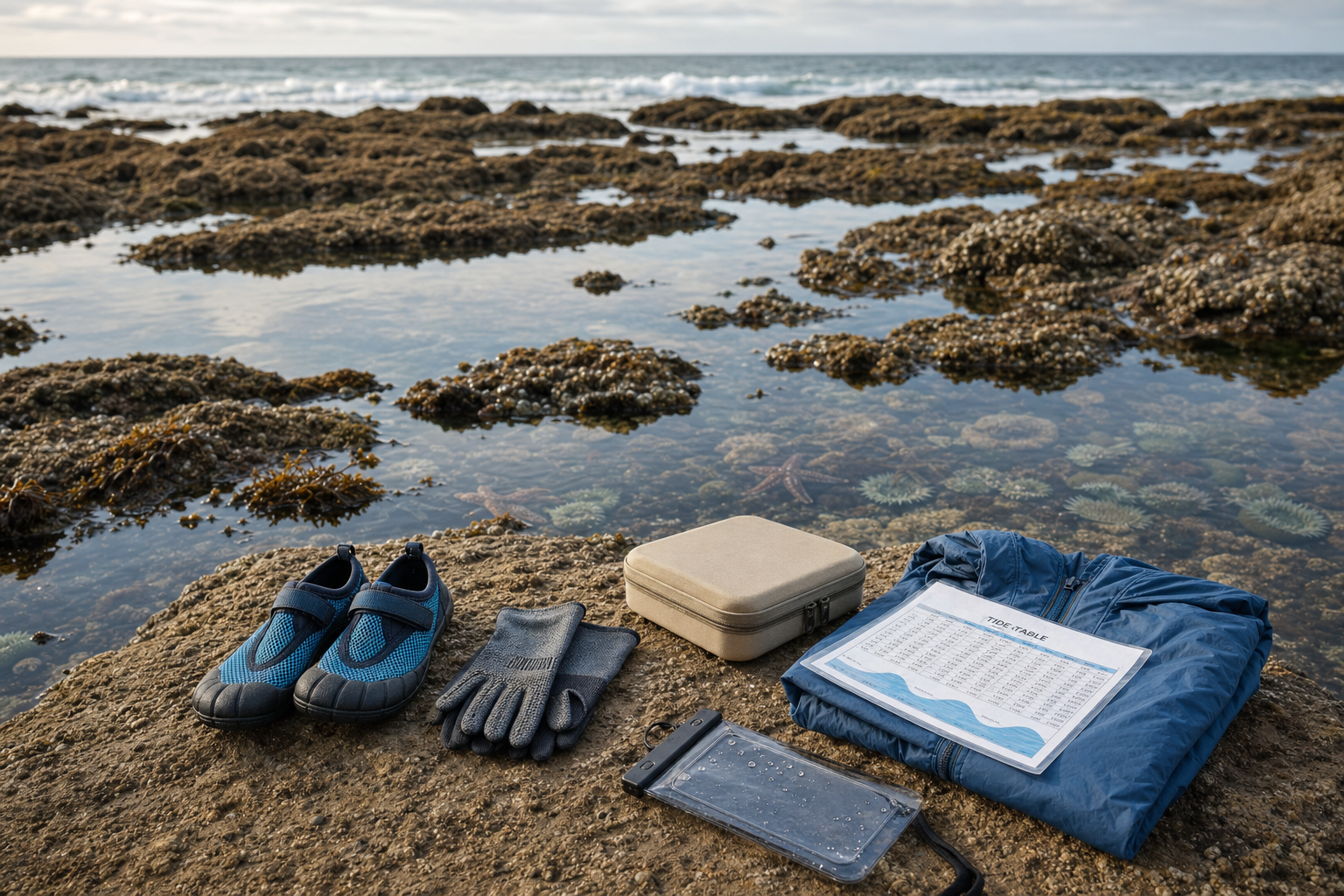
Feet land first. Every time. For ages 4-12, closed-toe, grippy shoes are essential. Water shoes, reef booties, or sturdy sneakers with deep tread help prevent slips on wet rocks covered in seaweed or barnacles. The California Coastal Commission advises wearing shoes that give you strong grip on slippery rocks.(coastal.ca.gov) Always bring layers—a windbreaker or fleece—and a change of socks: wet feet make balance worse. Slip-resistant gloves help if kids want to feel rocks or flip something over gently.
Bring other gear: a tide chart for your spot, a small first-aid kit (for cuts from sharp shells), sun protection, plenty of water, and a phone in a waterproof bag. Kids aged 4-6 should have an adult in full control: hand-hold policy. Hand holding means keeping the child within arm’s reach whenever there’s water near boots or waves have reach to ankles or legs.
When and Where to Go: Tide Timing & Choosing a Low-Tide Window
Do your planning ahead. Choose a low-tide window—official guidance from the U.S. National Park Service in Acadia says it’s best to explore tide pools starting about 1.5 hours before low tide and leave as the tide begins to come back in.(nps.gov) Check local tide charts and forecasts. The Coastal Commission in California recommends checking the tide chart so you start your adventure as the tide is going out.(coastal.ca.gov) Avoid days with high surf warnings or strong swell; rough seas increase the risk of wave-washing and being cut off by rising water.
When you arrive, scan the ocean for swell conditions. Are waves breaking too close? Are waves coming as regular sets or in unpredictable surges? RNLI warnings urge everyone near the sea to stay alert for large swells, especially when there are periods of calm surf followed by powerful waves with long swell periods. These conditions create a high risk of incident.(rnli.org)
Step-by-Step Plan on the Rocks: Safe Zones, Exit Routes, Wave Scanning
If you want a structured way to help your child progress at home, the 10-Week Plan guides you step by step.
Step 1: Pick your zone wisely. Identify flat-rocked areas with minimal slope, away from ledges where sneaker waves might sweep you. Safe zones are places with stable footing, exposure that allows you to see incoming waves from at least 20–30 meters out, and multiple exit routes (e.g. dry rocks or a path back to sand).
Step 2: Establish exit routes. Before kids step into tide pools, show them two or three clear ways back to high ground or shore. Make sure paths are not slick and are visible even if waves crash over them.
Step 3: Scan for waves constantly. Sneaker waves are large waves that can arrive without warning after long periods of mild surf.(weather.gov) Watch for sets with long swell periods, signs of breaking waves over reef edges, or water that surges unusually high. Teach children to keep eyes on the ocean and never turn their back—even to follow a crab or sea star.
Step 4: Keep children close. For ages 4–6, use the hand-hold policy: always stay within arm’s reach. Older kids (7–12) should understand the rule: stay where you can see the water’s edge and avoid edge zones. Let them explore safely in designated areas you have pre-checked.
[[ctakid]]
Step 5: Exit before tide rises. As low tide ends, water returns fast. Park Service guidance in Acadia says begin leaving as tide rises.(nps.gov) Parents should set a time to begin heading back, or use rising sea levels and creeping wet rocks as cues. Don’t wait until it’s too late to retrace your path.
Understanding Sneaker Waves: What They Are and Why They Matter
Sneaker waves aren’t a myth. They are large, unexpected waves that surge further up the beach than preceding ones, often after 10 to 20 minutes of relatively calm surf.(weather.gov) They can knock people off their feet, wash them over rocks, or pull them into strong currents. These are especially dangerous on rocky shorelines because slippery surfaces and sudden water force combine to reduce stability drastically.
Knowing about sneaker waves means staying alert even in peaceful conditions. Always watch the ocean, judge patterns of waves, and avoid complacency. RNLI safety advice includes consulting local advice, obeying signage, and avoiding risky areas when swell is large.(rnli.org)
Bonus Tip: Teaching Kids to Explore Responsibly & Swim Learn-Along Opportunities
Encourage curiosity, but pair it with caution. Tell kids to explore slowly, keep feet always planted before stepping, and inspect rocks before touching wildlife. Use a magnifying glass rather than pulling creatures off rock. Remind them the tide pool world is fragile. California Coastal Commission emphasises “Leave everything as you found it (or cleaner)”; touching animals harms them.(coastal.ca.gov)
If your child is nervous about water safety in open environments—ocean edges, creeks, rock pools—a structured swim or water safety course helps enormously. The 10-Week Plan by swimy.org offers progressive lessons; even for children aged 4–12, learning strength, balance, and confidence in water supports safer rock-pooling adventures. That extra training means when unexpected waves hit, kids have the confidence to duck, brace, or step back.
Final Takeaway: Ocean Respect More Than Rules
Tide pool safety with kids is about the mindset: respect the ocean, never assume it’s calm, always have an exit, manage distance from waves, choose appropriate gear, and supervise closely. With good footwear, wave scanning, safe zones, and exit routes, children can explore the rocky magic while parents sleep better at night. When waves surprise—which they will—staying upright is about preparation, alertness, and holding hands when needed.
Stay safe, stay curious, and let those tide pools reveal their secrets not dangers.
120+ swimming exercises sorted by age — with video and instructions. Developed by swim instructors, completely free.

120+ swimming exercises sorted by age — with video and instructions. Developed by swim instructors, completely free.