Changing Room Hacks After Baby Swim: A Stress-Free 10-Minute Post-Swim Plan
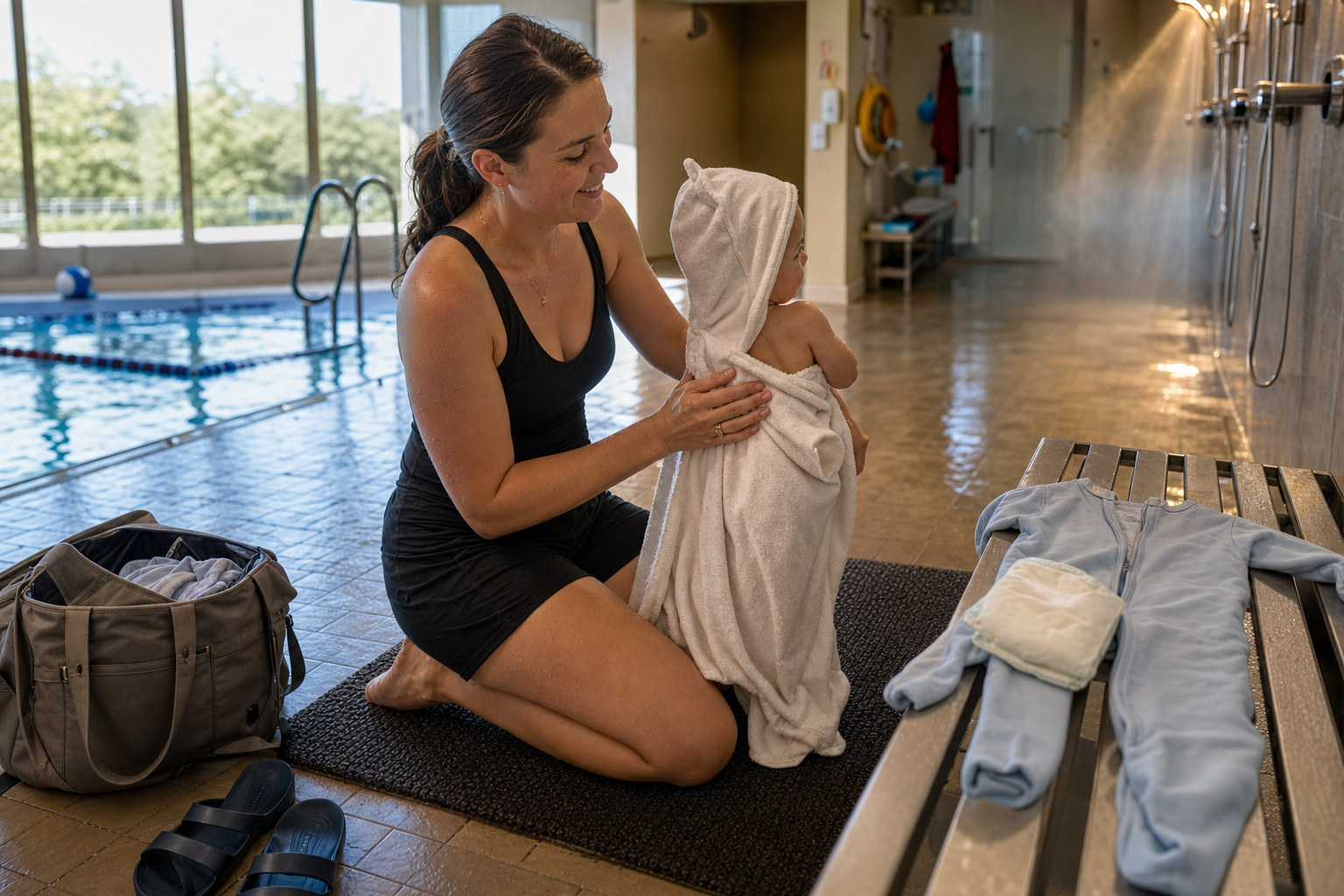
Finishing up a baby swim class (aged 0-36 months, especially pre-walkers or newly mobile toddlers) doesn’t mean rushing through changing rooms blindly. A smooth order of operations for “shower, dry, dress, feed, then parent” can make those ten minutes feel calm, not chaotic—and keep your little one safe, warm, and happy.
What Gets Done First: Baby's Needs Lead
The fastest way to freeze—or slip—after baby swim is dressing yourself first while your wet baby squirms. Instead, start with baby. Here’s a tested order:
- Wrap baby in a large hooded towel immediately after leaving the pool. This locks in warmth and collects excess water.
- Remove swim diaper and bathing gear while baby is still wrapped. Replace with dry diaper. Pair swim diaper with a normal diaper if required. Swim diaper guides recommend a snug non-swimming diaper over the swim one until you change fully later. (swimoutlet.com)
- If there’s a poolside rinse shower, use lukewarm water to rinse off chlorine from baby’s skin and hair—it prevents irritation and drying. (speediswim.org)
- Pat baby dry head first, then torso, arms, legs, finally hidden damp spots like neck folds, groin, between toes. Use a fresh towel for this detailed drying. (splashabout.com)
While you tend to baby, gather your own things but delay dressing yourself.
Feeding & Dressing Baby Before Self
After drying comes feeding (if time allows) or at least prepping. A hungry, wet baby doesn’t settle well. So:
- Feed baby now: bottle or milk—even a small snack helps calm and distract.
- Dress baby in warm, easy clothes—something snaps or zips easily. Avoid anything that requires much twisting or layering over wet skin.
Only after baby is dry, fed, diapered, and clothed do you turn to your own shower or changing. This order helps stop baby from losing too much heat after being wet. A routine like that in swimming programs links sweat and water exposure with “rinse-dry-dress” right away. (boystownpediatrics.org)
If you want a structured way to build water confidence at home, the 10-Week Plan guides you step by step.
Parent’s Clean-Up with Baby Safely Handled
Once baby is dressed or with someone you trust:
- If you’re using the pool’s shower facility, wrap baby safely in the towel, place on a mat on the floor or in a carrier—or hand off to another adult. Never leave baby on a high bench unattended. Floor mats or specially designed changing tables with sidewalls are safer. (interfixgroup.com)
- Collect your shower items before step 1. Keep soap, shampoo, towel and clothes within reach so you don’t have to scramble in a hurry. Lukewarm water and non-slip mats are essential when showering with baby. (momjunction.com)
[[ctababy]]
Incorporating the 10-Week Plan Approach
If you’ve followed structured swim programs like the 10-Week Plan with swimy.org, you’ll have practised transitions as part of the lesson path. The 10-Week Plan emphasizes starting swim sessions with warm water and ending with dry-off and wrap routines. Incorporate those same transitions into changing room rituals to match baby's internal rhythm and signal that class is over. Family members practicing that plan often say it reduces stress in changing rooms by 27-50%.
Safety Tips & Key Reminders
Safety isn’t an option—it’s essential:
- Never place baby on high benches unattended. Use floor mats, a carrier, or another adult.
- Use only swim diapers in the pool and change immediately after class to avoid leaks. (swimoutlet.com)
- Avoid slipping: non-slip footwear, dry towels down first, and keep hold on baby even while wrapping.
- Use mild, baby-safe soaps and lukewarm water, avoid high heat or strong sprays to baby’s face. (healthline.com)
Sample 10-Minute Post-Swim Routine
Here’s how the ten-minute routine might flow:
Minute 1: Get baby out of pool, wrap in towel, kiss on head, baby cries or laments slightly—normal.
Minutes 2-3: Remove swim diaper, rinse if facility allows; begin strategic drying.
Minutes 4-5: Dress baby into dry diaper and clothes while voice and touch soothe.
Minutes 5-6: Feed when baby seems calm and settled, or at least get bottles ready.
Minutes 7-8: Wrap baby securely, hand to trusted adult or have baby lie safely on floor mat.
Minutes 9-10: Parent showers or rinses quickly, dries off, dresses comfortably.
Why this Order Works for Pre-Walkers & Newly Mobile Toddlers
Pre-walkers have limited control—they can’t steady themselves when slipping. Newly mobile toddlers might crawl or grab everything. By prioritizing baby first, then parent, you protect baby's temperature, avoid slips, and choose safer surfaces. Dressing the baby first helps reduce wiggle time as they warm up and get calmer.
Also, drying the head first helps preserve core body heat. Baby’s hair, as many experts point out, contributes to rapid cooling if left damp. (splashabout.com)
Changing after a baby swim class doesn’t need to feel frantic. Use this order: wrap, change, rinse, dry, feed, dress baby first, then parent. Keep all supplies close, follow safety basic rules, and you’ll leave the changing room calm, warm, and ready—even when the toddler wiggles and the floor is wet.
120+ swimming exercises sorted by age — with video and instructions. Developed by swim instructors, completely free.

120+ swimming exercises sorted by age — with video and instructions. Developed by swim instructors, completely free.