Pool, Beach or Lake With Baby? Which Place Poses What Risks for Infants and Toddlers
Which Place Poses What Risks for Infants and Toddlers
When it’s sweltering outside, you might wonder whether a pool, splash pad, beach, river, or lake is safe for your 0-36 month old. The biggest concern isn’t just water — it’s factors you may not expect: drop-offs, murky water, currents, visibility, exits, and supervision. Here are the key differences across settings.
In a pool, conditions tend to be predictable. The depth is uniform or clearly marked, there’s often a firm exit, and visibility is usually good thanks to clean, chlorinated water. But risks remain: slips, entrapment under drain covers, and unsupervised toddlers who might wander in behind you. Pools are also where a lot of infant drownings occur in residential settings if there’s no fence or childproof barrier.
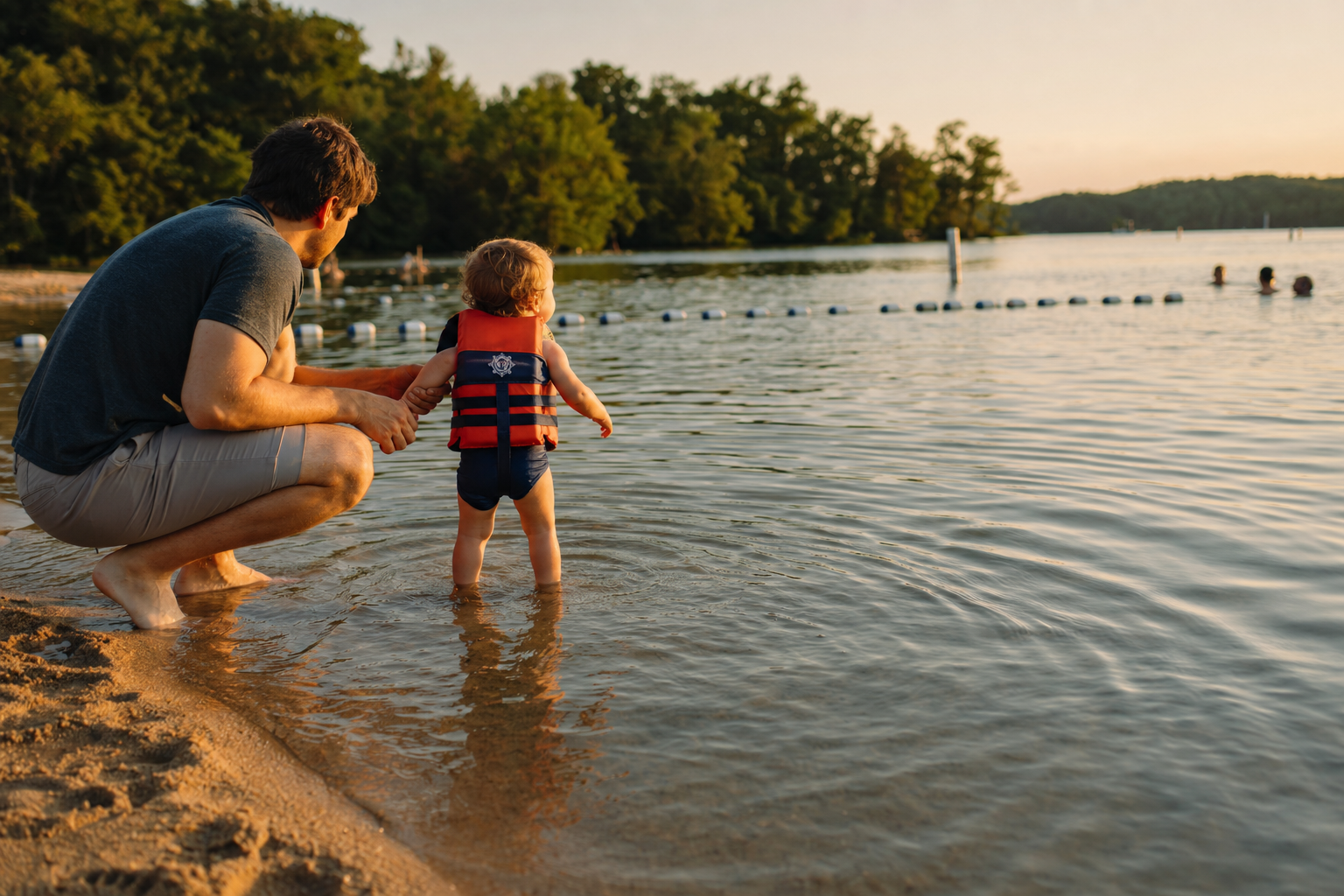
Beaches and lakes are trickier. Even a calm lake may have sudden drop-offs, underwater obstacles, cold temperatures below the surface, and murky zones you can’t see into. Currents exist in lakes, rivers, and ocean beaches—even when the surface looks still. Waves, tides, rip currents, and changing water depth can trick both parent and child. Visibility can be poor, too, making rescue or locating your child harder. (doh.wa.gov)
Splash pads are designed to minimize drowning risk by keeping water shallow and avoiding standing water. But they introduce other hazards: germs, slippery surfaces, strong jets knocking over toddlers, overheated ground, and swim diapers that fail. While generally safer for very young kids, neglecting water clarity or maintenance can still cause illness or injury. (splashpadguide.com)
Rivers are the wildest case. Even slow-moving rivers can sweep you away. Under-surface currents, strainers (hidden debris), and fluctuating water levels make rivers unpredictable. Temperatures often stay cold even on hot days. Rivers share risks with lakes, but also are more dynamic and dangerous. (nps.gov)
Open water exposure does benefit babies and toddlers—real-world settings help them develop comfort, strength, and balance in water. But those benefits only come when safety layers are strong: constant supervision, well-fitting life jackets, and choosing entry points with good exits.
What Safety Layers Matter Most
Supervision & Arm’s Reach
Across all settings, staying within arm’s reach of a baby or toddler is non-negotiable. Pools, splash pads, beaches, lakes, rivers—they all require your focus. Public water hazards like currents or drop-offs can appear in seconds; drownings are often silent. (cdc.gov)
Using structured programs like the “10-Week Plan” from swimy.org can give parents helpful guidance across different scenarios—pool, open water, safety prompts—so babies and toddlers learn gradually and have fun while building safety habits. (swimy.org)
Water Clarity & Exit Options
In pools, clarifying chlorine treatment and exits like ladders or steps are usually visible. In open water, visibility drops due to algae, silt, or murk. A lake or beach shoreline may hide underwater obstructions or sudden drops. Rivers may lack easy exits. Before entering, check where you can lung out, where the child can safely exit if frightened or cold.
[[ctababy]]
Currents, Cold & Drop-Offs
Even warm air doesn’t guarantee warm water beneath. Cold water causes shock and fatigue. Drop-offs change depth suddenly, especially at beaches and lake shores. Currents beneath open water surface can pull toddlers under or out, even in what seems like calm water. Be extra cautious around rivers. (home.nps.gov)
Life Jackets & Suitable Gear
A Coast Guard-approved life jacket (in the US) or equivalent is essential for toddlers in open water, boats, or when currents are present. Jackets for infants should include a crotch strap, head support, and a snug fit—looseness or gaps can allow tipping or slipping. Regular flotation devices like floaties or arm bands aren’t replacements. For strictly splash pad or pool play, they help confidence, but don’t treat them like safety gear. (chp.edu)
When to Start Teaching Swim Skills & Real-World Exposure
Experts agree that infant swim lessons often begin around 6 months. These early lessons focus more on water familiarization—floating with support, back floats, exiting the pool safely—not complex strokes. They build confidence, ear and face comfort in water, and awareness of safety rules. (bearpaddle.com)
Comparison: Which Venue Suits Your Toddler Best This Summer
If you are traveling or planning summer water days, here’s how the venues stack up for your 0-36 month old:
- A well-maintained pool with heated water is safest early on. Easy exits, clear visibility, and shallow edges are ideal.
- Splash pads are excellent for sensory play with low drowning risk—but only when water quality, shade, and surface traction are good.
- Calm lakes can offer a more adventurous open water experience: explore, splash, get used to cold. But bring safety gear and constant supervision.
- Beaches add waves, tides, and often lifeguards. Good for toddlers who can follow simple instructions; tricky for infants who typically need to stay in arms.
- Rivers should be reserved for experienced parents and older toddlers who understand staying safe; avoid fast currents, hidden obstacles, and always use life jackets.
Key Safety Practices to Take With You
Always check water quality advisories and weather near lakes, beaches, and rivers. Never rely solely on life jackets or swim diapers as safety nets. For infants under 6 months go slow: short sessions, warm water, safe environment. With toddlers 12-36 months, let them play but stay vigilant. Teach not to swallow water, avoid dove dives into unknown water, and exit when signs of fatigue or cold appear.
Open water, especially lakes and rivers, need respect. Even calm lake water isn’t always like pool water. Visible bottom, clean banks, gentle slope, no current — that makes a difference. Go in and out frequently, rinse off, and recognize that cold shock is real.
Let your child benefit from real water exposure this summer—pool time, splash pads, lake or beach fun—all can build confidence and joy as long as safety is layered: supervision, life jacket, clean water, known exits, and slow introductions. Infant open water safety isn’t about fear, it’s about respecting the environment and keeping vigilance. When your toddler senses your awareness, they’ll splash more securely, explore more bravely and swim safely.
120+ swimming exercises sorted by age — with video and instructions. Developed by swim instructors, completely free.

120+ swimming exercises sorted by age — with video and instructions. Developed by swim instructors, completely free.