Can You Wear a Baby in the Pool? Water Slings, Carriers, and Splash Rules Explained
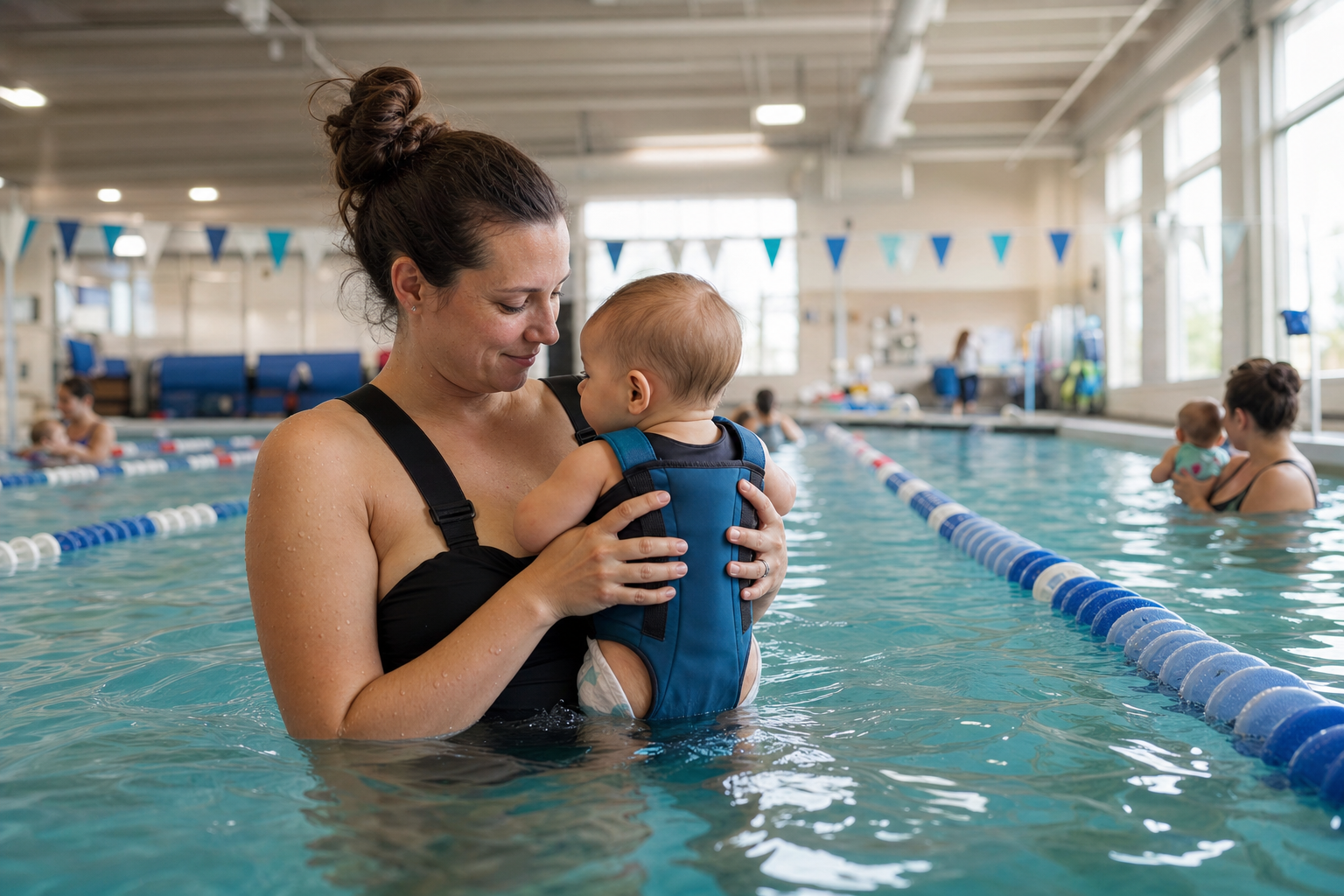
Here’s what parents of babies aged 0–18 months want to know right away: You can wear your baby in the pool using certain water-specific carriers—but it takes the right equipment, full awareness of risk, and active, hands-on support. Keep reading to discover when wearing a baby in water may be unsafe, what many pools allow, and why supporting your child with both hands is usually better for learning water skills.
When Wearing a Baby in Pool Water is Risky
If the carrier isn’t made for full water use, don’t assume it’ll work safely in the pool. Many bath or beach slings and wraps are built for surface splashing, not immersion. They often lack the structure needed to keep baby’s airway clear. Wet fabric can collapse or press around the baby’s chin, restricting breathing immediately. Experts warn that for infants—especially under four months or those born early—chin-to-chest positions are dangerous. (stanfordchildrens.org)
If you want a structured way to build water confidence at home, the 10-Week Plan guides you step by step.
Also, any sling or carrier that traps baby between your body and the fabric without visibility, restricts leg spread (which supports hip health), or becomes overly slippery with water is unsafe. Never submerge the baby’s head, slide into deep water where you can’t maintain grip, or rely solely on carrier straps when walking in slippery areas—risks multiply when footing is uncertain. RoSPA and other safety bodies stress using well-fitting, upright carriers, and always keeping the baby’s face visible. (rospa.com)
[[ctababy]]
What Pool Rules Often Allow (and Deny)
Swimming pools, parent–baby classes, or splash pads are starting to see “water baby carrier pool” or “baby sling in pool” debates. Some pools allow water-certified carriers and slings for shallow-term splash sessions, as long as health & safety rules—such as swim diapers, constant adult supervision, and clean materials—are respected. More cautious facilities may ban any fabric gear that could introduce lint or hazards to filtration systems or obscure the baby’s face underwater.
Usually, any waterproof, safety-tested carrier—built for wet conditions, quick-drying, certified to ASTM or EN safety standards—is more likely to be allowed. The WaterLand Baby Carrier, for example, is explicitly built for pool and marine play, supporting babies 4 months to 2 years, made with neoprene and certified to US-ASTM F2236-
120+ swimming exercises sorted by age — with video and instructions. Developed by swim instructors, completely free.

120+ swimming exercises sorted by age — with video and instructions. Developed by swim instructors, completely free.