Is This Swim Class Too Crowded? Class Ratios, Teaching Space & What to Do Next
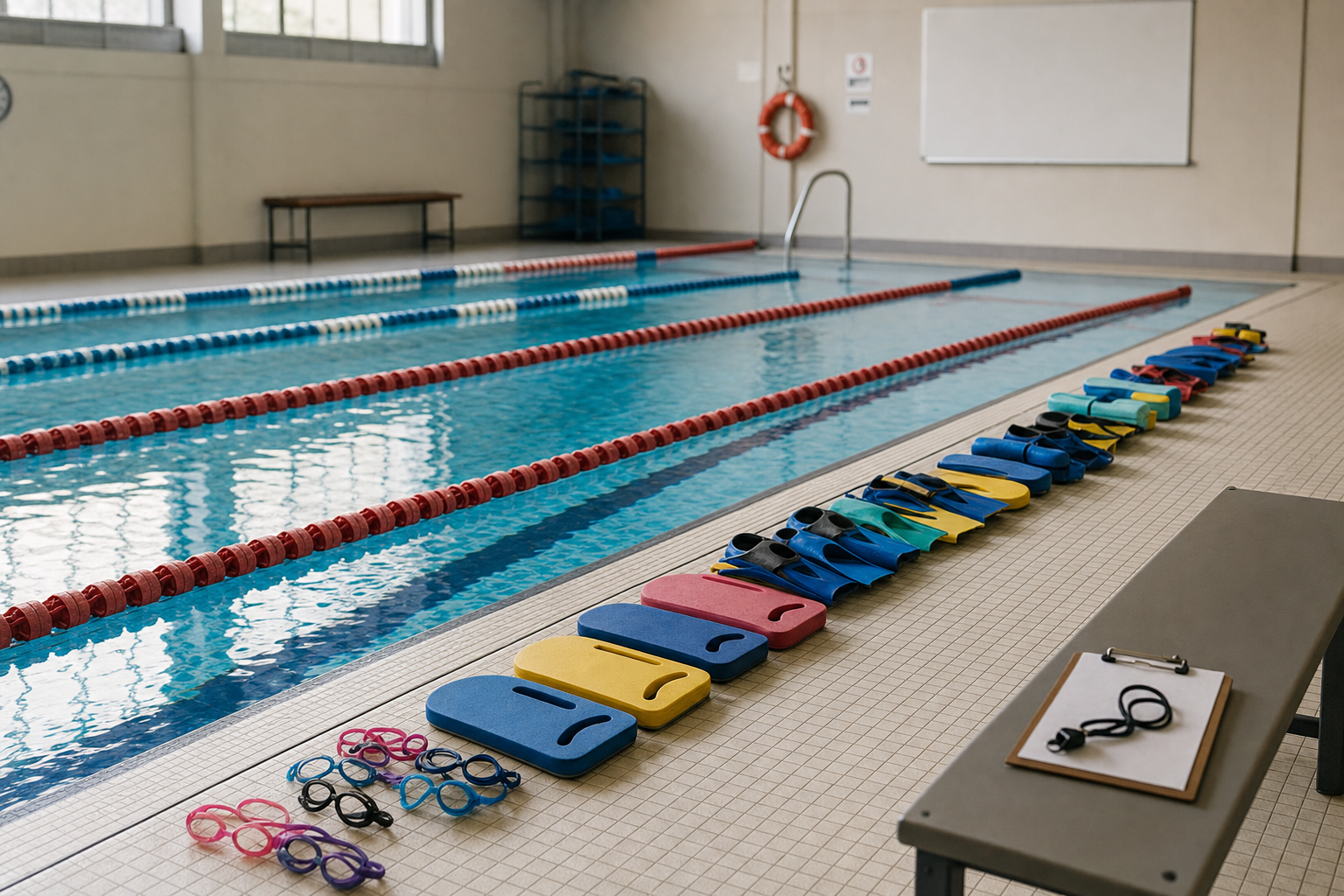
If you’ve ever looked at your child’s swim lesson and wondered, “Are there too many kids in here?”, you’re not alone. Choosing the right swim lesson class size can have a big impact on how much your child learns, especially for ages 3-8 (beginners) and 6-12 (stroke-development). Here’s a buyer’s checklist to help ensure your child isn’t lost in the crowd—and how to request a level or time slot change if needed.
What Swim School Ratios Should Look Like
When children are just starting out (ages 3-8), the US Swim School Association (USSSA) recommends a maximum 1 instructor to 6 students ratio, and states that 1 to 4 or less is best for beginners. This allows for more personalized attention and safer learning. (usswimschools.org)
For kids ages 6-12 who are developing strokes (freestyle, backstroke, breaststroke), slightly larger groups are sometimes acceptable, but only if the instructor is highly experienced and the class has strong structure. Any higher ratio than 1:6 risks slowing progress or hiding performance gaps. USSSA’s minimum standard still applies: no more than 1 to 6, with tighter ratios preferred. (usswimschools.org)
Key Red Flags: Overcrowded Swim Class Signs
You can tell if a swim lesson is overcrowded by watching how the class is set up and run.
Teaching space and lane density matter. If there are too many children per lane or the pool width can’t accommodate separation of skill levels, it’s harder for the instructor to correct individual technique. If kids are waiting in line to take turns doing basic strokes instead of practicing independently, that’s another warning sign.
Instructor engagement is another auction. If students spend long stretches doing warm-ups or free play because the teacher can’t rotate through students, progress will be slow. High instructor turnover or substitute teachers without notice also hurt consistency. Overcrowded classes often lead to long wait-times for completing key skills; if your child is stuck at level 1 or beginner for multiple sessions without noticeable development, that’s a red flag.
Policies around make-ups or schedule flexibility often reflect demand pressures. Schools that limit make-ups, charge for them, or fill absences heavily show that classes may already be overbooked. (swimkidswaco.com)
Buyer’s Checklist: What to Inspect Before Enrolling
To ensure swim lesson class size and quality are right for your child, here’s what to look for when comparing programs.
First, ask for the class ratio. Confirm whether it’s beginner (3-8) or stroke-development (6-12). Beginners should not regularly exceed 6 students per instructor; 4 is much better. For stroke-development, slightly larger is okay, if every student gets regular feedback and time in the water.
If you want a structured way to help your child progress at home, the 10-Week Plan guides you step by step.
Second, inspect the teaching space. Warm water pools or split lanes make a difference. Pool lanes should allow safe spacing. Each child needs enough water around them so collisions are minimized and stretching and kicking aren’t compromised.
Third, observe instructor engagement. Watch if the instructor moves among children, gives individual coaching, and keeps the energy going. Class structure should match your child’s age and stage—more guided skill practice at age 6-12 versus playful fundamentals for 3-5-year-olds.
[[ctakid]]
Fourth, look at how the swim school handles schedule changes or leveling up. Many swim schools offer appraisal days, trial lessons, or open slots for level changes if progress lags. If your child is ahead, you may be able to shift into more challenging classes once certified skills are met. Occasionally schools partner with programs like the 10-Week Plan from swimy.org to help track progress, and to make level decisions based on structured criteria. (Swimy’s 10-Week Plan dives into measurable goals like float, glide, breathing, and strokes so parents can see when moving up makes sense.)
Pay attention to wait-times and availability of class slots. If your swim school always has a waiting list, or you see many absences fill up right away, that often means existing classes are packed. Waiting doesn’t equal better quality—but it does often equal overcrowding.
How Kids Progress Faster in Right-Sized Groups
When groups are small and ratios are tight, instructors can give attention to each child’s body alignment, breathing technique, and confidence in the water. Young beginners gain trust with safety and support. Older kids (6-12) with proper stroke-development benefit from focused corrections—things like catch, pull, kick, turns, and more nuanced breathing.
If your child is stuck, or their class is moving slowly, progress becomes frustrating. Skills are delayed, and children may lose confidence. On the other hand, in a smaller class, children often feel more seen. Feedback is immediate. Errors are corrected sooner before bad habits set in. Motivation stays higher. Simply put, right-sized groups help kids build strong foundations faster, not just in strokes, but in confidence and joy of swimming.
How to Request a Level or Time Slot Change Without Burning Bridges
Sometimes, no matter how much you do your homework, your child is in the wrong level or time slot. Here’s how to handle it smoothly.
Start with skills. Before approaching the teacher or director, list specific skills your child can pull off—float, backstroke, side breathing etc. Use progress reports if the program offers them. Avoid comparing to others; focus on your child’s ability.
Talk to the instructor first. Express admiration for their teaching, then share your observations about where your child seems held back or frustrated. Ask if they think a level change is justified, or if there’s another class with fewer students or better ratio. Many instructors will be open to making recommendations if they see your child ready.
Second, ask about next available time slots that match better. Some classes later in the week or off-peak have smaller groups. Be willing to shift times to find a better fit.
Maintain respect. Swim schools are managing schedules, instructors, pool space, and many families at once. If change isn’t immediate, express understanding. Keep communication open and kind. You want them on your side.
Final Thoughts: When to Walk Away or Stay
If after one or two sessions you see red flags—slow progress, overwhelming ratio, little instructor interaction—take action. See if the swim school will provide a trial period or refund policy. If things don’t change, it may be time to switch.
But if everything else is good—the instructors are trained, the pool safe, your child feels comfortable—and it's just a matter of waiting for a spot in a class with fewer students, staying for a little longer may make sense.
Keep your eyes open. The right swim lesson class size matters, not just for water safety, but for your child’s swimming journey. With careful choice, communication, and patience, you can find a swim program where your child thrives.
120+ swimming exercises sorted by age — with video and instructions. Developed by swim instructors, completely free.

120+ swimming exercises sorted by age — with video and instructions. Developed by swim instructors, completely free.