Pool Lane Ropes and Babies: A Parent’s Safety Guide
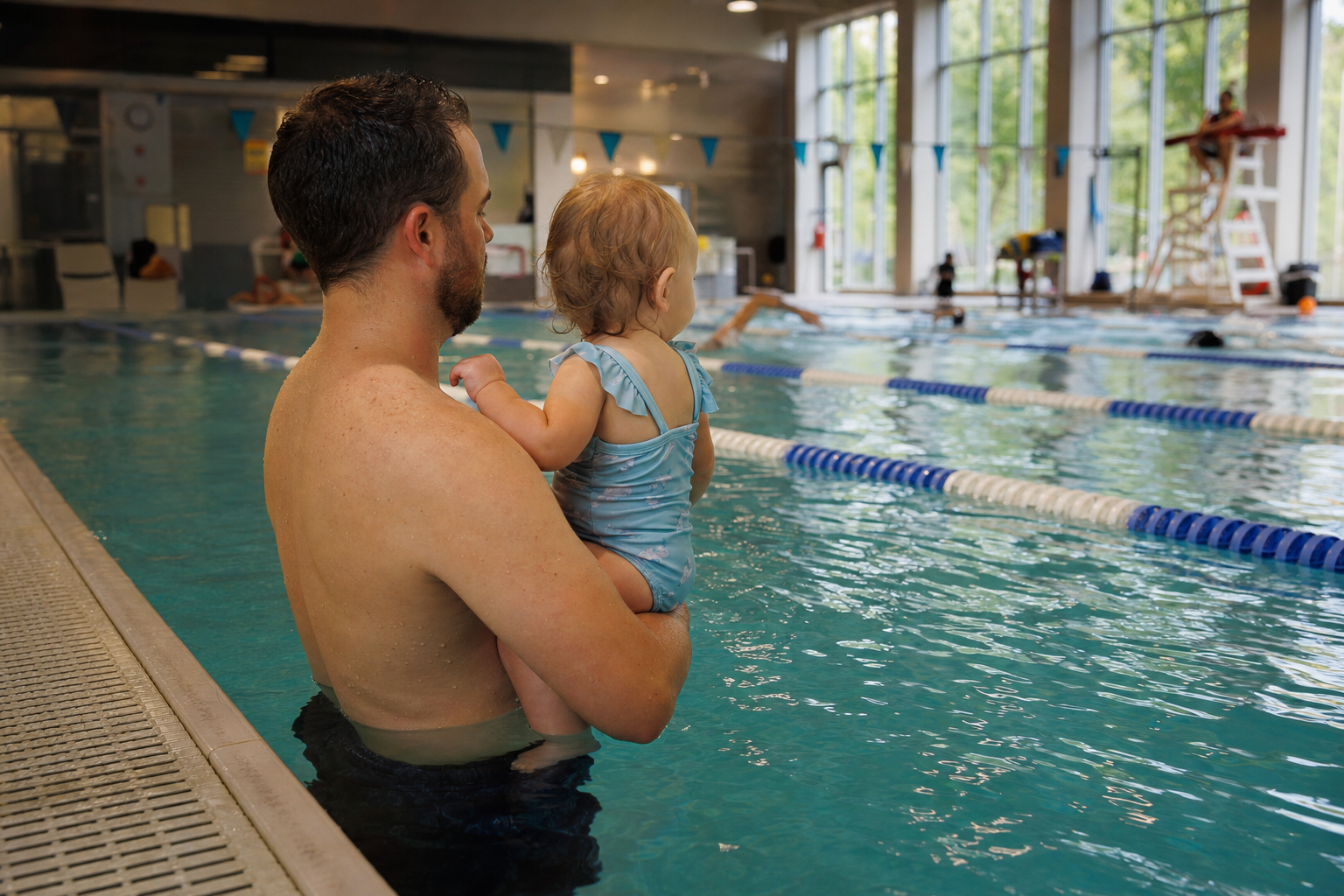
If you’re swimming in a lap pool with a baby aged 6-36 months, lane ropes might look harmless—but for little hands, hair, and bodies drifting in the water, they’re potential hazards. Getting clear on safer positioning, how to teach “look but don’t hang,” and when a pool layout may actually make open swim unsafe can protect your child and your peace of mind.
Where to Position You and Baby Relative to Lane Ropes
Stay between the baby and the lane rope, not behind it. If you put baby on the side of you farthest from the rope, they won’t drift into it, grab it, or lean on it. Keep fingers, jewellery, and loose swimwear well away. Always keep baby facing away from lanes where lap swimmers are using high speed or strong strokes—those ropes are both a physical and motion hazard.
Pick a lane that is clearly slower or more open, or when lap swimmers aren’t nearby. If a nearby lane is busy with vigorous activity, stay farther from that rope. Positioning yourself with one arm shielding the baby from the rope keeps them safe and prevents accidental contact with those plastic or foam discs.
Teaching “Look But Don’t Hang”
From about 6 months, babies become curious: they see colourful discs on ropes and want to touch. You can redirect this impulse. First, name what you see: “those are lane rope discs, round and bobbing.” Then show how to look but not grab. Try holding baby close so you can model touching something safer (pool wall or deck grip), then redirect their attention when they reach near the rope.
Use simple commands like “nice look, not grab” or “touch me, not rope” in a calm voice. Be consistent. It might help to demonstrate: tap the rope gently with your hand, saying, “rope is sticky” or “rope is not for grabbing.” Eventually baby learns the rope boundary—this protects hair catching discs, fingers pinching in between floats, or even swimsuit fabric getting snagged.
Recognizing When the Pool Layout Isn’t Ideal for Baby Safety
Not all pools are baby-friendly during lap swim hours. If lane ropes are very close to pool edge, or lanes are narrow, or the pool has too many busy lap lanes, hazards increase. Pools with tensioned ropes that are tight and heavy can snap back or pull a child under. While ropes should adhere to safety standards (e.g. disc/floats anchored with stainless steel cable), design specs don’t always address tiny hands and curiosity directly. (fepada.org)
If you want a structured way to build water confidence at home, the 10-Week Plan guides you step by step.
Also consider depth markings. Babies under 2 aren’t safe where they can’t touch the bottom unless supported. A pool that holds constant depth but has many fast lap swimmers means you must choose a quiet spot or avoid the pool when lanes are full. If the rope layout makes it easy for baby to drift into transit zones of lap swimmers, that pool may not work for practice until quieter hours.
[[ctababy]]
Practical Safety Tips in Open Swim with Baby
First, supervise with “touch supervision”: be in the water within arm’s reach. The American Academy of Pediatrics emphasizes that for infants and toddlers, a supervising adult with swimming skills must stay very close. (publications.aap.org)
Avoid using lane ropes as physical aid, barrier, or toy. They aren’t substitutes for walls or rails. No hanging, climbing, leaning, or swinging. And during open swim sessions, pick clearer areas—spots where lanes are far apart or fewer people are moving fast.
Also, check the lane rope discs: if edges are rough, gaps large enough for little fingers, or discs loose, raise the concern with facility staff. Swim schools and parents alike should demand properly maintained equipment—not assuming it’s safe just because ropes are installed.
Around 30-50% through your journey of getting baby comfortable in water, structured swim-lesson plans are very helpful. If you follow something like the 10-Week Plan of swimy.org you’ll start in shallow, calm water, progressively building confidence while always using safer positioning relative to the rope. Match your week-by-week goals with what the pool layout allows. (swimy.org)
When Lane Rope Hazards Demand You Rethink Open Swim
If there are no shallow, quiet zones, or if ropes are fixed in place too close to where you’re forced to stand or hold baby, it may be safest to wait for off-peak times. Loud, crowded lap lanes, high speed swimmers near small children, or slippery decks near ropes all heighten risk.
Always weigh the pool environment—if lifeguards are present and clearly enforcing rope discipline; if ropes are maintained and smooth; if there’s space; if adult supervision is constant and hands-on—those factors together tell whether that open swim is suitable for your baby.
Lane ropes can seem pure background—but for babies who grab, mouth and drift, they’re not. Positioning between you and rope, teaching gentle “look but don’t hang,” and selecting pools or schedules that support safety make all the difference. With these steps you can secure open swim fun for ages 6-36 months without letting lane rope hazards steal the joy.
120+ swimming exercises sorted by age — with video and instructions. Developed by swim instructors, completely free.

120+ swimming exercises sorted by age — with video and instructions. Developed by swim instructors, completely free.