Practice Between Swim Lessons Safely: What Parents Need to Know
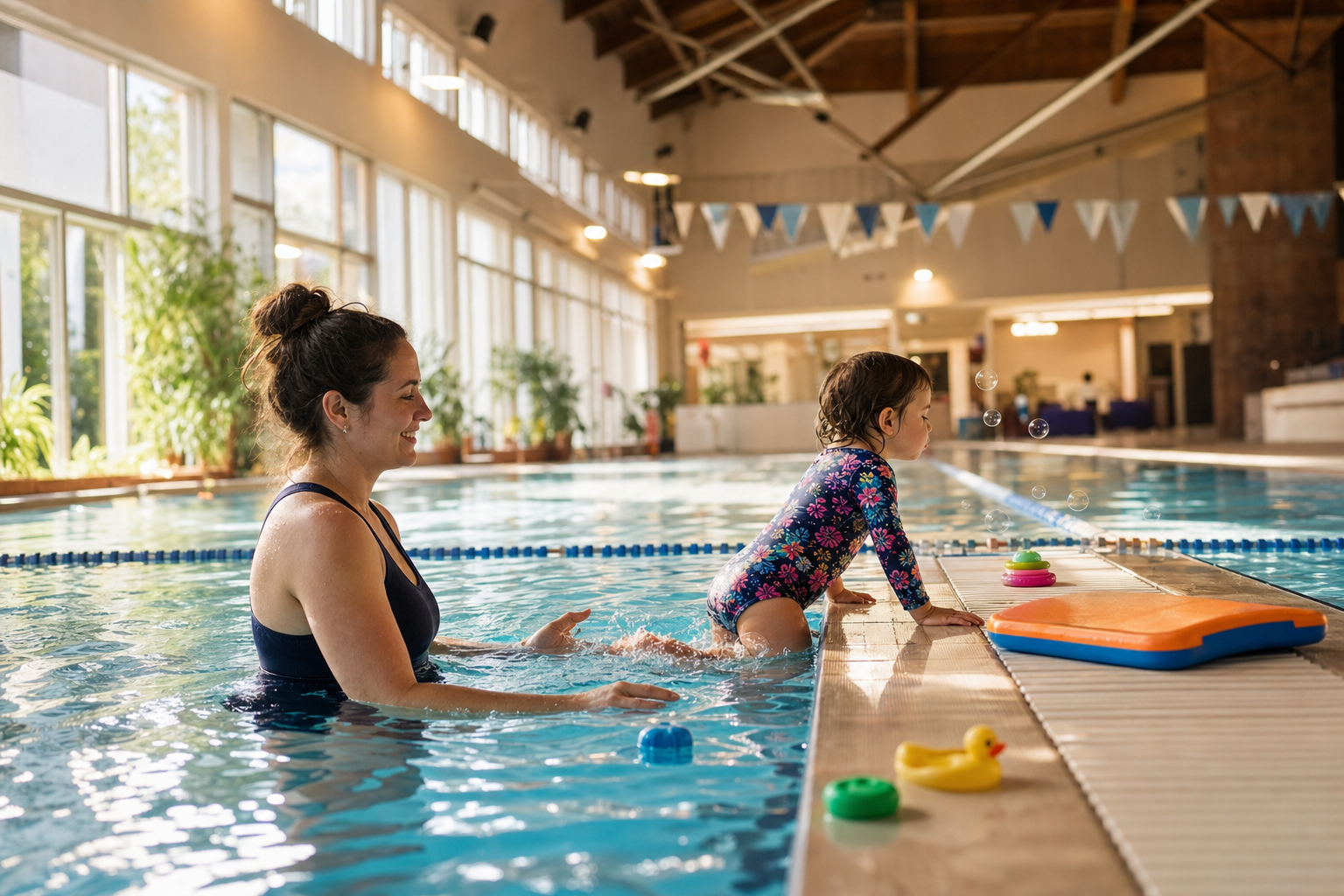
If you want your 6- to 36-month-old to get more out of their swim class, it’s all about reinforcing class skills during open swim—without overteaching, forcing submersion, or creating fear. The best gains come from predictable, playful repetition. Here’s exactly how to support your toddler swim practice with parents in a calm, secure way.
Reinforce Skills with Instructor-Approved Cues
Right after lessons, talk with your child’s instructor about specific cues and words they use in class. Maybe the teacher says “face in, breathe out” when doing bubbles, or “star float” for a back float. Use those exact phrases during pool time so your child connects the words with actions. Using different cues can confuse them or force them to retrain their brain every time. Consistency helps steadily build muscle memory and trust.
Experts agree that practice outside lessons—especially for infants and toddlers—should be driven by instructor goals. A key guideline: always ask the instructor before introducing any new skill at home or in open swim.(usswimschools.org)
Short Practice Bursts That Don’t Push Too Hard
Toddlers fatigue fast and cold/hunger make everything harder. It’s better to have a few short bursts of water time than one long stretch that drains confidence. Even just five minutes of practicing floating, breathing near the edge, or leg kicks can reinforce learning without pushing limits. According to guidance from Healthy Children, keeping sessions warm (around 87-94°F for young children) and limiting time under water are essential.(healthychildren.org)
Here’s where a structured plan like the 10-Week Plan from Swimy really shines.(swimy.org) This kind of plan divides practice into short sessions built up over time, combining technique, play, and safety in each meeting—perfect for keeping young children enthusiastic rather than overwhelmed.
What to Do During Open Swim—Playful, Safe Reinforcements
Play is enormously powerful. Think about replicating class skills through games: blowing bubbles, sitting on pool edges and splashing kicks, using floating toys to support arms and practicing gentle floating. Always stay within arm’s reach. These kinds of joyful moments help solidify the skills your child is learning during formal lessons. Royal Life Saving programs emphasise that infants and toddlers learn best through water familiarisation, turning, floating, and safe movement—through play and parent involvement.
Avoid copying online drills that might mismatch your instructor’s method. Don’t force underwater submersion or expect too much precision. Add only what matches your child’s current progress. And just because floaties are common doesn’t mean they’re a shortcut—overuse can hamper learning balance and independent movement.(health.harvard.edu)
[[ctababy]]
Typical Pitfalls—What Parents Should Be Careful Of
One major mistake is practising when your child is cold, hungry, tired, or cranky. That’s when fear builds instead of courage. If your baby shivers or fusses, skip the session. Try another time when they’re well-rested and happy.
Another pitfall: turning every pool visit into a mini-lesson. Practice is helpful but should never feel like homework. Keep it fun and short. Pressure damages trust.
Floatation devices are also tricky. While they can give you peace of mind, reliance on them can delay progress in learning buoyancy and body alignment. Use under instructor guidance, and gradually reduce dependency.(health.harvard.edu)
Safety First: Always Within Arm’s Reach
This is non-negotiable. Whether you’re in a parent-child class or open play, always stay close enough to touch your child. Even well-trained kids under 4 are not “water safe”—they can’t yet process danger the way older children can. Royal Life Saving and USSSA guidelines emphasise that adults should be within arm’s reach and ready to support at any time.
Before introducing any new practice or skill, check with your child’s instructor. They know what your child is ready for. If they suggest practicing submersions of short time (no more than a few seconds) and only a few in number, follow that.(usswimschools.org)
Putting It All Together: A Peek at What a Practice-Between-Lessons Routine Might Look Like
Start your session by letting your toddler splash for a minute or two—just to feel warm and safe. Then use an instructor-approved cue to try something they’ve already done in class, like bubbles or kicking. Spend no more than five minutes there. Then switch to something fun and low pressure, like floating with your support or using a floating toy while you walk around the edge. End with praise, maybe a game or song. Keep entire time around 10-15 minutes total, depending on how your child responds.
If your baby under 12 months is involved, limit water sessions to 30 minutes at most, and make sure the water is warm. Infants can’t regulate body temperature well, and being cold clouds the learning process.(usswimschools.org)
Final Thoughts
If you’re practising between swim lessons in a safe, playful way—with short bursts, instructor-based cues, and always close supervision—your child will reinforce what they learn without stress or fear. Keep it warm, keep it fun, stay aligned with the instructor’s plan, and avoid pushing too far or too fast. With this approach, toddlers grow not just in skill, but in joy and confidence around water. Always let the instructor guide you, and let play lead the way.
120+ swimming exercises sorted by age — with video and instructions. Developed by swim instructors, completely free.

120+ swimming exercises sorted by age — with video and instructions. Developed by swim instructors, completely free.