Seizure Disorders and Baby Swimming: A Safety Guide for Families
If your baby (0-36 months) has a history of epilepsy, febrile seizures, or neurological concerns, swimming or even baths can feel scary. Here are the most critical safety steps grounded in research—what to ask your doctor, when to wait, and how to stay safe in water settings.
Talking to Your Pediatrician or Neurologist First
Before enrolling your infant or toddler for swim lessons, schedule a detailed discussion with your pediatrician or neurologist. Ask about seizure type, frequency, triggers, recent medication changes, and whether any of the following apply: loss of consciousness, motor impairment during seizures, or a tendency to have auras before a seizure. These affect what precautions you’ll need. Experts recommend individualized assessments for children whose seizures are not well controlled. Swimming activities should take place with doctors aware, especially if medical history suggests elevated risk. (onlinelibrary.wiley.com)
One important question: How long after a seizure or a medication change is it safe to resume water activities? While there is no universal waiting period, many families find that waiting until the child has been seizure-free for several months (often 3-6) or until medication levels are stable helps reduce risk. Always confirm with your care team. (epilepsy.com)
Vital Water and Pool Safety Precautions
When the doctor gives the green light, these water safety measures are essential. The CDC explicitly identifies seizure disorders (like epilepsy) as a risk factor for drowning and notes that bathtubs are the most common drowning sites for this group. (cdc.gov)
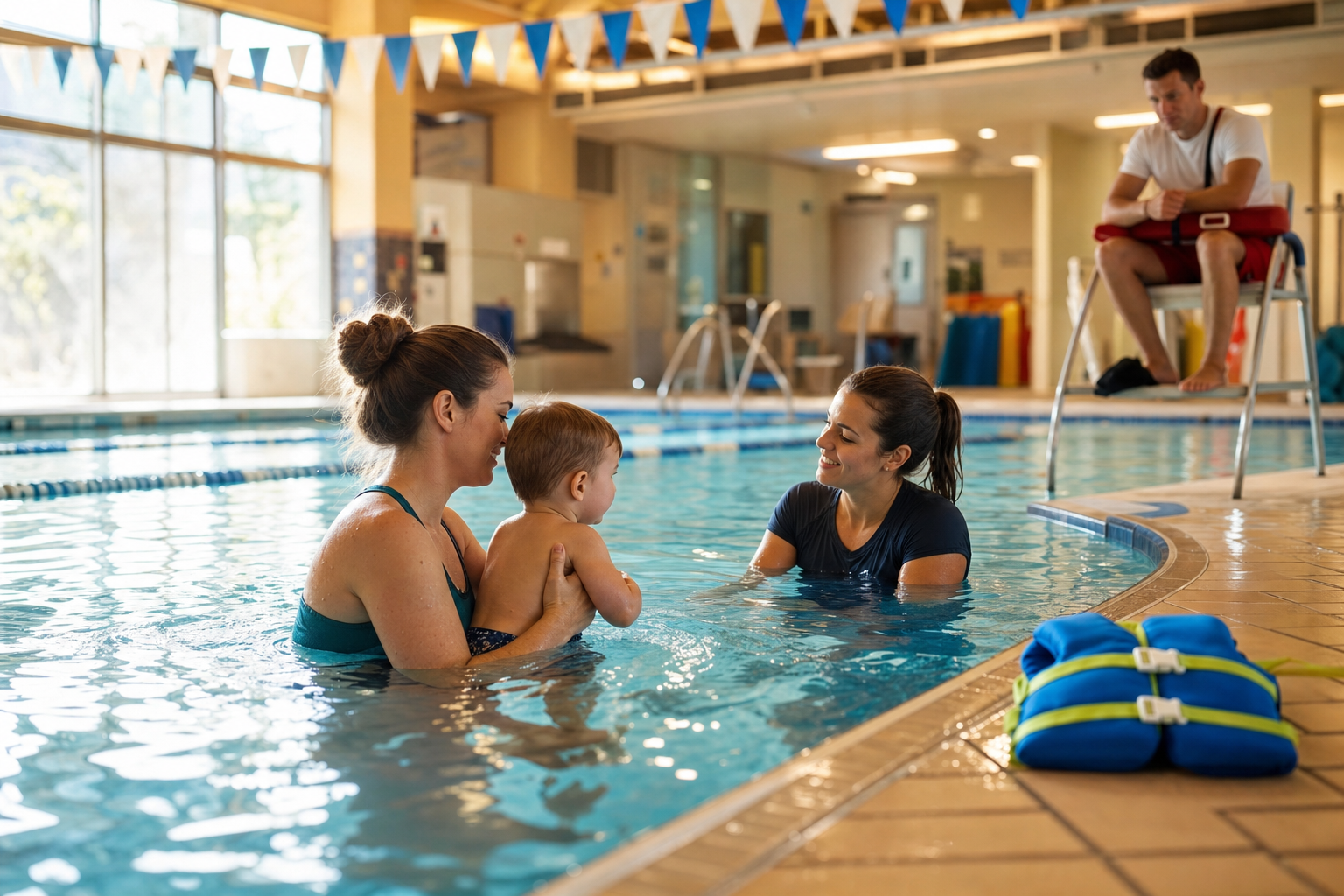
In pools, swim lessons, or baths, always maintain one-to-one supervision. For infants and toddlers under 3 years, caregiver involvement should be hands-on and within arm’s reach (“touch supervision”) even during formal swim classes. (healthychildren.org) Use lifejackets in open water or shallow areas if seizures are poorly controlled. (epilepsy.com)
Make sure there is a rescue plan: someone present who is trained in CPR and seizure first aid, and that pool staff or instructors are informed about your child's condition. Also discuss what to do if warning signs occur just before a swim—how quickly can you get out, where is the nearest help, etc.
Choosing Lessons: Class Size, Ratios, Reporting, and Accountability
If you want a structured way to build water confidence at home, the 10-Week Plan guides you step by step.
Small classes help. For parent-baby swim classes (ages around 6-36 months), a good instructor-to-baby ratio is one teacher per four to six babies plus caregivers. For babies under 12 months especially, tighter ratios like 4:1 might be necessary. (swimy.org)
Group lessons without one-on-one attention aren’t ideal when seizures might occur. Ensure the program includes caregiver education and that instructors clearly explain what to expect with your child’s specific epilepsy or febrile seizure history. Guidelines such as the USSSA Infant Toddler Guidelines limit toddlers under 3 to no more than eight per instructor in “caregiver and me” classes. (usswimschools.org)
[[ctababy]]
For structured swim support over time, some families use carefully designed plans to build both water familiarity and safety. For example, you might explore a structured outline like the swimy.org “10-Week Plan” that helps gradually build skills and comfort for both baby and caregiver in pool settings.
When to Skip Swimming: Post-Seizure and Post-Medication Periods
Sometimes it’s safer to wait. If your child has had a seizure very recently—especially one that involved losing awareness, motor control, or breathing changes—skip the pool or bath time until your health provider confirms it’s safe. Also hold off when anti-seizure medications are being adjusted or started, because until levels are stable, risk is unpredictable.
Children recovering from febrile seizures might be ready sooner, but still require careful supervision. If a child has ongoing seizures within a short timeframe or your clinician indicates the risk is elevated, postpone lessons or water play. Communication with your neurology team about every seizure event (date, duration, recovery) helps inform when you can safely resume water activities.
Everyday Bath & Swim Safety with Epilepsy or Febrile Seizure History
Baths deserve special attention. Since bathtubs are the most common drowning site among people with seizure disorders, never leave a baby alone—even for a moment. Showers (with non-slip surfaces) may be safer for older toddlers who are seizure-prone but still need supervision. (cdc.gov)
Stick to shallow water where your child can stand and you can support them easily. Avoid long sessions in cold water, because low body temperature under medication or after a seizure can increase risk. Wear bright swimwear so lifeguards or supervising adults can spot them quickly. Require that any plan allows for sudden exit if warning signs appear—restlessness, aura, odd sensations.
Putting It All Together: Sample Questions to Ask & Checklist
Make a checklist for your next medical appointment. Here are questions to cover:
How often have seizures occurred, and what type (awareness lost? limbs moving? breathing affected?) When was the last seizure? How stable is medication? What triggers are known? What rescue plan is in place for home vs. pool settings?
Checklist for swim programs: instructor-to-child ratio; instructor trained in seizure first aid; caregiver involved; warm water; constant supervision; lifejacket availability; pool staff aware of your child’s condition.
Final Thoughts
Baby seizures and swimming safety don’t have to mean missing out, but they do mean being prepared, patient, and proactive. Start discussions early with your pediatrician or neurologist, follow safety rules strictly, know when to pause after seizures or medication changes, and choose swim classes that offer the highest supervision and lowest risk. With the right support, infants and toddlers with epilepsy or febrile seizure history can enjoy water play and lessons safely and joyfully. Always treat this as individual medical guidance, not general advice—your child is unique, so the safest plan comes from your healthcare team.
120+ swimming exercises sorted by age — with video and instructions. Developed by swim instructors, completely free.

120+ swimming exercises sorted by age — with video and instructions. Developed by swim instructors, completely free.