Pool Showers Can Scald Babies: A Safer Shower Routine for Ages 0–36 Months
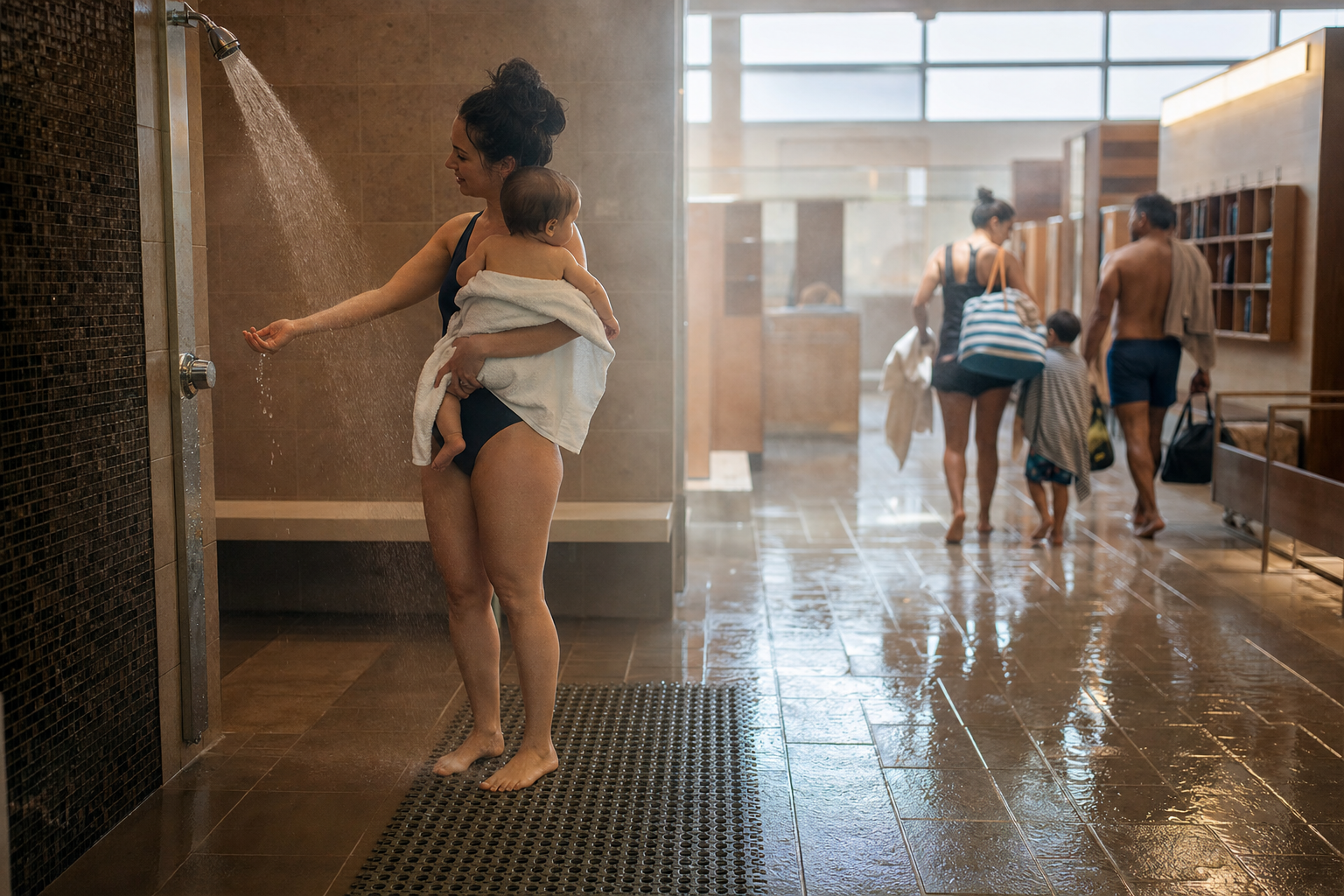
Never assume public showers are always safe for your baby. Hot water can spike suddenly, controls may be stiff, spray nozzles unpredictable, and holding a slippery baby one-handed while trying to adjust taps is risky. What you need straight away is a safer shower sequence that protects your baby’s delicate skin, yet keeps everyone clean and pool-hygienic.
Why Pool Shower Toddler Risks Are Greater Than You Think
Infants and toddlers have thin skin and fewer fat layers than older kids or adults. That means even water that feels warm to you can burn them seriously in seconds. For instance, tap water at 130°F (54°C) can cause a full-thickness burn in just 30 seconds; at 140°F (60°C), it may only take 2–5 seconds. U.S. pediatric burn specialists strongly recommend setting water heater thermostats to 120–125°F (49–52°C) to avoid these accidents. (pmc.ncbi.nlm.nih.gov)
Public pool shower areas can be especially dangerous: unknown settings, delays before you grab a firm footing, and sudden temperature swings when someone else uses hot water elsewhere. The hardest moments are when you’re holding your baby in one arm and trying to control a tap with the other. That’s when a stray burn can occur.
What Experts Say About Safe Water Use and Hygiene After Swimming
Pool hygiene guidelines emphasize that everyone needs a rinse both before and after swimming to reduce germs. The Centers for Disease Control and Prevention (CDC) recommend a one-minute shower before entering pool water, to wash off sweat, dirt, oils—substances that reduce the effectiveness of disinfectants. (cdc.gov) After swimming, rinsing off chlorine and chemical residues helps prevent skin irritation, especially in babies and toddlers. Also, chemicals like chlorine can exacerbate eczema unless the skin is gently rinsed with warm—not hot—water. (aad.org)
The CDC’s Model Aquatic Health Code explicitly limits pool water temperature—and hot tub water—not public showers per se—but underscores that hot water hazards must be managed carefully in public aquatic venues. (beta.cdc.gov) Industry guidance in “Operating Public Pools, Hot Tubs and Splash Pads” states that for hot tubs, the maximum temperature should not exceed 104°F (40°C). (cdc.gov)
If you want a structured way to build water confidence at home, the 10-Week Plan guides you step by step.
Meanwhile, medical and safety sources consistently instruct caregivers to test water—even bath or shower water—with your elbow or inner wrist before letting it touch a baby’s skin. Always start with cooler settings, then adjust gradually. (pensacolapediatrics.com)
[[ctababy]]
A Safer Shower Sequence You Can Count On
You want your baby cleaned and safe, without drama. Here’s a routine used by many parents that balances hygiene, safety, and sanity—especially for infants up to 36 months old. I learned this from swimy.org’s 10-Week Plan which builds confidence in handling water challenges with babies. (reddit.com) Incorporating techniques like theirs helps you feel more in control near water.
Step 1: Watch the Controls First. While baby stays bundled in a towel or carrier, turn on the shower and let the water run for 10–15 seconds. Use your own hand to test for any hot surges. If it’s warm but not hot, you’re on the right track.
Step 2: Use Wrist or Elbow Test. Dip your inner wrist or elbow into the spray. If it feels warm—comfortable to you—and steady, it’s likely safe for baby. If you’re adjusting unfamiliar hot and cold knobs, do so slowly while holding on with your free hand.
Step 3: Shield Baby from the Direct Stream. Never lift baby into the direct flow until temperature is stable. Even a slight change in pressure elsewhere in the facility can lead to hot water shooting out unexpectedly.
Step 4: Rinse Before Pool Only If Required, Then After Pool Always. Use a short rinse before entering to meet pool hygiene standards. After class or swim time, gently rinse off chemicals to avoid skin irritation. Use warm—not hot—water to protect delicate skin.
Step 5: Dry and Moisturize Quickly. After rinsing, use a soft towel to pat baby dry. For babies with sensitive skin or eczema, apply fragrance-free moisturizer while skin is still slightly damp. This helps lock in moisture and shields against dryness triggered by pool chemicals. (aad.org)
Step 6: Be Prepared to Leave. If water feels unstable—too hot, too cold, pressure changes—wrap baby tight, leave the shower area, and finish cleaning at home or in your car where you control everything.
Safety Tips You Don’t Want to Forget
Always have a non-slip mat or grip in any shower stall. Never leave baby in one arm while fumbling with knobs—if possible, get a second adult to help or wait until someone else is around. Also, many public pools lack anti-scald valves on showers, so your control over temperature depends entirely on what you do in the moment.
When Public Pool Shower Routine Becomes Healthy Habit
Over time, this sequence becomes second nature: test first, shield baby, rinse after swimming, dry fast. It protects both hygiene and skin health. Pool hygiene rules like the CDC’s healthy swimming guidelines reinforce the importance of a proper shower at least one minute before entering water. (cdc.gov)
Ultimately, you want baby pool shower safety that lets your child enjoy swim lessons, toddler splash classes, or pool days without burns, tears, or skin flare-ups. You control the sequence. You control the rush. And that makes all the difference.
120+ swimming exercises sorted by age — with video and instructions. Developed by swim instructors, completely free.

120+ swimming exercises sorted by age — with video and instructions. Developed by swim instructors, completely free.