Locker Room 101 for Swim Kids: Privacy, Phones, Quick Changes
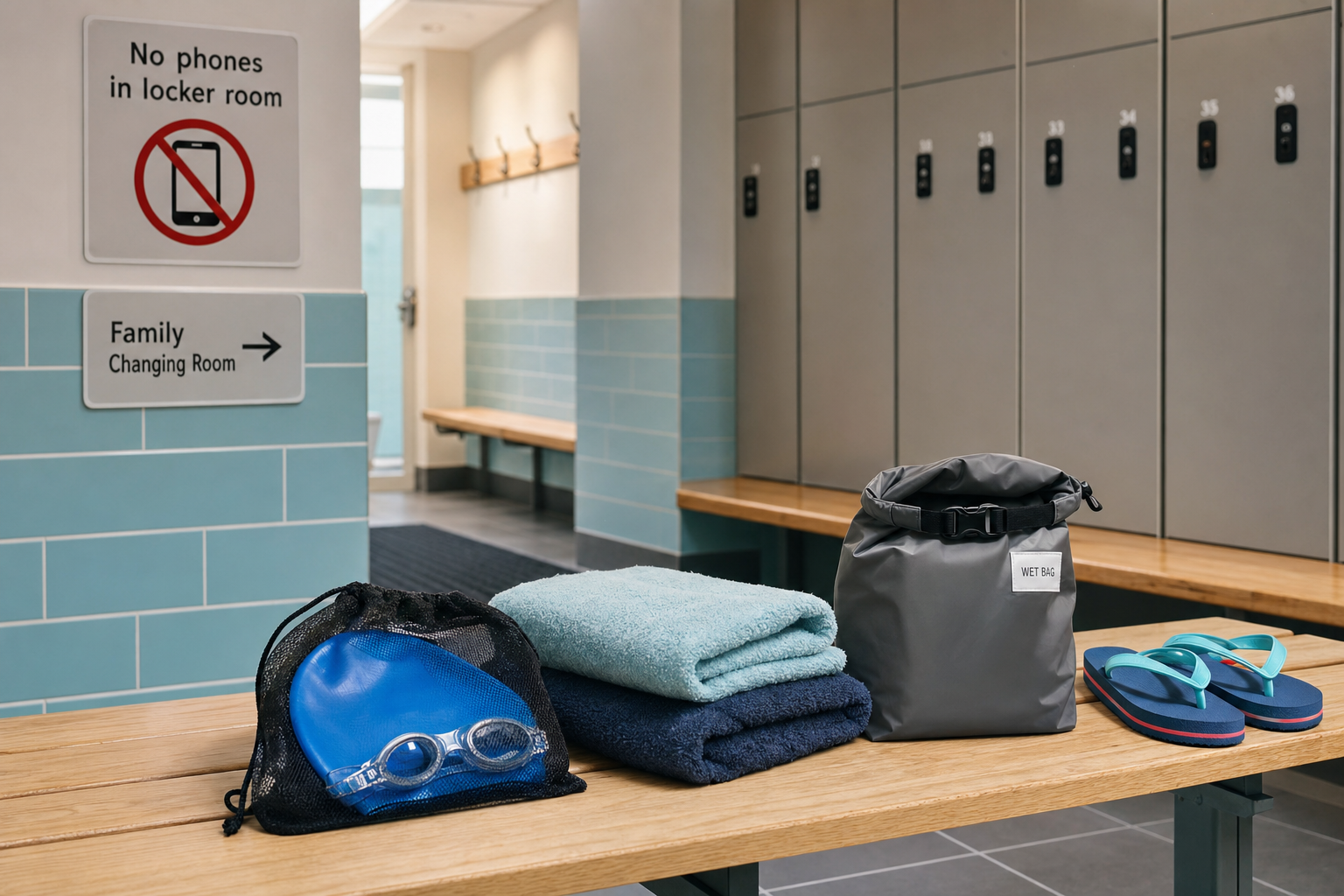
When swim lesson time rolls around—before and after class—it can feel like herding cats. But with well-defined rules and an organized routine built around respect and privacy, you can take the stress out of pre-/post-lesson madness. For kids aged 3-12, swim locker room etiquette isn’t just about manners—it’s about safety, confidence, and efficiency.
What rules most matter for swim locker room etiquette kids
First: phones and cameras do not belong in locker rooms. Many swim clubs, YMCAs, and swim teams enforce a strict no phones locker room policy to protect children’s privacy. The U.S. Center for SafeSport insists that “no device that has a camera, such as a phone or tablet, should be allowed in the locker room.”(uscenterforsafesport.org) Local facilities like the Madison Area YMCA formally ban phones, texting, scrolling, and even web surfing in changing areas.(madisonareaymca.org) Clear signage helps, but parents need to model behavior by leaving phones in lockers or in their bags until they’re outside.
Second: privacy and family changing rooms. Kids need to feel safe, especially when undressing or drying off. Family or private changing rooms are ideal when possible. YMCA of Greater Seattle provides family changing rooms for small children or those with special needs.(seattleymca.org) When not available, ensure your child uses a cubicle or private stall, and adults always supervise without entering opposite-gender rooms.(sportintegrity.gov.au)
Third: keep moving, avoid lingering, and stow gear properly. Locker room aisles and benches get chaotic fast. Sessions and swim meets peak with parents hustling to help kids change, pack bags, and leave. Don’t linger. After drying off, stack towels neatly, place wet suits in wet bags, store gear in lockers or bags. Slippery floors caused by puddles or stray gear are serious injury risks. Etiquette is as much about safety as courtesy.
If you want a structured way to help your child progress at home, the 10-Week Plan guides you step by step.
What to pack so changes are fast and organized
A well-packed swim bag is your secret weapon. Pack in advance to avoid last-minute scrambles. Must-haves: tightly fitted swimsuit (avoid baggy shorts), two towels (one for drying, one spare), goggles (for ages 3-12), spare swim cap if hair’s long, change of dry clothes, plastic or waterproof wet bag, water bottle, and a light snack for afterward. For outdoor lessons, sunscreen matters.(waterwisekids.com)
[[ctakid]]
Insider tip: consider ease of packing for the full session or season. A resource like the “10-Week Plan” from swimy.org helps you map what to bring each week so you have essentials ready without overstuffing your bag.(swimy.org)
Coaching independence without chaos
For ages 3-12, growth in confidence often comes when children take ownership of changing routines. Teach them how to hang up towels, unzip swim bag pockets, find a locker, and avoid blocking walkways. Role-playing at home during bath time or pretend changing routines helps younger learners practice privacy and speed.
Encourage children to put on swimwear under outer clothes before arrival if possible, saving time in the locker room. Teach them to stretch out hair ties, pull caps over wet hair, use cubicles for changing, and always dry their feet before stepping out. When parents stay calm, kids pick up habits faster than by telling them what not to do.
Handling peak times: lessons, meets, and group drop-offs
During swim meet weekends or the start and end of lesson blocks, locker rooms get packed. Plan to arrive early; even five to ten minutes can relieve pressure. Use family changing rooms or plan where your child will go based on gender rules. Many pools enforce gendered locker room use for ages 6-9 unless accompanied, another reason why knowing ahead what your facility’s policies are makes big difference.(sportintegrity.gov.au)
Have parents agree on who helps with what: one assists changing, one packs up; leave no puddles or sandals in aisles. Respect space, don’t crowd others, keep voices low. Facilities often share in their policies that lockers are not for long delays or storing unneeded gear once kids are dry and dressed.(seattleymca.org)
Bottom line: safety, respect, simplicity
Locker room etiquette isn’t about rules for rules’ sake. For children aged 3-12, respect for privacy (no cameras/phones), clean movement (keep walking, don’t block aisles), and good gear habits (wet bags, tidy spaces) build a safer, calmer experience. Parents who model phone-free changing rooms, prepare bags, and coach small independence see faster changes and less stress. The rhythms you establish during lesson blocks or swim meets lay the groundwork for lifelong comfort in swim environments. When we do this well, both children and parents leave with confidence, not chaos.
120+ swimming exercises sorted by age — with video and instructions. Developed by swim instructors, completely free.

120+ swimming exercises sorted by age — with video and instructions. Developed by swim instructors, completely free.