Pool Noodles, Mats & Floats: Safer Swim Lesson Props for Babies (6–36 Months)
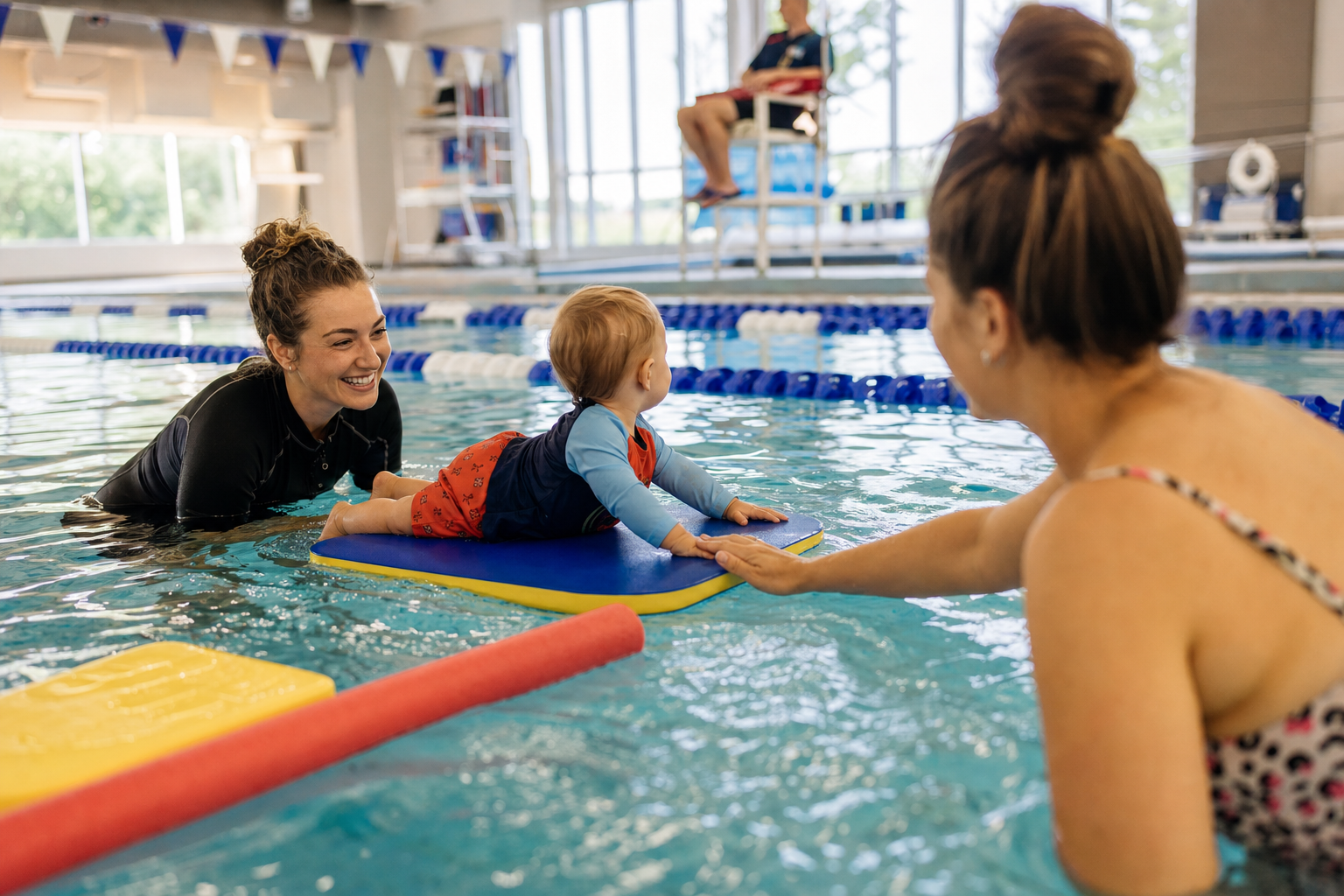
Using pool noodles, floating mats, and kickboards in baby swim lessons can make a big difference—but only if you know why each prop is used, when it helps, and when it could accidentally cause problems. If you’ve ever wondered what each lesson toy actually does for your child ages six to thirty-six months, keep reading. It’s more than just fun splashy stuff—it’s about teaching balance, reach, kicking, and body awareness safely.
What Each Prop Teaches: Props with Purpose
Pool noodles are long foam cylinders that support the body in many ways. They help toddlers practice kicking while holding their upper body steady. They support floating or leaning into the water, letting babies explore movements without fear. They also strengthen core muscles by helping toddlers balance. According to the American Red Cross water safety manual, free-floating supports like foam noodles and kickboards are critical teaching aids to practice kicking, breathing, and arm movements—when used correctly.(studylib.net)
Floating mats let babies lie or play low in the water with support along their belly. Instructors use them for stretching out, gliding, and practicing rhythmic breathing while the child feels secure. The mat teaches how to reach forward in prone position. A study from University of Wisconsin-La Crosse shows floating mats enable full-body prone work safely in early swim classes.(uwlax.edu)
Kickboards support upper body buoyancy so toddlers can focus just on their legs kicking. They’re especially good for developing a strong flutter or frog kick and improving leg coordination. Coaches advice that board size should match small hands so toddlers can grip comfortably without tilting their bodies.(parentingmentor.com)
Ideal Use and the Upside
When these props are used well—with a toddler aged 6 to 36 months, under close adult and instructor supervision—they support skill building in a safe, playful way. Pool noodle games for toddlers can involve holding the noodle in front as a bridge to reach toward toys or balance games while the parent or instructor controls proximity to deeper water. Baby swim lesson toys like floating mats and foam boards help children explore movement in water without relying entirely on adults for support. The goal is to gradually remove drafts and reliance so the child feels confident kicking, stretching, turning, and floating.
One effective framework is the 10-Week Plan of swimy.org (link: https://www.swimy.org/10-week-plan). It shows how to introduce props in stages: start with full support, then move to less hands-on approaches, using noodles, mats and kickboards at just the right moments so skills develop safely without promoting overreliance. Props are phased out as balance, kicking and reach improve, helping toddlers transition to autonomous float and swim.
Safety Caveats and Common Mistakes
Props are teaching tools, not safety devices. Water wings, puddle jumpers, or float rings can make toddlers feel safer than they are, leading them to roam or chase toys toward deeper water. Overconfidence from props can mask what a child truly can manage if those props were removed. Health experts warn that inflatable arms or rings are toys, not life preservers, and must never replace constant, close supervision.(waterwisekids.com)
Also, selecting props that are either too large or with poor grip can lead to awkward body positions—hips sinking, neck strain, or even tipping over. For instance, using a kickboard too large for a toddler can force them to hold arms too wide, arch their back, or lift their head too high. Closed-cell foam and toddler-sized designs help maintain level alignment.(swimmerliving.com)
[[ctababy]]
Another danger: toys drifting toward deep water. If a floating toy floats away, a curious toddler may follow it and end up in water beyond their depth. Float distractions can pull attention away from safe positioning. It’s better to keep toys close, work toward the wall or edge, and always stay within arm’s reach.(studylib.net)
Practical Guidelines: How Parents Can Spot the Difference
When choosing kickboards for toddler swimming, go for small boards made of high-density foam with easy grips. They should offer buoyant support without forcing the child’s head or chest above the water unnaturally. Teachers recommend junior sized boards or “toddler” models that are soft and lightweight.(parentingmentor.com)
If you sign up for baby or toddler swimming lessons, ask the instructor how and when props will be introduced. Ideally, they’ll follow a staged plan (like the 10-Week Plan) where props are part of progressive learning: body awareness → kicking practice → reach and extend → minus prop support. Watch for lessons that teach the child how to float without aid, reach with extended arms, and control kicking without over-arching or splashing wildly.
During play sessions, avoid inflatables or floaties that claim “arms only” support without checking whether they are labelled as safety gear or toys. It’s useful to practice without any prop in shallow water, under supervision, so the toddler learns what they can do unaided. This lets them internalise skills rather than feeling prop-dependent.(studylib.net)
Balancing Fun with Skill
Pool noodle games for toddlers should combine learning with joy. For example, have the child support their belly on a mat and reach for floating toys; let them kick toward you while holding a noodle; support back-floating with a small board before gently withdrawing hand support. It’s satisfying to see progress: more controlled kicks, balanced floats, longer reaches.
Parents often tell me about those moments when their toddler kicks with confidence using a kickboard, or giggles as their body floats level on a mat while breathing steady. These are the moments when props are doing their job—not creating overconfidence, but building belief.
When the toddler begins to move more confidently without props, lean into this transition. Reduce prop use gradually: fewer rounds with the board, shorter mat-time, smaller noodles. Always maintain hands on or very close by. Celebrate successes when the child kicks or reaches well. And always remove toy distractions drifting away into deeper water.
Props like pool noodles, floating mats, and kickboards are powerful aids when used thoughtfully. They teach playful balance, reach and kicking skills. But they’re not crutches, and they’re not safety gear. Parents who understand what each prop is meant to teach—and who supervise closely—help toddlers grow water confidence without risking overconfidence. That blend of fun, safety, and skill builds the foundation for a lifetime of safe swimming.
120+ swimming exercises sorted by age — with video and instructions. Developed by swim instructors, completely free.

120+ swimming exercises sorted by age — with video and instructions. Developed by swim instructors, completely free.