Adjusting One-to-One Holds in Busy Water: Practical Skills for Parents (0–36 Months)
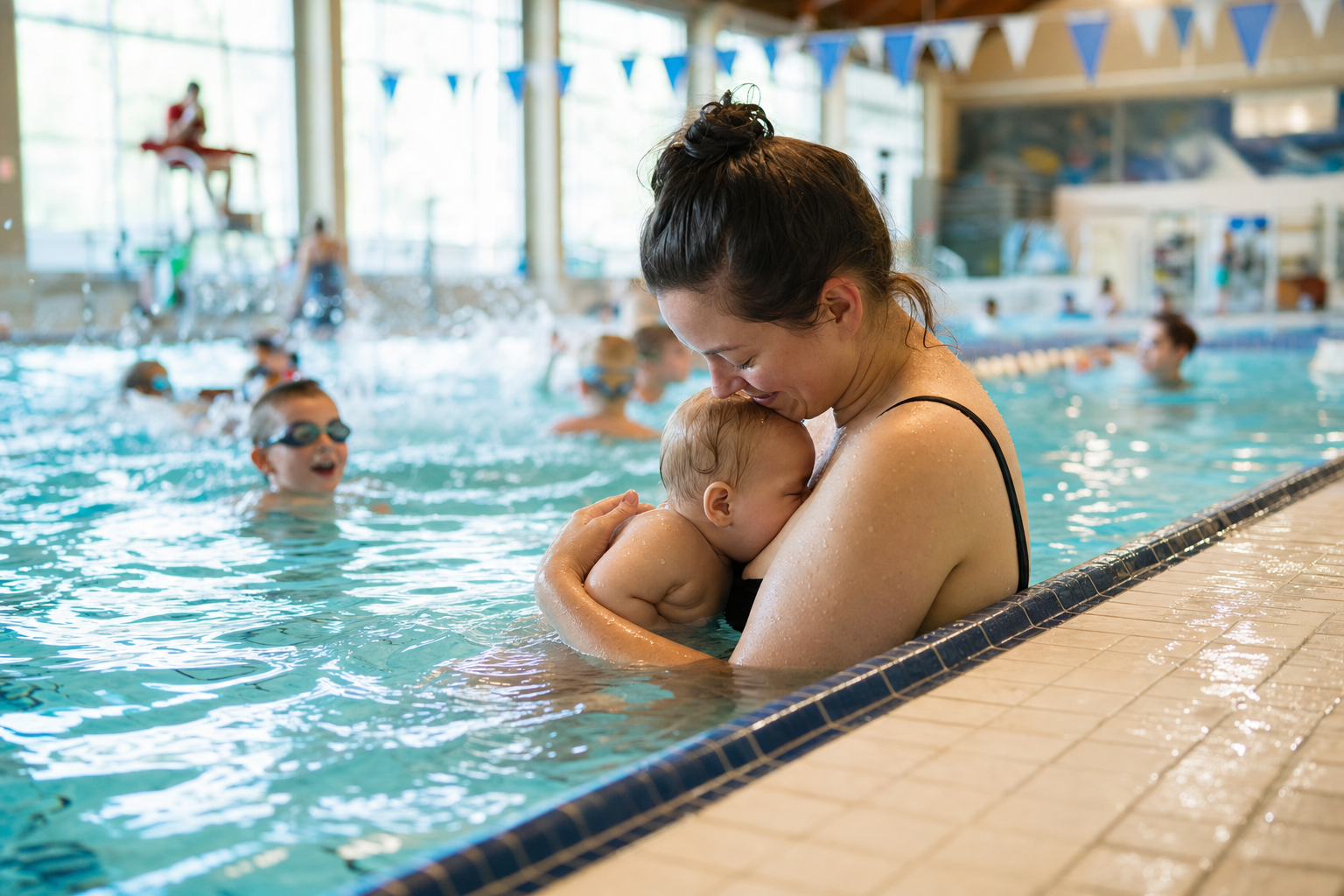
When a calm swim class turns into a crowd of splashes, echoing whistles, or waves from older kids, those beautiful one-to-one holds you practiced may suddenly feel like trying to balance on a tightrope. Here’s how to adjust front, side, chest, and hip holds when the water gets chaotic, so your baby stays secure, calm, and safe.
Which Holds Work Best When the Pool Is Busy
Chest & Face-to-Face Holds for Infants (0-12 Months)
When sensory overload hits, especially for babies without full head control, go back to chest holds that allow skin-to-skin contact and eye contact. Holding baby face to face with cheeks against your chest supports the head and keeps their face well above the water line. Support under the chest and hips only enough to avoid arching or neck strain, and avoid pushing up too high under the armpits—this can tilt the head back and risk water inhalation. These holds are ideal at all ages, but critical when surroundings are loud or unpredictable. Multiple experts agree: keeping a baby’s face clear and airway safe always takes priority. (swimy.org)
Back Floats & Side Support Holds to Pause & Reset
A back float allows your baby to rest when water turbulence or over-stimulation becomes too much. Support their head gently against your chest or shoulder, keep hands along their back, and ensure their nose remains above water—even during splashes or when turning. For slightly older babies or young toddlers with improved core strength (around 6-24 months), side holds (hip holds) let them explore water with support on one hip while your other hand manages their back or bottom. These holds give room to move safely without compromising support. (swimy.org)
When to Move from Independent Play Holds Back to Secure Holds
Parents often want to stick to the progression learned in lessons—from playful hip or stretch holds to more independent, horizontal or floating positions. But in a busy pool, that progression may need to pause.
- Signs to switch hold styles: baby stiffens, clings, turns away, or suddenly goes quiet. These may mean sensory overload or fear. Moving from a side or prone play hold to a chest or face-to-face hold can bring reassurance.
- Crowded setting stress: if toddlers drift toward chaotic zones where older kids are diving or splashing hard, adopt a gentler hold that keeps them close to you and the wall—secure chest or hip holds keep control tight without rigid grip.
- Waves and splashes: avoid holds that expose baby’s face upward. Better to use chest-to-chest holds, supporting under the arms and chest, not under the armpits alone.
If you want a structured way to build water confidence at home, the 10-Week Plan guides you step by step.
⏱
[[ctababy]]
Typical Pitfalls in Busy Open Swim and How to Avoid Them
One common mistake is trying to run through your regular lesson plan holds unchanged during open swim time. In structured lesson settings, there may be calm routines and gradual transitions. When you switch to busy water, lessons aren’t the priority anymore—safety and comfort are. Holding your baby horizontally during a front glide or prone position may be wonderful in calm water—but in chaotic settings it can leave heads wobbling, arms flailing, or faces splashed repeatedly.
Another pitfall: over-gripping. Holding too tightly under the armpits or pulling up too much compresses soft joints, causes a baby’s chin to drop, and pushes the airway at risk. Relaxed but firm support works best. Experts also caution against forced submersion or timed breath holds—they increase risk and anxiety. (swimy.org)
How to Practice Safe Holds Step by Step
Start with the most secure holds (chest and front face holds) when you walk into a busy pool or open water session. See where the noise, splashes, movement are worst and avoid them. Gradually try hip and side holds as baby shows comfort—arms relaxed, eyes calm, no gripping. Use back floats when you want to pause—allow baby to gazing up, take a breath, and reconnect with you.
If you follow a plan (like the 10-Week Plan of swimy.org) you’ll have guided progressions built in. This helps you know when to attempt more playful holds, but also reminds you how often to return to steadier holds during more chaotic swims. (swimy.org)
Safety Rules to Never Skip
Always keep your baby or toddler within arm’s reach. The American Academy of Pediatrics emphasizes “touch supervision” for infants, toddlers, or weak swimmers—adults should be close enough to physically catch or support them instantly. (publications.aap.org) Avoid leaving them alone or with another child—even if both seem water-confident. Lifeguards are helpful, but they don’t replace your responsibility. Life jackets can add layers of safety but never replace good hold technique and supervision. (healthychildren.org)
Final Takeaway
Busy water doesn’t have to undo your swim class progress. Secure chest or face-to-face holds are your go-to when things feel overwhelming. Side and hip holds are great for exploration—but only when your little one is ready. Watch for stress cues, stay within arm’s reach, and adjust your hold style according to the setting. Keep your baby’s airway safe, face above water, and your grip light but supportive. That’s how you combine skill practice with safety—and turn even chaotic pool sessions into moments of confidence and bonding.
120+ swimming exercises sorted by age — with video and instructions. Developed by swim instructors, completely free.

120+ swimming exercises sorted by age — with video and instructions. Developed by swim instructors, completely free.