UV & Ozone Pool Systems: What Parents of Babies Should Still Check
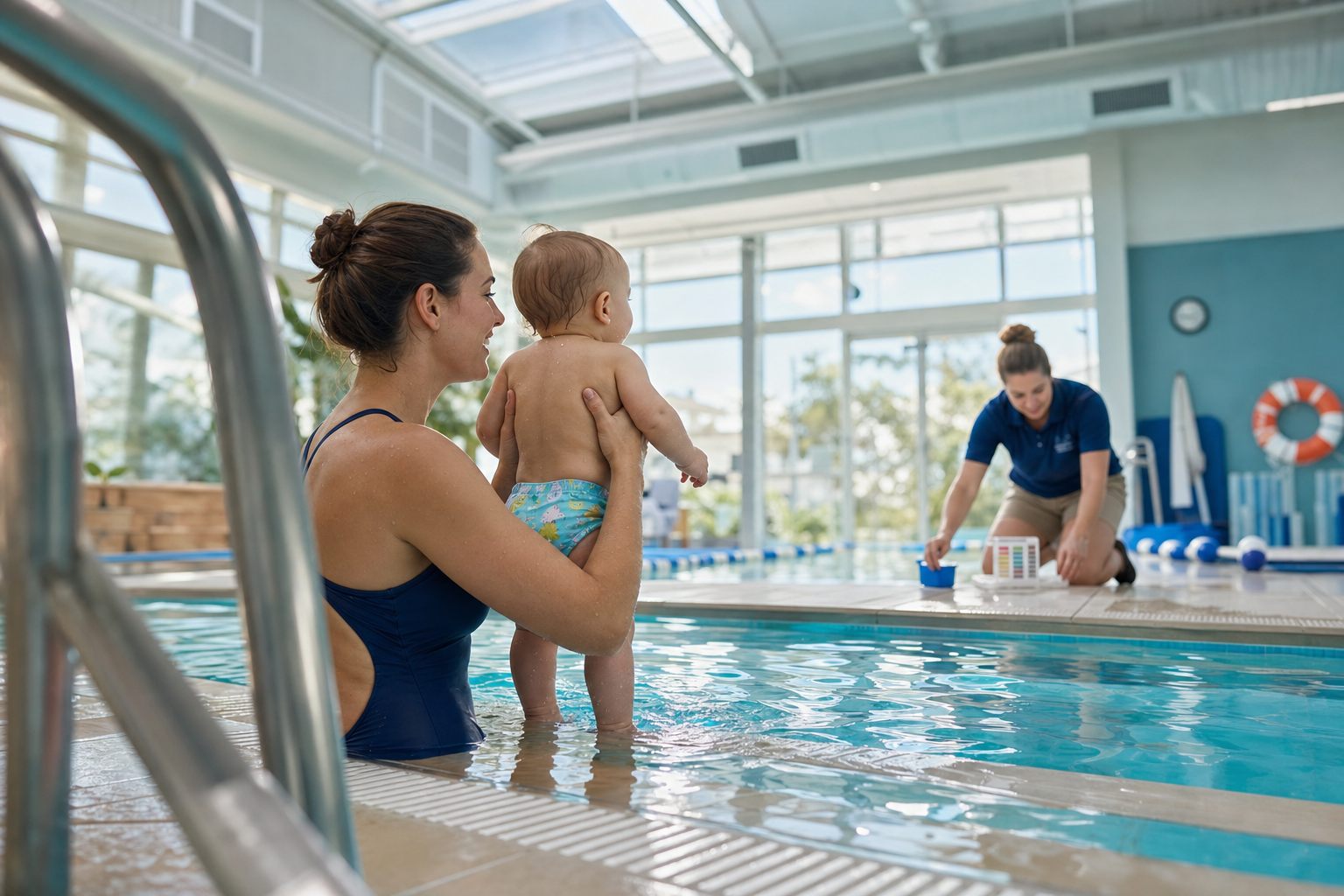
If your baby (3–36 months old) is going to swim in a “UV pool,” “ozone pool,” or a chlorine-free setup, here’s what you absolutely need to check to keep them safe. These systems sound high-tech and germ-fighting—but they don’t replace everyday checks and habits. Your baby’s health depends on both.
What UV & Ozone Can Do—and What They Can’t
UV and ozone systems are often marketed as “chlorine alternative” or “chlorine-free,” which might lead parents to believe they get better safety for babies. UV light (in the 220–300 nm germicidal range) can inactivate many bacteria, viruses, and pathogens on contact. Ozone systems can kill germs and reduce chlorinated by-products. Both are powerful.
Still, UV and ozone do not leave behind a residual disinfectant. That means once water leaves the UV lamp or ozone chamber, there’s nothing “still working” unless there’s another disinfectant in use. Guidelines like those from Western Australia insist that UV filters may only be used in baby spas if chlorine (or an approved residual biocide) is also in operation, because UV lacks lasting disinfection in the water body itself. (healthywa.wa.gov.au)
The World Health Organization’s recreational water guidelines also acknowledge that ozone or UV can allow lower chlorine levels, but they still expect some residual disinfectant (like free chlorine) to remain to prevent germs that haven’t passed through the UV/ozone system. (iris.who.int)
Top Parent Checklist for Ensuring Safety in UV or Ozone Pools
Here are the specific things parents should always check before letting a toddler or baby swim—even if a pool advertises as “chlorine-free” or “ozone pool baby safe.”
1. Disinfectant Residual & pH Balance
Always ask for the current levels of free chlorine or bromine (or whatever disinfectant is used), and the pool’s pH (ideal range 7.0–7.8). Even with UV or ozone, having a small residual disinfectant helps kill germs downstream or in places UV never reaches. The CDC recommends keeping these disinfectant levels checked at least twice daily, more if many people are swimming. (cdc.gov)
If you want a structured way to build water confidence at home, the 10-Week Plan guides you step by step.
2. Filtration & Water Clarity
UV light and ozone work best when water is extremely clear. If the water is cloudy, dirty, or murky, UV/ozone can’t do their job. Filters must remove hair, skin flakes, sweat, poop. If the pool has advanced filtration, ask when filters were last cleaned or replaced.
3. Hygiene Rules Before, During, After Swim
Don’t assume UV or ozone replaces basic hygiene. Showering before getting in the pool reduces contaminants; regular diaper checks keep poop out of the water. For baby pools or swim schools, swim diapers are essential. Parents looking into baby swim lessons with plans like swimy.org’s “10-Week Plan” should still check whether the facility insists on swim diapers and shower rules—even with “chlorine-free” or “UV pool baby” claims.
[[ctababy]]
Alerts & Risks That Are Often Overlooked
Claims like “chlorine-free pool baby safe” might lead to false assumptions. Parents sometimes think they can skip checking the water, skip swim diapers, or skip rinsing their baby before and after swimming. These are risky.
Chloramines & Chemical Irritation
Even a UV-treated pool that still uses chlorine or bromine will have by-products like chloramines if swimmers enter dirty or sweaty, or if diaper leaks occur. Chloramines irritate sensitive baby skin, eyes, and lungs. Indoors, poor ventilation worsens this. (cdc.gov)
Infections and Immune Risks
One study found that babies who participated in baby swimming under conditions with inadequate disinfection or chemical control had slightly higher rates of early infections like diarrhea or ear infections. It wasn’t definitive, but it’s a signal that cleanliness and correct chemical balance matter—even more for young, developing immune systems. (pubmed.ncbi.nlm.nih.gov)
Post-Swim Skin & Body Care for Babies
After you swim, the care your baby gets matters just as much as what you did in the pool. Sensitive baby skin can dry out or become irritated by both water and residual disinfectants.
Pat them dry thoroughly. Rinse off with fresh water—not just a towel wipe—and apply a gentle moisturizer. Watch for signs of redness, itchiness, or diaper rash that flares up after swim days. Always have swimwear or nappies washed separately so residue doesn’t spread.
Bottom Line: What to Look for & Ask For
Before choosing a self-respecting facility or pool—hotel pool, swim school, or private pool—ask these:
- “Do you use UV/ozone plus free chlorine (or another chemical residual)?”
- “What are your target and actual disinfectant & pH levels right now?”
- “How often is the water tested, the filter cleaned, and the pool emptied or backwashed?”
- “Do you require showering before entering, swim diapers for babies, and limit swim time for younger infants?”
When you find a pool that does all of this well, let your baby in. And remember: “UV pool baby” or “ozone pool babies” are useful keywords when searching, but the proof is in those details.
UV and ozone systems are strong tools in the fight against germs, but they don’t do everything on their own. For the health of babies between 3–36 months, you still need clear water, proper residual disinfectant, hygiene rules, and careful aftercare. When all those are in place, you can let your little one splash away with more confidence.
120+ swimming exercises sorted by age — with video and instructions. Developed by swim instructors, completely free.

120+ swimming exercises sorted by age — with video and instructions. Developed by swim instructors, completely free.