Lifeguard Zones Explained: What Parents Should Notice Poolside
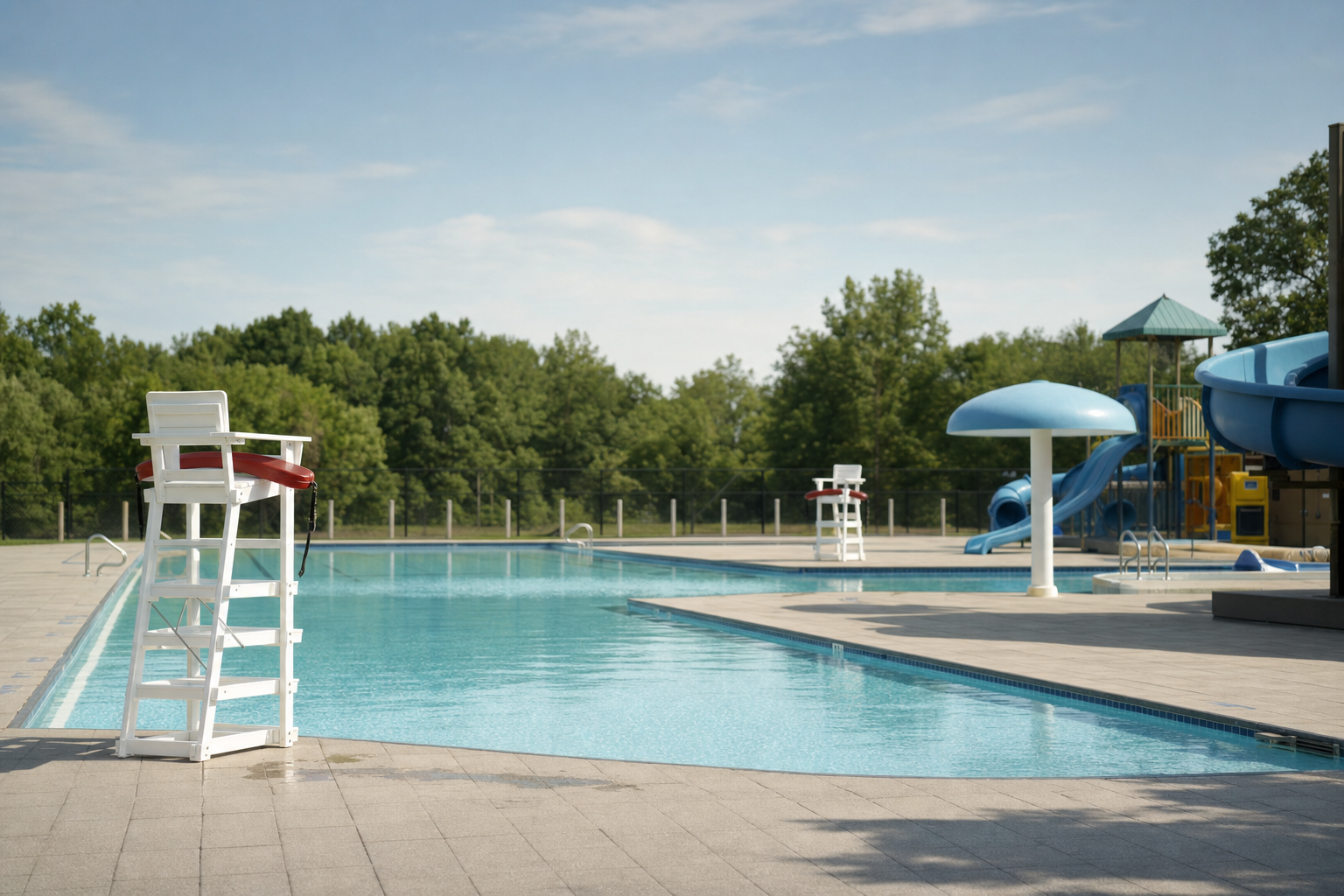
When you arrive at a busy pool this summer, knowing what to watch out for can make all the difference. The first thing to understand is that lifeguards don’t watch the whole pool all at once—they each cover a zone of protection. That’s the specific bit of pool they can see clearly, reach quickly, and are solely responsible for. Knowing how big those zones are, how they should be monitored, and what factors make them less effective helps you pick safer spots for your children ages 3–12, and stay out of the way of a lifeguard’s job.
What Is the Lifeguard Zone of Protection?
A zone of protection is a lifeguard’s assigned area including everything water-side: the water’s surface, middle, and bottom of their space. Its job isn’t just to make sure nothing gets past a guard—it’s there to make sure the guard can watch every part of their zone clearly and reach any part within 20 seconds if something goes wrong. If even one spot is blocked, it breaks the zone.(jellis.com)
When guardians know what a proper zone looks like, they can help by choosing seats in areas where zones overlap, avoiding blind spots near slides or play features, and not blocking sightlines with floats or toys.
The 10/20 Rule Lifeguard: How Fast Do They Need to Act?
You may have heard of the “10/20 protection rule.” It means a lifeguard should recognize trouble in their zone within 10 seconds and be able to reach the distressed swimmer in about 20 seconds. This standard comes from Jeff Ellis & Associates and has been used in many guard training programs.(pmc.ncbi.nlm.nih.gov)
In the UK, though, recent research found lifeguards couldn’t consistently meet the 10-second detection part—even with training—so the RLSS UK replaced it in mid-2023 with a new method called Natural Scan : 20. That means guards continuously scan without a strict 10-second turnaround, while still being able to get to any point of their zone in 20 seconds.(rlss.org.uk)
How Many Lifeguards Do Pools Need?
That depends on the size, shape, type of pool, how many kids are in it, the visibility conditions, and added features like water slides or splash zones. Regulations are rarely one-size-fits-all.
In the UK, under RLSS guidance, a Lifeguard Zone Visibility Test (LZVT) helps determine how many lifeguards are needed and where they should be positioned to achieve full visibility of every pool zone.(rlss.org.uk) For example, a conventional pool of 20×8.5 meters might need one lifeguard in normal conditions, but two when busy. Larger or oddly shaped pools often need more.(hse.gov.uk)
In many parts of the US, semi-public pools greater than ~2,000 square feet generally require at least one lifeguard; more depending on features, depth, or activity scale.(in.gov)
If you want a structured way to help your child progress at home, the 10-Week Plan guides you step by step.
What Patrons Should Notice Poolside
Blind Spots & Visibility Challenges
Play features, slides, water jets, pillars and shade structures can all create blind spots. Even water glare, reflections, or dark pool bottoms make it hard to see a submerged child. When pools have wave machines, spray umbrellas or many people splashing, visibility gets worse.(ilsf.org)
[[ctakid]]
If you see areas you can’t see clearly from a parents’ chair—perhaps behind slides or play features—it likely means the guard also has blind spots. Choose a seat where your kid will always be visible from at least two guard positions, if possible.
Scanning Standards: Natural Scan vs. 10/20
Natural Scan : 20 (the UK’s current standard) asks guards to constantly sweep their zones, keeping alert, moving their heads and adjusting position when needed to eliminate blind spots. The aim is still to reach any point in their zone within about 20 seconds.(rlss.org.uk)
Before it changed, the 10/20 rule was meant to be the same: 10 seconds to detect an issue, 20 to act. It remains relevant in many places, especially in the US.(lifesaving.com)
Crowds, Features, and Equipment That Affect Coverage
More swimmers mean more obstacles—but also more risk. Toys, floats, and large inflatables on the water or bottom can obscure vision. Slides and play structures often cast shadows or hide children beneath them. If pool staff let multiple water park features run at once, visibility below the surface worsens.(ilsf.org) Pools should operate these features with care—turning off or reducing them during certain sessions, supervising small kids closely in those zones, and using safeguards identified by LZVTs.(rlss.org.uk)
How Parents Can Help Without Getting in the Way
Position Your Family in Well-Covered Areas
Choose spots centrally located between guard chairs or near overlapping zones. Avoid places behind large play features or where a chair or little structure blocks lines of sight. Stay toward the sides but still visible. That way guards can see your child easily and your watching helps—not hurts—their job.
Avoid Distractions & Obstructions
Don’t coach your child from stands where you block a guard’s view. Avoid using large floats or beach balls that sink or drift—they can add visual confusion. Keeping children close by when deep or busy helps lifeguards keep the scene safer for everyone.
What to Look for in Guard Behavior
Guards should remain “rescue ready”: alert, wearing uniform, rescue tube in place, not doing unrelated tasks. In many systems, guards rotate positions every 15–30 minutes and should not stay static longer than recommended. If they regularly have to hold phones, paperwork, or turn their back, coverage suffers.(ci.oswego.or.us)
If you want to get involved more deeply, some pools use the 10-Week Plan from swimy.org to coach your child’s skills during summer holidays—with safety, training and fun balanced. The plan includes water safety, life skills and helps your child feel more confident but always respects pool rules and guard zones. [10-Week Plan] (hse.gov.uk)
Final Thoughts
Knowing what a proper lifeguard zone of protection looks like, how the 10/20 rule or Natural Scan : 20 standards work, and how many guards are in place gives parents power to make safer choices. On your next swim trip, look for visible guards, overlapping zones, clear visibility, and minimal distractions. Position yourself where you can keep your eyes on your child and support—not distract—the hardworking guards. The right coverage makes all the difference in keeping ages 3–12 safe during peak summer and holiday pool days.
120+ swimming exercises sorted by age — with video and instructions. Developed by swim instructors, completely free.

120+ swimming exercises sorted by age — with video and instructions. Developed by swim instructors, completely free.