Private Baby Lessons at Public Pools: What Parents Really Need to Know
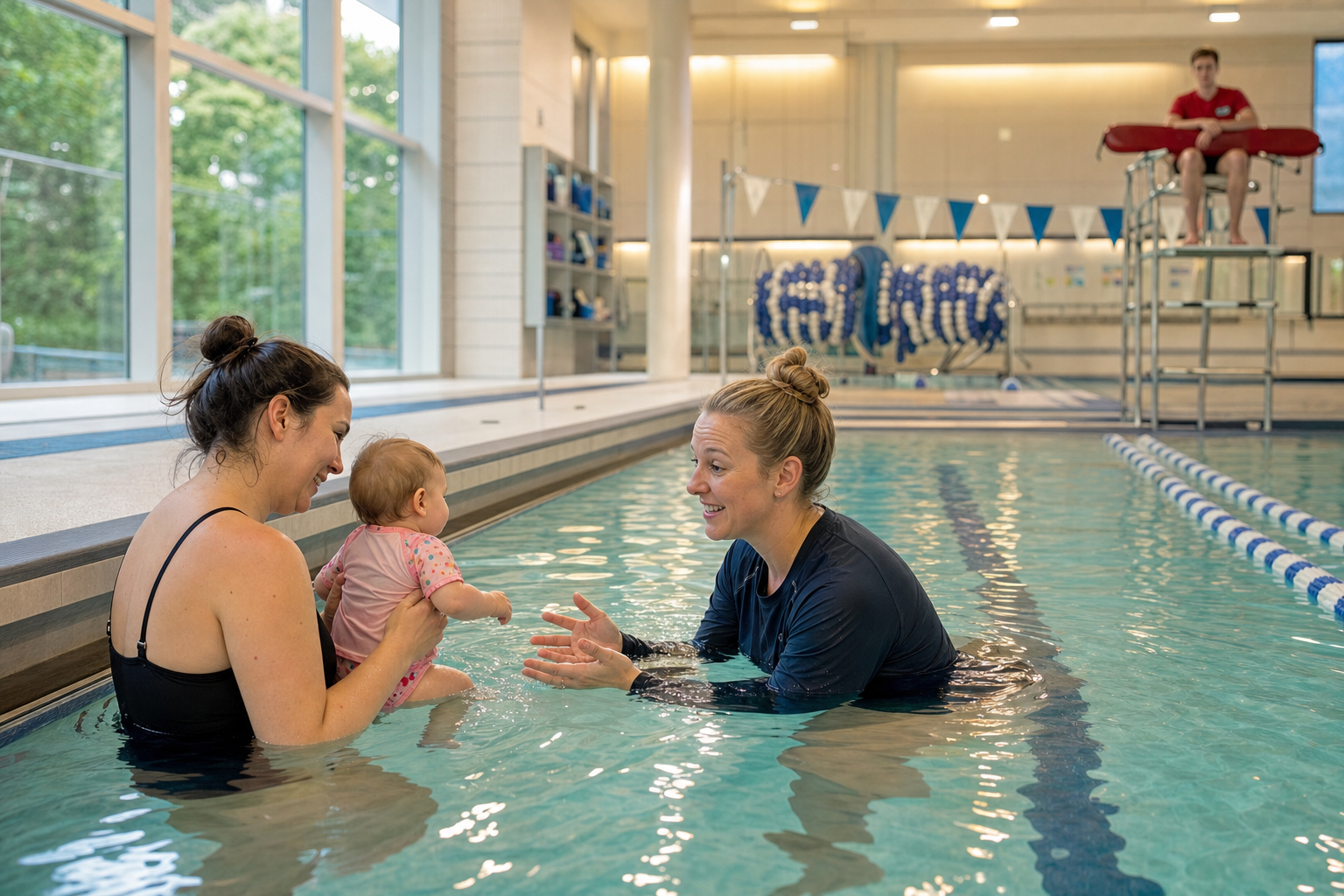
When you search for “private baby swim lessons” or “infant swim instructor near me,” providers often promise you can use your local or community pool. Before you hand over your credit card, you need to ask some critical questions—because not every instructor is allowed to teach in every pool.
Can Instructors Teach at Your Public Pool?
First, pool managers or facility operators set their own rules about whether they allow outside instructors. Many public pools require you to get approval for an external swim instructor, even for infants aged six to 36 months. Legally trained lifeguards, health codes, and permits are usually involved. For example, Washington state rules say that pool owners must provide a lifeguard or certified swim coach for organized swim activities at public pool facilities.(apps.leg.wa.gov)
You should ask the instructor whether they have facility permission in writing. If there’s no formal agreement, the community pool could say no, or even insist you only use their own staff.
Insurance: Who’s Covered?
Swimming lessons always carry risk—slips, drowning risks, medical emergencies. That’s where insurance comes in. Most public pools will require an instructor to carry their own liability insurance, even if they teach there regularly. The pool’s policy may cover the facility itself, but it probably won’t protect you or the instructor in a lawsuit.(swimschoolinsurance.com)
Typical requirements include general liability insurance and sometimes professional liability (for teaching mistakes). Amounts like $1 million per occurrence are common. If the pool uses city or state-owned property, the gang might ask to be listed as an additional insured party.(larmpool.org)
Who’s in Charge of Safety and Lifeguard Coverage?
If lessons are happening in a public pool, ask whether lifeguards provided by the pool will be on duty. Sometimes, public pool rules demand that lifeguards staff the pool even during private instruction sessions. Other times, the instructor might need to supply extra supervision or bring their own qualified helper. Oregon, for example, requires a certified lifeguard when swimming is underway and proper coverage even for team practice or lessons.(oregon.gov)
If you want a structured way to build water confidence at home, the 10-Week Plan guides you step by step.
Also clarify: during class, who watches the water? The instructor directs the lesson, but parents have to stay alert. Caregivers typically need to be present, either in the water or poolside. Showering and changing areas should also be supervised, following the pool’s procedures.(dpr.dc.gov)
Class Ratios, Ages, and the “10-Week Plan”
For babies aged 6 to 36 months, small class sizes and lots of caregiver involvement are essential. Many instructor guidelines recommend split ratios of no more than 1 teacher to 3 infants—or even 1-to-1 for very young or very timid babies. Teachers need special training in infant-and-toddler swim education.(usswimschools.org)
[[ctababy]]
Look for programs that use recognized structures with proven safety plans. For example, swimy.org’s 10-Week Plan offers a progressive structure designed for infants and toddlers, emphasizing safety, caregiver involvement, and gradual water introduction. That kind of program helps you ask better questions so you know the instructor is following a set curriculum—rather than winging it based on pop-up lessons.
Who Is Responsible in an Emergency?
In any emergency—drowning, sudden illness, accidents—the duty of care gets split among different people: facility operators, swim teachers, and caregivers. Facility operators are usually in charge of physical safety: water quality, emergency equipment, lifeguards on duty, clear signage, and the emergency action plan. Teachers are responsible for supervision of their lesson group, knowing rescue procedures, first aid and CPR. Parents and caregivers remain responsible for keeping babies safe around water and following pool rules.(swimmingspf.com)
Always ask: What’s the venue’s emergency protocol? Where is the AED and how far away is medical help? Is the instructor certified in rescue and CPR for infants? These are essential safety factors, not optional extras.
Checklist to Ask Before Booking
Start every conversation with a set of smart questions. You want to confirm: “Do you have permission to use this pool?” “What certifications do you hold—especially water safety instructor, CPR, first aid?” “Do you carry your own liability insurance, and is the pool added as ‘additional insured’?” “Will lifeguards be on duty during lessons? If not, who’s supervising water level safety?” “What’s your instructor-to-infant ratio?” “Can you explain your emergency plan if something goes wrong?”
It may feel like a lot, but it’s worth it. If an instructor can’t answer these confidently, move on. When you find someone who says yes to all of the above, your family is in very safe hands.
Final Thoughts: Responsibility and Safety
Private baby swim lessons can be amazing for infants and toddlers—they build strength, water familiarity, and confidence when done properly. But mobile or “bring-your-own-instructor” options advertised online often skip over important legal or facility requirements. Just because an instructor says they teach at community pools doesn’t automatically mean the pool agrees, or that the paperwork and insurance are in place.
You deserve clarity. Insist on written facility approval, proper insurance, certified lifeguards, caregiver presence, small ratios, and emergency protocols. Even when you get all that right, the caregiver must still stay alert and follow pool rules. With all these pieces in place, “private baby swim lessons” become safe, supportive, and life-affirming.
120+ swimming exercises sorted by age — with video and instructions. Developed by swim instructors, completely free.

120+ swimming exercises sorted by age — with video and instructions. Developed by swim instructors, completely free.