Stuck at One Level? A 4-Week Motivation Reset for Young Swimmers
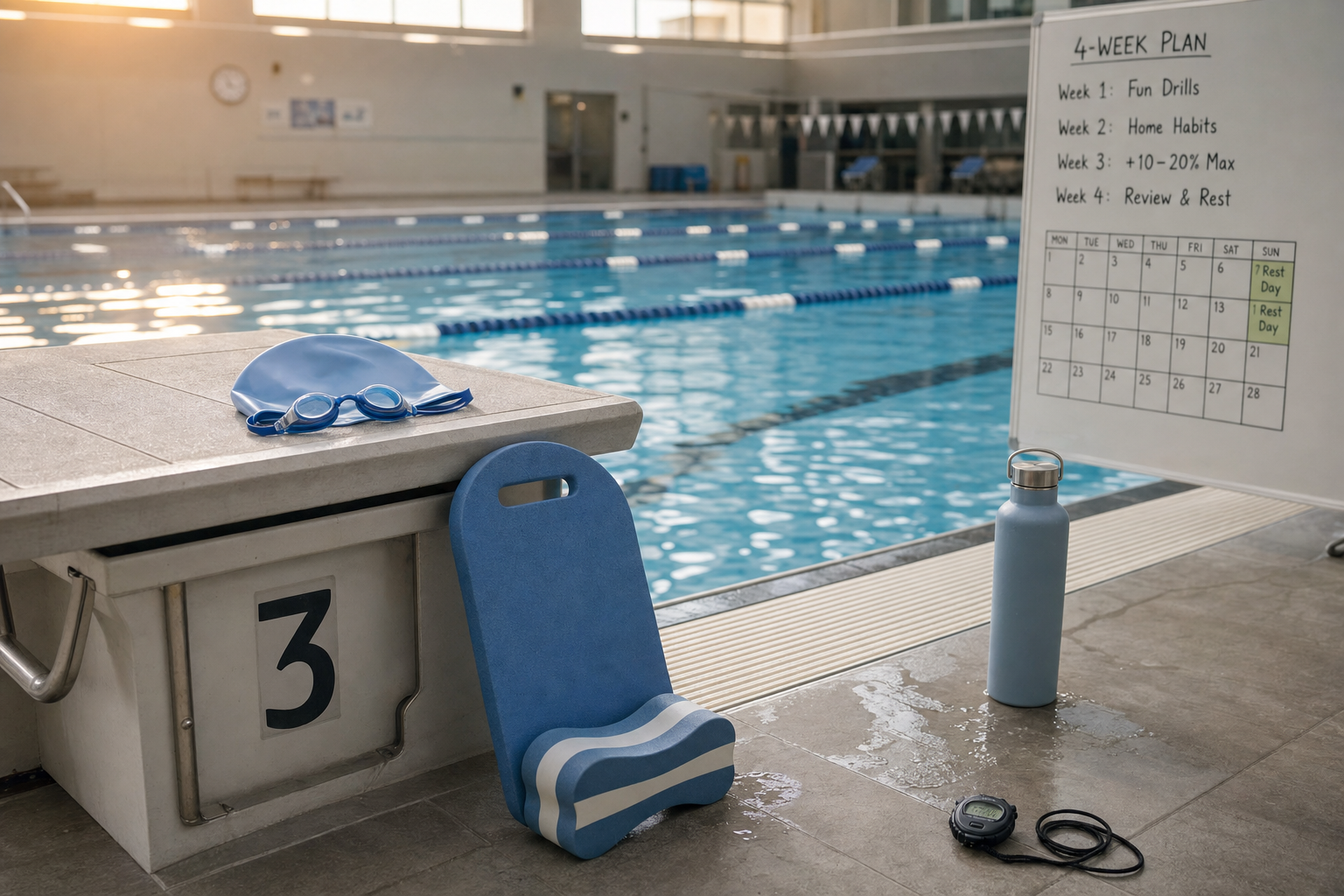
If your child, aged 6-12, seems stuck at one level in swim lessons—no faster splits, no new strokes, just the same routine week after week—this plan is for you. It combines fun pool goals, smart rest, and mini-wins at home to push past plateaus. Parents will learn how many rest days to schedule, how to spot early signs of burnout, and how to boost kid swimmer motivation.
Week 1: Shake Things Up in the Pool
Start with fun, non-competitive goals in the swimming lessons. Maybe it's mastering a flip turn, trying dolphin kicks, or swimming one lap without rest. These mini-wins feel real and build confidence. Don’t just pile on extra laps—that often causes burnout or overuse injuries, which the AAP defines as repetitive stress with insufficient recovery.(publications.aap.org) Technique work with playful games will feel less like training and more like play.
Smart rest also begins now. The American Academy of Pediatrics (AAP) recommends that young athletes have at least one to two rest days per week from organized training or sport-specific work.(publications.aap.org) Use Week 1 to set expectations: School swimming lessons and any club practice should allow time for complete rest days, physically and mentally.
Week 2: Build Confidence at Home
After the first week’s wins, shift some focus to home. Small dryland drills (stretching, body-weight strength) for 10-15 minutes two or three days this week can make a difference. Talk with your child about what parts of swimming they enjoy most and which parts feel hard. If the plate in their mind says “slow flip turn,” that’s a clue to work in drills, not distance.
Nutrition, sleep, hydration are often underestimated. The AAP report stresses that proper recovery depends on sleep, nutrition, and stress reduction.(publications.aap.org) A consistent bedtime and balanced diet help muscles repair, boost mood, and build stamina.
[[ctakid]]
Week 3: Smart Training Load and Cross-Training
Now, gradually increase swimming or training load—but do not increase total volume by more than about 10-20% week-to-week, a guideline from AAP to avoid injury.(publications.aap.org) If your child swims three days a week, maybe add one more day—but keep it light, maybe drills and fun relays instead of hard intervals.
If you want a structured way to help your child progress at home, the 10-Week Plan guides you step by step.
Introduce cross-training: a dance class, bike ride, or gymnastics helps work different muscle groups and keeps things fresh. AAP warns that playing multiple sports is fine, but overscheduling or training the same muscle groups in one sport every day leads to overuse.(healthychildren.org) Parents should also know that taking 2-3 months off per year from a specific sport, possibly divided into shorter breaks, is an important safeguard.(healthychildren.org)
If your child is feeling better about small goals and showing more effort in workouts, it may help to follow structured plan ideas like the 10-Week Plan from SwimY.org which includes alternating fun strokes, technique drills, rest weeks and home practice essentials, customized for young swimmers. This can break the cycle of plateau by introducing new stimuli.
Week 4: Review, Adjust, Protect Recovery
In the final week of this reset, look back: What mini-wins did your child achieve? Were rest days respected or skipped? Did new fun goals light a spark again? If performance is still flat, that’s okay—flat sometimes means rest or technique need more time.
Crucially, protect recovery. AAP clinical guidance says kids need one to two full rest days weekly, meaning no organized or sport-specific practice.(publications.aap.org) Also, never allow weekly training load to spike by more than about 10-20%; do this gradually. Overuse and burnout signs include persistent muscle or joint pain, mood changes (like irritability), poor sleep, loss of interest in the pool, or dropping performance even after rest.(publications.aap.org)
How Parents Spot Burnout Early
Some signs are subtle. If your child often says “I’m tired,” or seems anxious about practice rather than excited, those are red flags. Ongoing joint or shoulder pain (especially in swimming) that doesn’t go away with rest should be checked. When technique slips, breathing gets ragged, or motivation drops, it’s time to pull back.
Make rest days non-negotiable, use them for free play, family outings, or hobbies other than sports. These are what keep a kid coming back long term with joy, not resentment.
Why This Reset Works Over Time
Youth swimmers often stall when training becomes predictable, rest is ignored, or goals feel unreachable. This four-week mix of fun pool challenges, home support, rest, measured load increases and reviews reboots progress without breaking safety rules. It aligns with AAP and HealthyChildren guidance about rest days, avoiding sudden load jumps, and preventing overuse injuries and burnout in young athletes.(publications.aap.org)
If after four weeks you see renewed energy, faster stroke breakdowns, or even just more smiles in swim cap and goggles, you’ve reset motivation, broken the plateau, and built resilience—all without risking burnout or injury.
Keeping children ages 6-12 swimming safely and happily takes balance. With rest, structure, and purposeful goals, you can help your young swimmer regain confidence, improve technique, and have fun again. Better than pushing hard is pushing smart—and joy in the pool always wins.
120+ swimming exercises sorted by age — with video and instructions. Developed by swim instructors, completely free.

120+ swimming exercises sorted by age — with video and instructions. Developed by swim instructors, completely free.