Sun Hats in the Pool: Fit Rules for Babies & Toddlers (0–36 Months)
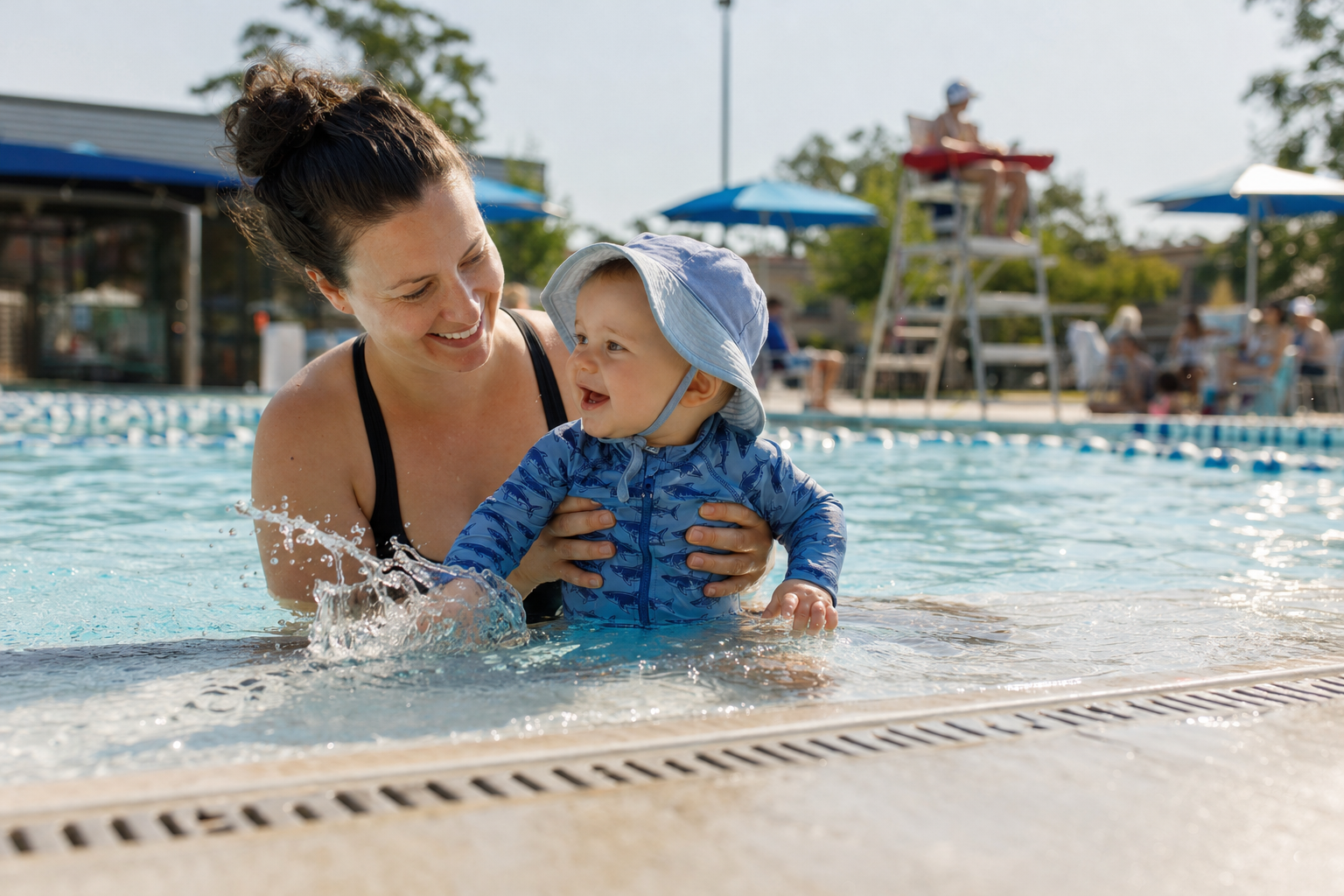
Every parent wonders: is this baby swim hat helping with shade… or just floppy cloth floppping in my baby’s eyes? Let’s cut straight to what truly matters for babies and toddlers at pools, splash pads, or on holiday—so they get shade without panic, wet fabric on face, or dangerous straps.
When a swim hat is genuinely useful
If your baby is aged 0–36 months and you’re outdoors during UV levels 3 or higher—especially in spring and summer—it becomes worth using a baby swim hat. For infants under six months, medical advice is to avoid direct sun and rely on shade, clothing, and hats rather than just sunscreen. (schn.health.nsw.gov.au) A swim hat blocks UV rays from reaching the scalp, ears, face and neck—skin areas that are thin and quick to burn in babies. A properly fitted sun hat for baby swimming also avoids irritating wet fabric against the face and knocks off some of the worry when lifting them out of the water.
Where it becomes annoying, floppy or vision-blocking
A hat becomes more hassle than help when the brim is too wide, too floppy, or too rigid. If it drops over a toddler’s eyes during crawling, swimming, or when in a carrier, it disturbs vision—might even startle them or disrupt caregiver hold. Wet or heavy fabric can press into eyes, cheeks or forehead, especially when lying down or being carried, which triggers panic or irritability. Also, straps that snap, drag, or are loose will either cinch skin or make the hat fly off—neither ideal.
Key checks: strap, brim, visibility, removal
Strap matters
Choose hats with a secure chin strap or toggle that holds snugly—enough so it won’t slide off but loose enough to avoid choking, fitting just two fingers underneath. Any long strap with a toggle must also have a safety snap or be placed at the back of the head, trimmed to avoid tangling or choking hazards. Safety authorities in Australia recommend this for hats on babies. (health.qld.gov.au)
Brim width and stiffness
A brim at least 6cm (about 2⅜ inches) for toddlers offers enough shade for face, ears and neck without drooping into the eyes. Bucket hats with wide brims or legionnaire styles (with side and back flaps) do well here. If the brim is too stiff, the baby can’t lie back comfortably; too floppy, and it blocks the view. Australian sun safety guides insist on brimmed or bucket hats with wide protective brims. (schn.health.nsw.gov.au)
If you want a structured way to build water confidence at home, the 10-Week Plan guides you step by step.
Visibility and fit
Make sure the hat doesn’t block the eyes when baby moves. Try bending the hat as your child laughs, splashes or leans back. Ensure the fit is snug—depending on age, baby’s head control matters a lot. Before about 3 months, infants often can’t sit perfectly upright, so hats must be soft and designed to crumple or adjust when the baby lies back in prams or your arms. Fabric should be quick-drying and stretchy, not heavy when wet. (decathlon.com.au)
Easy removal and caregiver hold
If the hat has stiff brims or flaps, make sure it doesn’t interfere with your grip when you pick baby up. Also test removal: if the straps or snaps are too fiddly, in a splash panic or when baby squirms, you’ll hate wrestling to take it off. Simpler straps with safety snap release or toggle adjusters are preferred.
Around this point many parents wonder when to introduce structured swim teaching. If you’re following a swim training plan—say something like the 10-Week Plan from swimy.org to build comfort in water—you’ll want a hat that can be removed quickly during sessions without disrupting the flow or the hold.
[[ctababy]]
Best sun hat styles by age and situation
For babies 0–6 months, a soft bucket or flap hat with UPF-50+ fabric, minimal structure, and a secure but simple chin strap is safest. Infant skin is very delicate, so lightweight fabrics that dry fast reduce discomfort. As babies get more mobile—the 7–24 month stage—legionnaire or flap-style hats with side and back neck protection are good. They offer extra shade when crawling or being carried. Toddlers near 2–3 years often tolerate wider brims and styles with more structure—but keep ensuring brim doesn’t dip into eyes when they look up.
When you’re at splash pads or outdoor pools, remove the hat if it’s soaked, flopping over eyes or neck, or when holding the baby in arms where you need secure handholds. Use a quick-release snap or toggle so taking off and putting on is fast.
Combining hat use with broader sun and safety routines
Even a perfect toddler pool sun hat won’t replace shade, protective clothing, hydration and good timing. Use hat plus rash vest or long-sleeved swimwear, seek shade or baby is under a canopy in pram, and limit outdoor sessions during peak sun hours. For babies under six months, sunscreen is generally a last resort except on small exposed areas. Hydrate well and keep swim sessions brief.
A well-fitting baby swim hat offers real value—shade, skin protection, less panic and mess—but only if the brim, strap, and visibility are right. Strive for UPF 50+, secure but safe straps, brim that shades without drooping, fabric that dries quickly and lets baby see.
When you pick the best sun hat for baby swimming or toddler pool sun hat, try it in real life—have baby move, lie back, splash—and make sure the hat helps more than it hinders. The right fit makes pool time fun, comfortable and safe for everyone.
120+ swimming exercises sorted by age — with video and instructions. Developed by swim instructors, completely free.

120+ swimming exercises sorted by age — with video and instructions. Developed by swim instructors, completely free.